16
11/2026
Which Fits Your Rack: Smart PDU vs. 1U/1.5U RS485 PDU
Compare the Intelligent 2nd generation PDU with the 1U/1.5U RS485 PDU: rack fit, communications ownership, ISO 9001:2015 scope, purchasing terms and acceptance checkpoints.
Which Fits Your Rack: Smart PDU vs. 1U/1.5U RS485 PDU
A rack PDU decision rarely stalls on features. It stalls on execution: whether the unit fits the rack you already own, whether your monitoring stack can actually read it, and whether the acceptance test you sign still means something a year later. That is where the choice between the Intelligent 2nd generation PDU and the 1U/1.5U RS485 PDU stops being a specification exercise and becomes a purchase order.
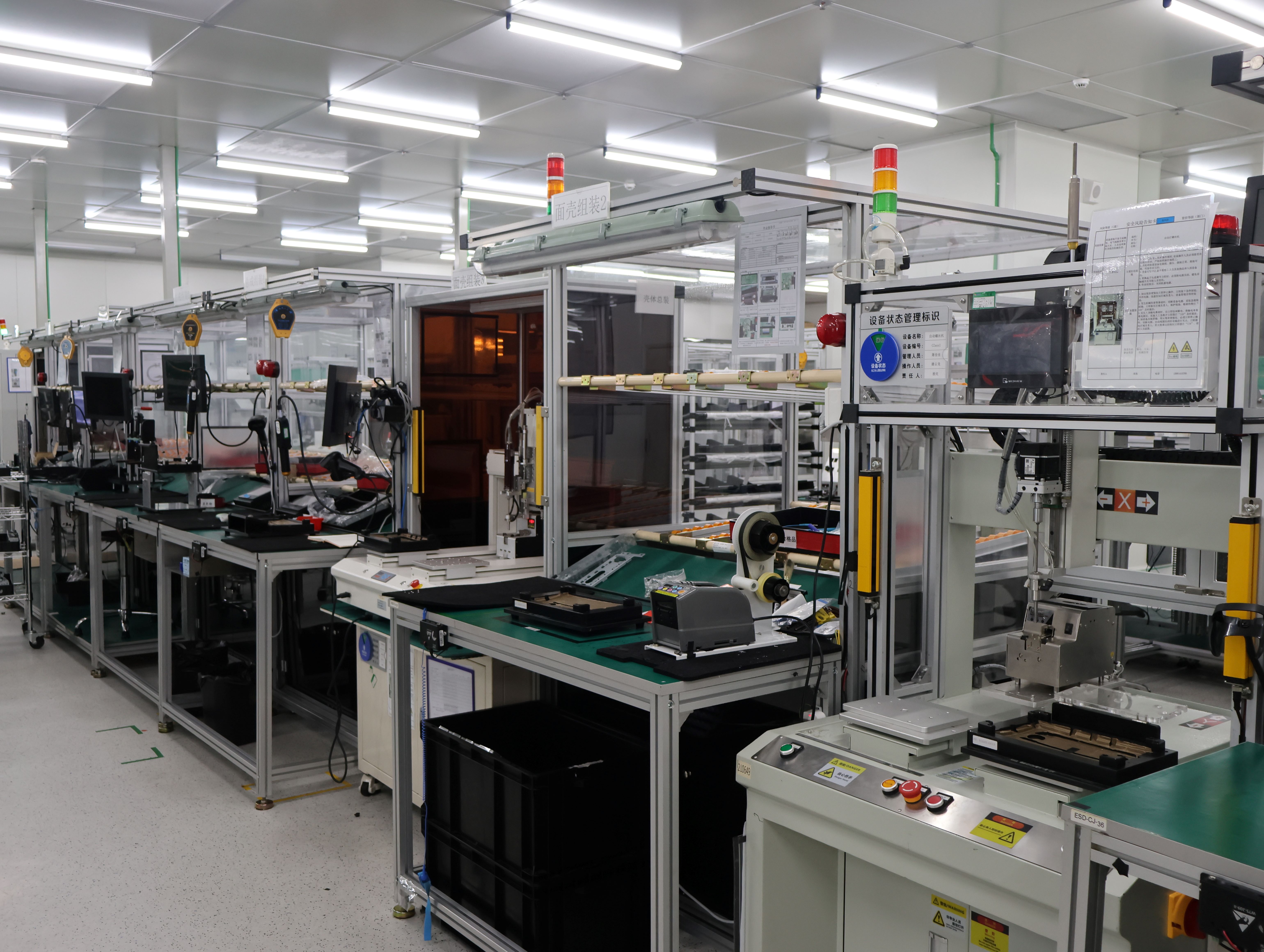
Both are core product lines from BOMPDU, the brand of Wuxi Bom Electronic Technology Co., Ltd., a manufacturer established in 2018 in Wuxi, Jiangsu, China, focused on end-of-row power distribution for data centers. The portfolio carries two core lines — the Intelligent 2nd generation PDU and the 1U/1.5U RS485 PDU — supported by more than ten invention patents covering common PDU connector types, and both lines sit under the same quality system: an ISO 9001:2015 certificate whose scope covers PDU control board design and development, alongside ISO 14000 environmental management.
The comparison below runs as four decision filters, then the purchasing terms and acceptance checkpoints that turn a choice into a released order. Where a specification is not documented for a model, this article marks it as a line to confirm rather than filling the gap with an assumption.
The real problem: control intelligence has to live somewhere
A rack PDU sits between the branch circuit and the IT load. For the buyer, the only architectural question that changes a purchase order is where the control intelligence lives. One model concentrates it at the strip and puts the strip on the network. The other keeps intelligence local to the strip and reports over a serial bus to a head-end that already exists in the cabinet or the building.
Neither arrangement is automatically better. They fail differently, they are commissioned differently, and they generate different evidence at acceptance. That produces three practical consequences at the execution stage: how much rack height and rear depth the unit consumes, who owns the network path and the protocol documentation, and what you can require in writing before a shipment is released. Everything else — outlet count, cord length, mounting hardware, labelling — is a model-level detail that belongs in the quotation, not in the category comparison.
What each line is documented to deliver
Intelligent 2nd generation PDU
The 2nd generation platform is built on distributed control. Sub-control modules carry switching and monitoring functions, and the platform records relay action status and operating cycles so that control logs can be analysed over the service life of the unit. Alarm logic is two-level: a primary alarm as current approaches the rated value, and a second alarm at overload, with feedback delivered over RS485 or the network. BOMPDU's published comparison data lists a 10/100 BASE-T network interface for the smart PDU.
The boundaries matter as much as the capabilities. The platform description does not enumerate its full protocol stack, its per-outlet metering granularity, or its rack height. Those come from the model datasheet. And a network alarm path is not the same statement as “every protocol your DCIM platform speaks is supported” — that is a documentation request, covered in Filter 2.
1U/1.5U RS485 PDU
This line is defined by two attributes: a horizontal form factor in single or one-and-a-half rack units, and RS485 communications. That is what the category name establishes. Outlet count, metering depth, alarm model, protocol layer and cascade behaviour are model-level questions. A 1.5U strip consumes one and a half rack units of mounting height; in a 42U rack that is a real cost measured against servers, shelves and cable management, and it should be counted during layout rather than discovered at installation.
Filter 1 — Rack fit: height, depth and the door
Rack fit is decided by five measurements, and only one of them is the rack unit count. Take them from the cabinet you will actually populate, with the rear door closed.
- Mounting height. One rack unit is 44.45 mm by definition, so a 1U strip consumes one unit and a 1.5U strip consumes one and a half — including the partial unit that cannot be recovered for equipment.
- Usable rear depth. Measure from the rear rail to the inner face of the closed door, then subtract the space the input cable and the outlet cords need.
- Bend radius and latch clearance. Power cords and locking connectors need room to seat without strain; a strip that fits but forces a hard bend at the outlet is not a fit.
- Feed direction. Top-of-rack or under-floor entry changes where the input terminates and whether the strip must be mounted with the inlet at the top.
- Airflow. A horizontal strip placed across the hot-aisle exhaust path can disturb the airflow pattern the rack was designed around.
For the RS485 line the height is known from the category name. For the Intelligent 2nd generation smart PDU, confirm the exact rack units and mounting orientation for the model being quoted before the rack elevation is frozen. Re-specifying a strip after cabinets are populated is a scheduling problem, not a purchasing one.
Filter 2 — Communications: who owns the path to your monitoring platform?
RS485 is a multi-drop serial bus. Devices share a pair, each responds to an address, and a master polls them. To reach a DCIM platform or a building management system, that bus typically terminates in a serial gateway or a head-end controller that maps registers onto a network protocol. The purchasing consequence is ownership: someone must specify and support that gateway, and it must be clear what happens to alarms if it stops responding.
Before ordering the RS485 line, put these on the RFQ: baud rate and parity settings, the address plan and how it scales when racks are added, the maximum number of devices per segment, the polling interval your platform will use, the register map document, the alarm bit mapping, and whether the gateway is supplied by you or by the vendor.
A network-managed strip changes the ownership question rather than removing it. The unit sits on the LAN, so the items to confirm are the protocol list, alert delivery channels, time synchronisation for log timestamps, user roles and authentication, and the firmware update path with a rollback position. Two items deserve separate pass/fail lines.
IPv6. This is the requirement most often assumed rather than verified. Manufacturers that document it explicitly show what a verifiable answer looks like: Raritan, for example, lists IPv4/IPv6 management for its intelligent rack PDUs in its published technical specifications. If your addressing plan is IPv6-only, an unconfirmed protocol is a failed requirement, not a discussion point to resolve after delivery.
Cascading. Device counts are not comparable across vendors unless the topology is defined. Raritan documentation states PDU-to-PDU cascading up to 16 devices; Vertiv documentation states daisy-chaining up to 50 devices on a single IP address. Those are different architectures with different counting methods, and reading one as better than the other would be a mistake. Write the topology, the maximum number of downstream units, the IP behaviour of each unit and the controller requirement into the RFQ instead of comparing headline numbers.
Feature names behave the same way. Sequential power-on, socket-level monitoring, custom alarm thresholds, single/three-phase switchable input and master-slave cascading all mean something slightly different depending on who defines them. Give each one a definition in your document: which outlets are sequenced, what the sequencing interval is, whether metering is per outlet or per branch, what the configurable threshold range is, and how phases are switched. A feature confirmed only by name is not confirmed.
Filter 3 — Quality evidence: what ISO 9001:2015 covers, and what it does not
BOMPDU's quality position is an ISO 9001:2015 certificate whose scope covers PDU control board design and development, supported by ISO 14000 environmental management. The scope is the useful part of that sentence. The control board carries metering, alarm logic, relay drive and the communications interface, so a management system audited at the design and development stage of that board addresses process control for the component that determines most of what the unit will do in service.
It is not a product safety certificate. IEC 62368-1:2023 is the safety standard applied to ICT and AV equipment, including PDUs, in most major jurisdictions according to IEC/IECEE, and conformity is demonstrated per product rather than per management system. Ask for the model-level safety evidence with the quotation, and read the scope line on any certificate you receive rather than the logo on the cover page.
Two further verification points follow from BOMPDU's own control design. On metering, published accuracy figures are only meaningful with their measurement basis: Server Technology states ±0.5% metering accuracy for its PRO4X line, and that number means little without the reference instrument, load range and test conditions attached to it, so request both together. On relay lifecycle, because the platform records relay action status and cycles, ask for the rated cycle figure and whether the log can be exported — that export is what makes maintenance planning possible instead of reactive.
Filter 4 — Purchasing terms are design constraints
Commercial terms decide which architecture you can actually deploy, especially on a first order or a multi-site rollout. For the configurations described in BOMPDU's current supply content units, the minimum order quantity is 2 units, typical production lead time is 30 days, and monthly production capacity is 1,000 units. Delivery terms are FOB, payment terms are a 30/70 split, and acceptance is based on a pre-shipment test. Some module-level configurations carry higher minimum quantities, so the figure that governs your order must appear on the quotation itself.
- MOQ of 2 units makes a pilot rack, a lab build or a distributor demonstration unit commercially viable without stock risk.
- 30-day typical lead time with 1,000 units per month supports scheduled replenishment, but a multi-site rollout should have capacity allocation confirmed with the order rather than assumed.
- FOB delivery means freight, insurance and import clearance sit with the buyer, so landed cost per unit has to be calculated before two quotations are compared on price alone.
- 30/70 payment concentrates most of the cash exposure at shipment; align that milestone with your own project approval and installation dates.
- Pre-shipment test acceptance is only as strong as the report it produces, which is why the next section defines what that report must contain.
Side-by-side: the decision dimensions
| Decision dimension | Intelligent 2nd generation PDU | 1U/1.5U RS485 PDU |
|---|---|---|
| Rack height and mounting | Confirm rack units and mounting orientation from the model datasheet before freezing the rack elevation | Horizontal form factor stated by the category (1U or 1.5U); confirm offset and hardware per model |
| Control architecture | Distributed sub-control modules; relay action status and cycles recorded in control logs | Distribution with an RS485 link; per-outlet intelligence to be confirmed per model |
| Communications | Alarm feedback over RS485 or network; network interface listed as 10/100 BASE-T; protocol list to be confirmed | RS485 serial link; protocol layer and register map to be confirmed |
| Alarm model | Two-level current alarm: primary near rated current, secondary at overload | Alarm thresholds and reporting method to be confirmed per model |
| Quality evidence (both lines) | ISO 9001:2015 certificate scoped to PDU control board design and development; ISO 14000 environmental management; model-level product safety evidence requested separately, referenced against the applicable standard such as IEC 62368-1:2023 | |
| Commercial terms (both lines) | MOQ from 2 units, configuration-dependent; typical lead time 30 days; capacity 1,000 units per month; FOB; 30/70 payment; pre-shipment test acceptance | |
| Expansion path | Define cascade topology, maximum downstream units and IP behaviour in the RFQ | Define bus addressing, devices per segment and gateway ownership in the RFQ |
Where each pattern fits
When the 1U/1.5U RS485 PDU is the cleaner match
The serial line suits racks where a head-end already owns the cabinet: an industrial or edge enclosure reporting into a PLC or building management system, a satellite site polled by an existing controller, or a repeatable outlet distribution pattern where the network layer is already paid for and supported. The architectural advantage is that you are not adding a second management plane — you are extending one that exists, with a known address plan and one owner for the gateway.
When the Intelligent 2nd generation PDU is the cleaner match
The 2nd generation platform suits racks where the strip itself has to be visible to the monitoring platform: cloud and colocation racks, halls where remote diagnosis shortens a truck roll, and sites where two-level current alarms and relay action logs feed a maintenance routine. Here the unit is the reporting point, so the protocol documentation and the alarm mapping become the critical path in commissioning.
When you standardise on both
A mixed estate is a legitimate outcome: the smart platform in primary halls where per-module alarms and relay logs matter, the RS485 line in edge cabinets already terminated on a serial backbone. The condition is that the address plan, the register and alarm naming, and the firmware version register stay consistent across both, otherwise the operations team inherits two inventories instead of one.

Execution: six steps from quotation to signed acceptance
- Freeze the electrical envelope for the exact model. Confirm phase, voltage, current rating, breaker and connector type. Portfolio ranges published by any manufacturer are not model ratings — Server Technology, for instance, states a portfolio spanning 16 A to 100 A and up to 57.6 kW, which says nothing about a single strip.
- Release the rack-fit drawing. Rack units, mounting orientation, feed direction, cord routing and rear-door clearance, signed off against Filter 1 before the purchase order is raised.
- Write the control path into the RFQ. Protocol list with IPv6 as pass/fail, register map or MIB, firmware version, alert channels, and — for the RS485 line — baud settings and gateway ownership.
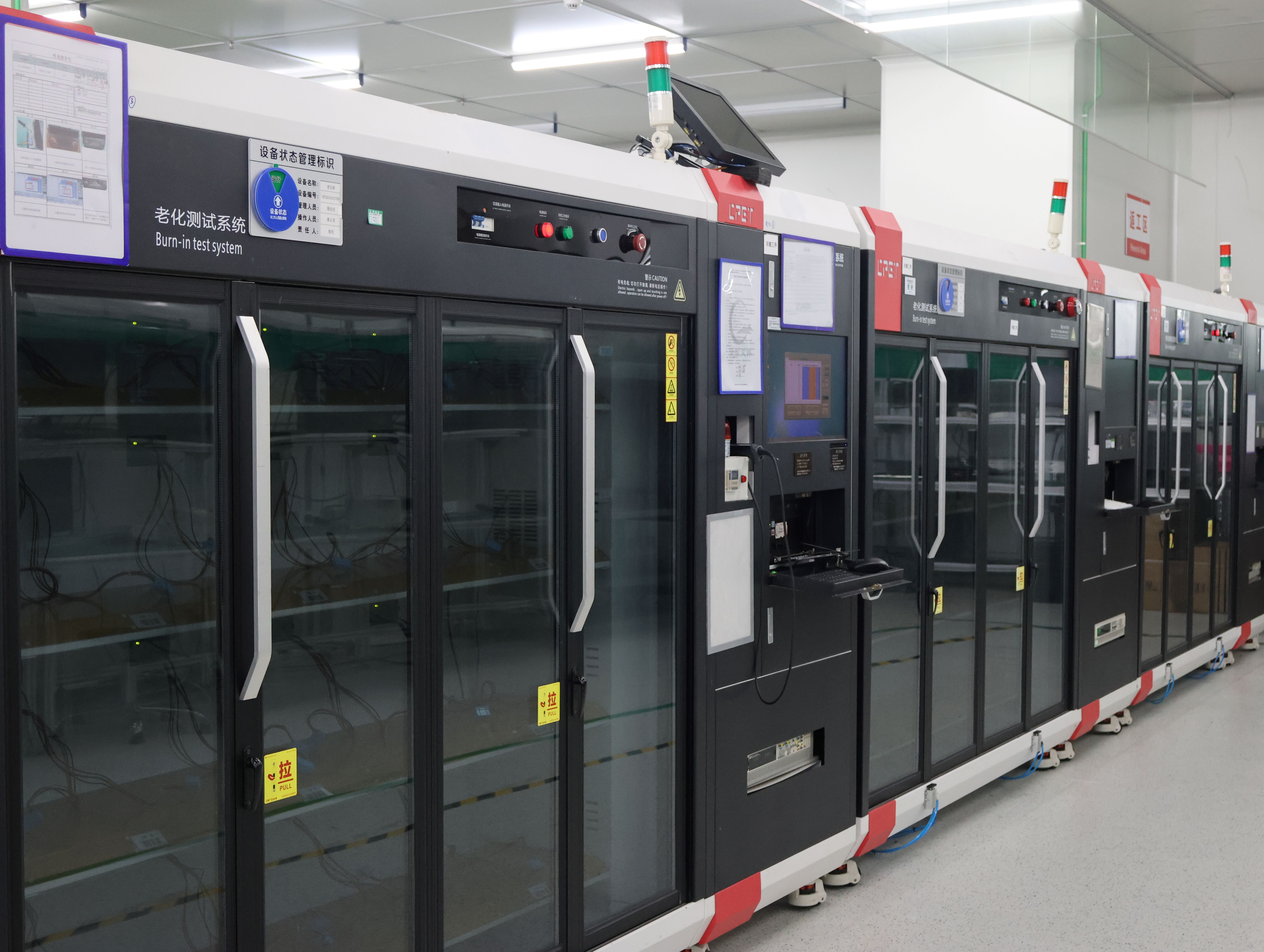
- Define the acceptance test, not just the acceptance basis. Specify that the pre-shipment test report must include serial numbers, the exact configuration tested, communications and alarm verification, and the firmware version loaded.
- Lock the commercial terms per configuration. MOQ for your configuration, 30-day typical lead time, FOB responsibilities, the 30/70 milestone schedule and the shipping date the report relates to.
- Document the long-term package. Spare-module availability and replacement route for the distributed control module, register map revision control, and the process for adding a second site to the same address and alarm scheme.
FAQ
Does the ISO 9001:2015 certificate certify the PDU itself?
No. It is a quality management system certification whose scope covers PDU control board design and development, together with ISO 14000 environmental management. It shows audited process control for the board that carries metering, alarm logic and communications; it does not demonstrate electrical safety of a finished PDU. Request model-level safety evidence separately, referenced against the standard that applies in your market, such as IEC 62368-1:2023 for ICT equipment.
How do I confirm IPv6, SNMP or Modbus support before ordering?
Write each protocol into the RFQ as a pass/fail line, and ask for three things with the quotation: the register map or MIB document, the firmware version it applies to, and a configuration screenshot from that firmware. Raritan, for example, states IPv4/IPv6 management explicitly for its intelligent rack PDUs, which shows the level of documentation to expect. An unconfirmed protocol is a failed requirement, not an assumption to carry into design.
What do the purchasing terms look like for a pilot order?
For the configurations in BOMPDU's current supply content units, the minimum order quantity is 2 units, typical production lead time is 30 days, delivery is FOB, payment is a 30/70 split, and acceptance is based on a pre-shipment test. Some module-level configurations carry higher minimum quantities, so have the quotation state the MOQ that applies to your exact configuration rather than relying on the category figure.
Can I test before committing to a full rollout?
Yes, within those terms. An order at the 2-unit minimum supports a pilot installation on a live rack. Ask for the pre-shipment test report with the shipment, record serial numbers and firmware versions, then run your own check: inject current near the primary alarm threshold and above it, and confirm both alarm levels reach the platform you actually monitor.
What lead time and capacity should a multi-site rollout plan for?
Typical production lead time is 30 days with monthly capacity of 1,000 units. Split the order into batches that match your installation sequence, ask for capacity allocation to be confirmed with the order, and hold a buffer at the second site. Those are planning decisions to agree with the supplier, not assumptions to carry alone.
Which line should I pick for a rack that already reports to a BMS?
If a serial head-end already owns the cabinet and polls RS485 devices, the 1U/1.5U RS485 PDU keeps that control path without adding a second network interface per rack. If the PDU itself should sit on the network, with two-level current alarms and relay action logs delivered to your monitoring platform, the Intelligent 2nd generation platform is the closer match. Confirm protocol and alarm mapping for the exact model before deciding — the current product brochure covering both lines can be downloaded here: BOMPDU product brochure (PDF).
Conclusion: decide on fit and evidence, then commit
The Intelligent 2nd generation PDU and the 1U/1.5U RS485 PDU are not competing answers to the same question. One moves the reporting point onto the network and keeps relay and alarm records inside the strip; the other keeps the control path serial and lets an existing head-end stay in charge. The decision that survives an audit is made on four filters — rack fit measured with the door closed, communications ownership defined in the RFQ, quality evidence read at its stated scope, and commercial terms examined as constraints rather than line items.
Acceptance then closes the loop: a pre-shipment test report tied to specific serial numbers, an alarm test performed with injected current, a register map matched to a firmware version, and a documented route for spare modules when the estate grows. That package is what a distributor can resell with confidence and what an operations team can support for years, which is the real long-term argument in a category where the unit outlives the person who specified it.
Deciding between the two lines for a specific rack? Fix the model, the mounting height and the protocol list first, then request the quotation with MOQ, lead time and acceptance scope stated in writing. Product information is available at www.wuxibom.com, and the brochure covering both lines can be downloaded from the link above.