16
11/2026
Smart PDU Supplier Audits: ISO 9001 Evidence to Acceptance
Audit a Smart PDU supplier step by step: verify ISO 9001:2015 certificate 05126Q03324R001 from NOA, map the control-board scope to products 1558 and 1559, and set acceptance criteria and delivery terms.
Smart PDU Supplier Audits: ISO 9001 Evidence to Acceptance
A Smart Power Distribution Unit supplier audit should end with three finished documents, not one: a verified certificate record, a model-level acceptance table for the exact units on the purchase order, and a delivery assurance clause set matched to the site's operating conditions. ISO 9001 evidence can carry the first document. It cannot, on its own, carry the second or the third.
This guide builds all three around a single certificate. The record under audit states ISO 9001:2015 certification issued by NOA Testing & Certification Group Ltd. under certificate number 05126Q03324R001, against the GB/T 19001-2016/ISO 9001:2015 standard, with a scope that covers design and development for PDU control boards. That is management-system evidence, and it is specific and useful: it speaks to how design and production processes are controlled. It does not speak, by itself, to whether a delivered unit satisfies a given rack's electrical, thermal or network requirements.
The audit below separates three questions that suppliers often answer as one: is the certificate real and current, does its scope reach the product being bought, and can the supplier prove the delivered configuration against written acceptance criteria? Products 1558 (Intelligent 2nd generation PDU) and 1559 (1U/1.5U 485 PDU) are used as worked examples because they represent the two purchase patterns most data-centre and industrial buyers face: a monitored, controllable rack PDU on one side, and a metered RS485 distribution unit on the other. Both are produced by Wuxi Bom Electronic Technology Co., Ltd. (BOMPDU), a Wuxi, Jiangsu-based manufacturer of end-of-row power distribution solutions for data centers, established in 2018, with 70 employees, a 12-engineer R&D team and more than ten invention patents for PDU products.
Why a certificate cannot be used as the acceptance decision
The audit problem is not fraud in most cases. It is scope drift: a document that is genuine, current and correctly issued gets attached to a quotation for something it was never written to cover. Four failure modes account for most of the mismatch seen in smart PDU sourcing.
- Scope-to-model drift. A certificate covering design and development for PDU control boards is cited as evidence for a finished, assembled rack PDU with connectors, breakers, housings and firmware configuration. The control board is the part that carries monitoring, metering and communication, so the coverage is relevant, but the delivery item is larger than the certified activity.
- Management system read as product approval. A quality management system certificate is treated as if it were a product safety approval. These are different documents issued for different purposes, and procurement files usually need both.
- Undated evidence in a dated project. Certificate numbers, scope wording, certified site addresses and validity periods are copied from a PDF that has since been superseded, without a status check with the issuing body.
- No written conversion into acceptance criteria. The audit produces a favourable impression instead of a testable table. When the first batch arrives, nobody can say whether the delivered metering accuracy, channel current limits or alarm behaviour matches what was evaluated.
Project-scenario fit sharpens the problem further. A rack PDU destined for an IDC hall, an outdoor telecom site, an automated production line, an emergency command centre or a roadside traffic cabinet is judged against different operating requirements, and the certificate is identical in all five cases. The certificate is the constant; the acceptance criteria are the variable.
Industry context: why model-level evidence decides smart PDU projects
Smart features are no longer a premium tier that can be waved through on a supplier's reputation. ResearchAndMarkets data reported through BusinessWire put intelligent PDUs at 55% of total PDU market revenue as of 2023, which means the monitored and controllable configuration is now the mainstream purchase rather than the exception (SRC-0001). When the majority of units shipped carry control electronics, the audit question shifts from whether smart functions exist to whether the specific smart functions on the purchase order are evidenced.
Safety compliance follows a separate track from quality management. IEC 62368-1:2023 is described by IEC/IECEE as the mandatory safety standard for ICT and AV equipment including PDUs in most major jurisdictions (SRC-0003). A buyer auditing a supplier should therefore hold two distinct files: the management-system file built around ISO 9001, and the product conformity file built around the safety standard and any market-specific marks the destination country requires. Neither substitutes for the other.
Published manufacturer portfolios also show why portfolio-level numbers cannot be dropped into an acceptance table. Server Technology documents intelligent rack PDU coverage from 16 A to 100 A input current, voltages from -48 VDC to 415 V three-phase, and capacity up to 57.6 kW across its range (SRC-0006). Raritan documents AC inputs from 12 A to 125 A per line, 100 VAC single-phase to 480/277 V three-phase, and capacity up to 86.6 kW across its range (SRC-0007). Those are portfolio envelopes spanning many models and phases, not the rating of any single unit, and they cannot be compared with a single-model specification without matching phase, voltage, current and duty conditions.
The same discipline applies to architecture claims. Raritan states PDU-to-PDU cascading up to 16 devices (SRC-0005), while Vertiv documents daisy-chaining up to 50 devices on a single IP address (SRC-0008). The two figures describe different architectures and counting methods, so a procurement specification that asks only for a device count will collect numbers that cannot be compared. The specification has to name the topology, the maximum downstream units, the IP-address behaviour and the controller requirement.
The three-layer evidence chain to build before a quotation is accepted
Treat the supplier's certificate as layer one of three, and refuse to sign an order while any layer is empty.
Layer 1: certificate identity
Record the document exactly as printed rather than as summarised in a brochure: issuing body NOA Testing & Certification Group Ltd., certificate number 05126Q03324R001, standard designation GB/T 19001-2016/ISO 9001:2015, and the scope statement covering design and development for PDU control boards. Add three items the certificate number alone never tells you: the validity period shown on the document, the certified site or sites, and a written confirmation of current status obtained from the issuing body rather than from the supplier's sales file. The dual GB/T and ISO designation matters for international buyers because it is how the Chinese national adoption of the ISO 9001:2015 standard is written on certificates issued in China; it indicates the management system was assessed against the ISO 9001:2015 requirements, and it remains a management-system statement, not a market-access mark.
Layer 2: scope-to-model mapping
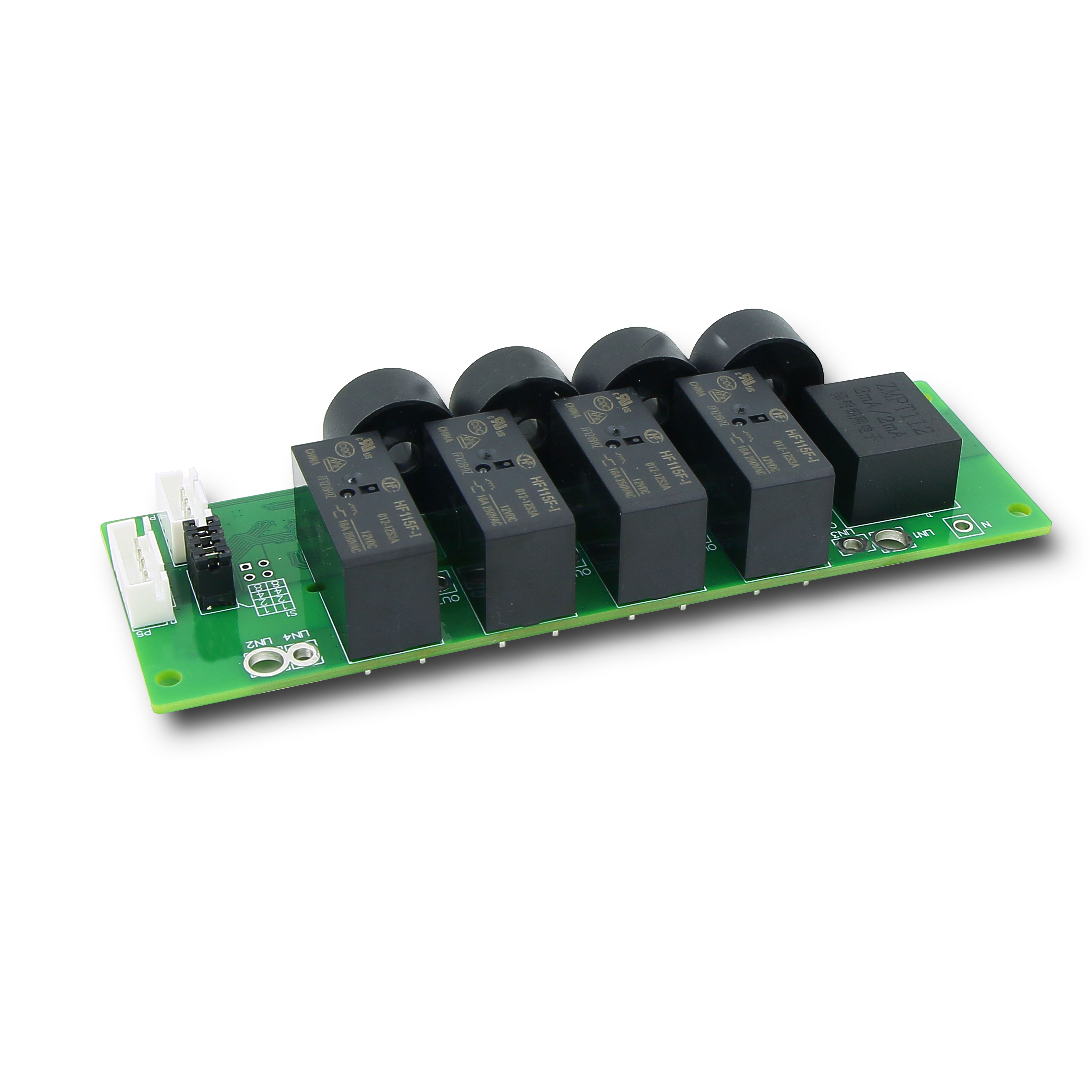
Design and development coverage for PDU control boards is the part of the scope that carries commercial weight for smart products, because the control board is where metering, switching, alarm logic and communication interfaces live. The mapping exercise asks one question per line item: which certified activity produced the thing I am buying? For product 1558, the control board carries input and output parameter collection plus separate monitoring and control per channel. For product 1559, it carries RS485 Modbus communication, the segment-code display and settable alarm parameters. Both depend on the design and development activity named in the scope. Neither is fully described by it, which is why layer three exists.
Layer 3: process and batch evidence
Ask how the certified process shows up in production. BOMPDU states 100% test as its quality control method, a monthly capacity of 1,000 units and a 30-day lead time, and describes R&D pilot-scale as well as mass-production capability, supported by in-house equipment that includes a reflow furnace, a burn-in test system, a testing station and a high-low temperature test chamber. Those are company-stated process facts. For audit purposes they become questions with document answers: what is the test step's pass criterion, what record travels with the batch, and which units are pulled for burn-in or temperature conditioning before packing.
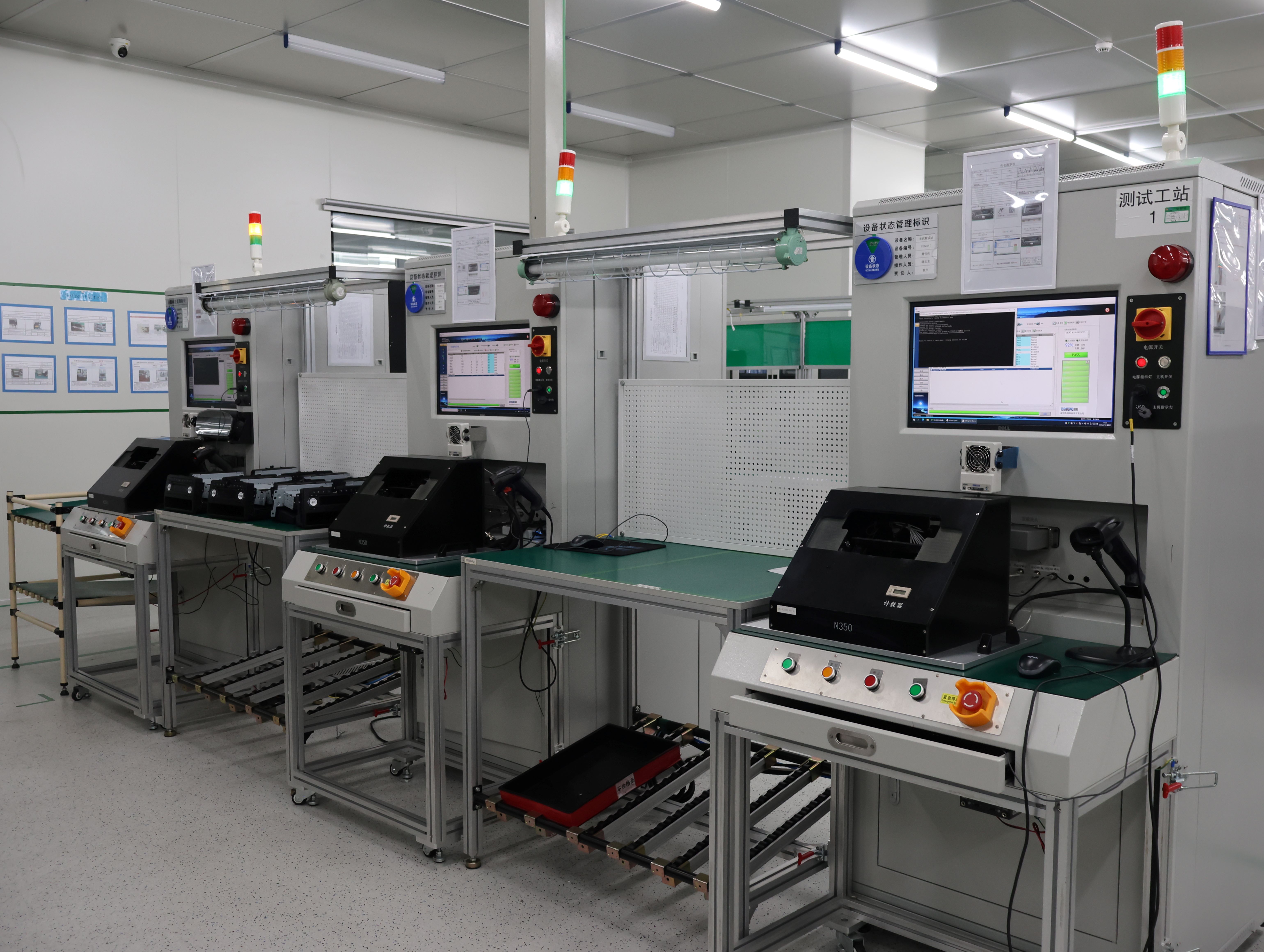
A testing station inside the BOMPDU production facility, where assembled PDU control and metering functions are verified before packing.
Seven audit steps, and the artifact each one produces
Run the audit as a short sequence with a named output at each step. The outputs are what get attached to the purchase order; the conversation is not.
- Transcribe the certificate exactly. Copy issuer, number, standard, scope wording, validity period and site address from the document itself, not from a catalogue. Artifact: a one-page certificate transcript signed by the auditor.
- Check status with the issuer. Request written confirmation that certificate 05126Q03324R001 is current and that the named scope is unchanged. Ask separately about the issuing body's own accreditation if your compliance team requires it, and record the answer as given rather than assumed. Artifact: issuer status confirmation filed with the transcript.
- Read the scope literally. Write down what the certificate covers and what it does not. Design and development for PDU control boards is design activity; it is not a statement that every finished model has been type-tested. Artifact: a scope statement in the supplier's own words with the auditor's boundary note.
- Map scope to the exact model. For each ordered model, list the functions that depend on the certified activity. On product 1558 this includes per-channel monitoring and control and the input and output parameter collection. On product 1559 it includes RS485 Modbus communication and the settable over-voltage, under-voltage and over-current alarms. Artifact: a model-to-scope map, one row per ordered model.
- Separate quality evidence from product conformity evidence. Keep the ISO 9001 file and the safety-conformity file apart, and list which jurisdiction-specific requirements the destination market imposes. IEC 62368-1:2023 provides the ICT and AV safety reference in most major jurisdictions (SRC-0003), and any additional national mark is a separate line. Artifact: a two-column conformity checklist.
- Replace claims with model specifications. Convert the datasheet into the acceptance table described in the next section, and mark every cell the supplier has not documented. Artifact: the acceptance table annexed to the order.
- Convert the table into purchasing terms and delivery assurance. Attach the acceptance table, the batch record requirement, the lead-time commitment and the after-sales channel to the contract. Artifact: a signed contract annex.
What ISO 9001 evidence supports, and what it leaves open
Buyers get into trouble when one evidence type is asked to do another type's job. The table below is the boundary map used in this audit; every row is a question to ask, not a verdict to assume.
| Evidence type | What it can establish | What it does not establish |
|---|---|---|
| ISO 9001:2015 certificate 05126Q03324R001 (NOA Testing & Certification Group Ltd.), scope covering design and development for PDU control boards | That a management system covering the stated scope at the certified site has been assessed against GB/T 19001-2016/ISO 9001:2015 | Product-level electrical safety, EMC performance, firmware behaviour or market access; coverage of activities or sites outside the stated scope |
| Product safety conformity record for the exact model (for example against IEC 62368-1:2023) | That the delivered model has been assessed against the cited safety standard, when a valid report naming that model exists | Does not follow from the quality certificate; must be requested separately and matched by model number |
| Model specification record | Stated ratings, metering accuracy classes, channel current limits and interface type for a defined model | Batch-to-batch consistency, calibration drift over service life, or performance outside the stated conditions |
| Factory test regime, stated as 100% test | That every unit passes a defined production test step as described by the supplier | Independent type testing, third-party verification, or the rigour of the pass criterion unless it is documented |
| Company-reported reference projects | A documented deployment history as described by the supplier | Independent verification of outcomes; results in other sites, loads or climates |
Boundary map for a smart PDU supplier audit. Each row should be closed with a document, not a verbal assurance.
Translating the audit into acceptance criteria for products 1558 and 1559
Acceptance criteria only work when they are specific enough to fail. The two models differ in what they measure, how they communicate and how much the buyer must confirm in writing before shipment.
Product 1558, the Intelligent 2nd generation PDU, is specified for a rated input of AC110-250 V at 50/60 Hz with single-phase or three-phase input, a maximum load current of 0-63 A, and input parameter collection covering current, voltage, energy and power including active, reactive and apparent power and power factor. Input voltage accuracy is stated as 0.5% over 85-250 V, and input current accuracy as level 1 between 0.65 A and 3.1 A and level 0.5 between 3.1 A and 63 A. On the output side, the auxiliary module provides 4 outputs and the main module supports up to 8 auxiliary modules, with a rated output of AC220 V at 50/60 Hz, a single-channel maximum of 16 A, a single-board maximum of 32 A, output voltage accuracy of 1% over 85-250 V, and output current monitoring from 0.2 A to 16 A at 2% accuracy between 0.2 A and 0.8 A and 1% between 0.8 A and 16 A. The stated output function is separate monitoring and control.
Product 1559, the 1U/1.5U 485 PDU, is specified for a rated input of 100-240 V with an input range of 90-264 V, voltage, current, power and energy measurement at level 1 accuracy (1% plus or minus 0.1) within the rated input voltage range, and display resolution of 0.01 V, 0.01 A, 0.01 kW and 0.01 kWh. Current input uses an external transformer. Communication is an RS485 interface using the Modbus protocol, the display is a segment-code LCD with white background and black text, and the caution function covers over-voltage, under-voltage and over-current alarms with settable parameters.
| Acceptance item | Product 1558 (Intelligent 2nd generation PDU) | Product 1559 (1U/1.5U 485 PDU) |
|---|---|---|
| Electrical input | Rated AC110-250 V, 50/60 Hz; single-phase or three-phase input; maximum load current 0-63 A | Rated 100-240 V; operating input range 90-264 V |
| Metering accuracy | Input voltage 0.5% (85-250 V); input current level 1 at 0.65-3.1 A, level 0.5 at 3.1-63 A | Level 1 (1% plus or minus 0.1) for voltage, current, power and energy within the rated input range |
| Channel capacity | Main module supports up to 8 auxiliary modules; auxiliary module provides 4 outputs; single channel max 16 A; single board max 32 A | Outlet count and configuration are not stated in the specification record; write the required count into the order |
| Output control | Separate monitoring and control per channel; output voltage accuracy 1% (85-250 V) | Monitoring and alarm functions stated; confirm whether outlet-level switching is required for the project |
| Alarm behaviour | Confirm the over-current protection and alarm setpoint behaviour of the ordered configuration in writing | Over-voltage, under-voltage and over-current alarms, parameters settable; record agreed setpoints |
| Communications | The specification record does not enumerate network protocols; require the supported protocol list for the ordered model in writing | RS485 interface with Modbus protocol; confirm register map and baud settings |
| Display | Not stated in the specification record; confirm at quotation | Segment-code LCD, white background with black text; 0.01 V, 0.01 A, 0.01 kW, 0.01 kWh resolution |
Acceptance draft built from the supplied specification records. Blank or unstated cells are deliberately left as buyer actions rather than filled by assumption.
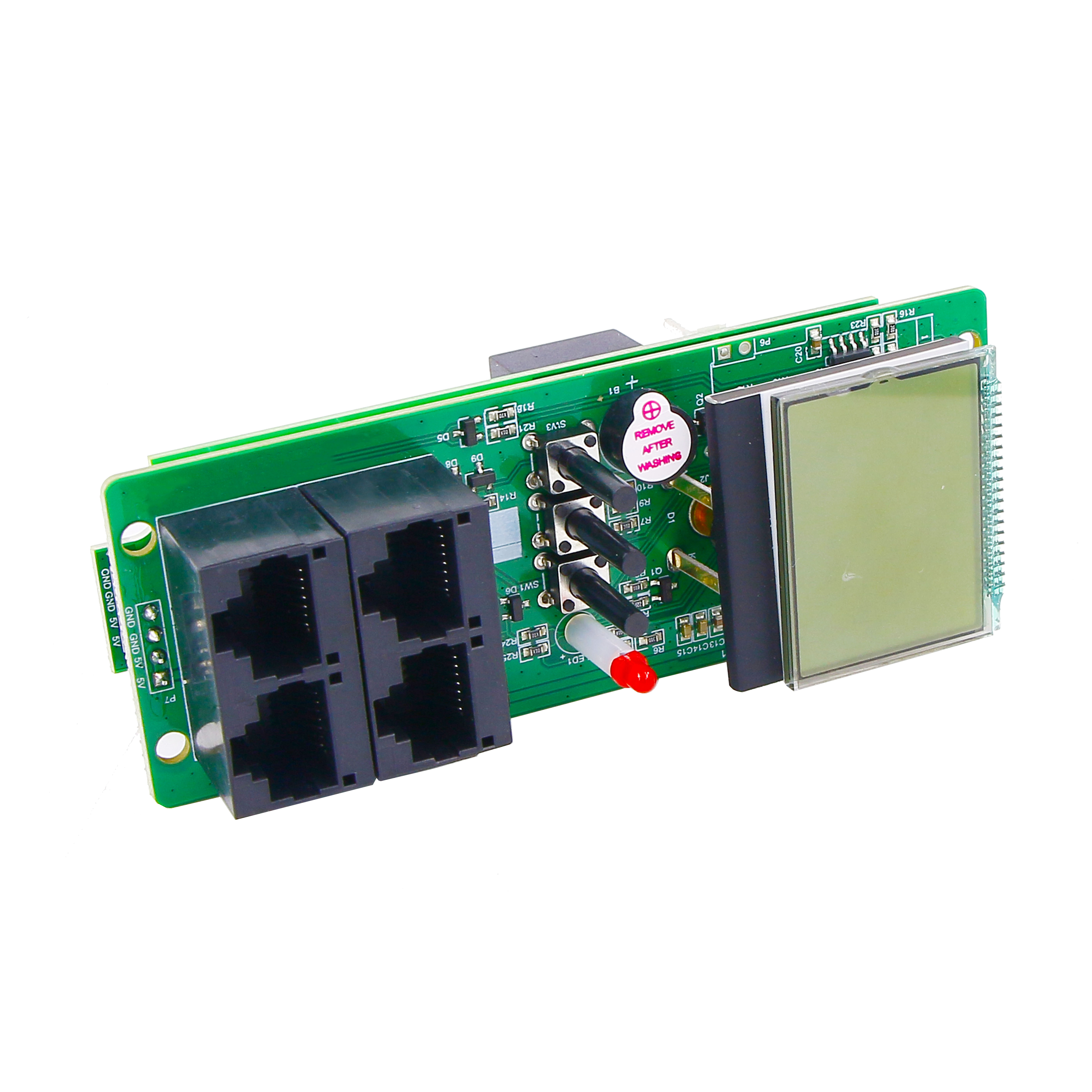
The 1U/1.5U 485 PDU (product 1559): RS485 Modbus communication, segment-code LCD and settable over-voltage, under-voltage and over-current alarms.
Boundary worth writing into the file: the certificate supports the design and development control of PDU control boards. It does not certify the electrical safety of a finished model, does not extend to sites or activities outside its stated scope, and does not remove the need for model-level test reports demanded by the destination market.
Matching the audit to the project type
Once the acceptance table exists, the last adaptation is scenario fit. The same supplier evidence is interrogated differently in each deployment pattern, and the differences show up as extra rows in the annex.
Data centre and IDC construction
This scenario assumes stable server power supply, 24/7 operation, and supporting equipment including servers, switches, UPS and an environment monitoring unit; its function is remote power control and energy consumption monitoring, with remote reset referenced in the scenario requirement. Product 1558 is the model linked to this scenario in the supplied material. Add these rows to the annex: per-channel current limits against the actual rack load, the metering accuracy class against your reporting requirement, and a written confirmation of the protocol set the ordered unit supports. Treat the scenario's reference to SNMP-based integration as a project requirement to be confirmed model by model, not as a specification inherited by default.
Telecom base station support
Outdoor base station power is characterised by 24/7 continuous operation, supporting equipment such as BBU, RRU and battery pack, and special requirements for wide temperature range and lightning protection; the function stated for the product in this scenario is remote reboot with voltage and current monitoring, and product 1558 is again the linked model. Because a wide temperature range and lightning protection are scenario requirements rather than stated model ratings, the annex should require the operating temperature range and surge protection arrangement of the ordered configuration in writing before approval. Do not accept the scenario description as a product datasheet.
Industrial automation and manufacturing lines
For automated production line upgrades, the stated function is power control via RS485 with status collection, against supporting equipment that includes PLC, touch screen and sensors, with Modbus-RTU and strong anti-interference as special requirements; product 1558 is the linked model. Here the acceptance rows shift toward communication stability: register mapping, polling behaviour, recovery after communication loss, and the alarm path that a PLC can consume. Ask for the register list and a sample of the commissioning procedure.
Government and emergency command centres
Command system construction adds dual power input, high reliability and alarm notification to a 24/7 operating profile, with servers, KVM and a large display system as supporting equipment and hierarchical power management plus fault alarm as the stated function; product 1558 is the linked model. Dual input and notification behaviour are configuration items. Write them as a configuration clause naming the exact input arrangement and the notification channel, and require the factory test record that demonstrates it.
Transportation and roadside traffic systems
Road traffic monitoring projects run 24/7 with camera, optical transceiver and industrial PC loads, and state surge protection and rail-mount installation as special requirements, with centralized power control and status feedback as the function; product 1559 is the linked model in the supplied material. This is the scenario where the format question must be settled explicitly: the 1U/1.5U form factor is a rack format, so if the cabinet demands rail mounting, the mechanical arrangement has to be agreed in writing rather than inferred from a scenario description. Surge protection is likewise an item to specify, not to assume.
Delivery assurance questions that close the audit
Certification evidence answers process questions; delivery assurance answers schedule and continuity questions. BOMPDU's stated commercial parameters are a minimum order quantity of 2 units, a 30-day lead time, a monthly capacity of 1,000 units, 100% test, remote after-sales support, and OEM/ODM production with customization of metering and control, outlet number, and single-phase or three-phase input. The capability record lists EU and Middle East among export markets. All of these are supplier-stated figures and should be converted into contract commitments before the first release.
- Capacity against the rollout curve. If the project releases units in phases, map each phase against the stated 1,000-unit monthly capacity and the 30-day lead time, and agree what happens if two phases overlap.
- Batch records. Agree the content of the test record that ships with each batch, and require it to reference the acceptance table rows rather than a generic pass statement.
- Configuration control. For OEM/ODM orders, freeze the metering and control functions, outlet count and input phase in a signed configuration sheet, and require written approval before any substitution.
- Support path. Confirm the remote support channel, response route and the controller or module replacement process, since the control board is the part that carries the monitoring functions under audit.
- Reference verification. Ask for the deployment facts behind any reference project, such as the airport data centre installation described as 800 units in service for 3 years with real-time monitoring of current, voltage, energy and power per socket, or the server manufacturer installation described as 2,000 units over 2 years with remote on/off control and unmanned operation. These are company-reported cases; use them to test whether the supplier can answer follow-up questions on configuration and load, not as independent proof of performance.
Frequently asked questions on Smart PDU supplier audits
Does ISO 9001:2015 certification confirm that a Smart PDU is electrically safe?
No. ISO 9001 is a quality management system standard, and certificate 05126Q03324R001 with its design and development scope for PDU control boards speaks to process control. Electrical safety for ICT and AV equipment including PDUs is addressed by product standards; IEC 62368-1:2023 is described by IEC/IECEE as the mandatory safety standard for such equipment in most major jurisdictions (SRC-0003). Ask for the product-level conformity record that names the exact model, and keep it in a separate file from the quality certificate.
Which certificate details should be copied into the audit file?
Copy the issuing body NOA Testing & Certification Group Ltd., the certificate number 05126Q03324R001, the standard designation GB/T 19001-2016/ISO 9001:2015 and the scope wording covering design and development for PDU control boards, exactly as printed. Then add three items the number alone does not provide: the validity period shown on the document, the certified site or sites, and a written status confirmation obtained from the issuing body.
Does the certificate carry the product into export markets?
It does not function as a market-access mark. The dual GB/T 19001-2016 and ISO 9001:2015 designation reflects the Chinese national adoption of the ISO 9001:2015 standard and indicates the management system was assessed against those requirements; it remains a management-system statement covering the stated scope and site. Destination-market conformity, including safety requirements such as IEC 62368-1:2023, is a separate qualification that must be evidenced per model and per market.
How do products 1558 and 1559 connect to a control-board design scope?
Both depend on the control board for the functions buyers actually evaluate. Product 1558 collects input and output parameters, states input voltage accuracy of 0.5% over 85-250 V and input current accuracy of level 1 at 0.65-3.1 A and level 0.5 at 3.1-63 A, and provides separate monitoring and control per channel with a single-channel maximum of 16 A. Product 1559 provides RS485 Modbus communication, level 1 metering accuracy of 1% plus or minus 0.1 within its rated input range, and settable over-voltage, under-voltage and over-current alarms. The scope covers the design and development activity behind those boards; the delivered ratings still need model-level confirmation.
What should the acceptance table contain for these two models?
At minimum: electrical input and phase arrangement, metering accuracy class and range, channel current limits and outlet count, output control behaviour, alarm setpoints, communication interface and protocol list, and display resolution. Leave unstated items blank and convert them into written supplier confirmations rather than filling them by assumption. The 1558 specification record, for example, does not enumerate network protocols, and the 1559 record does not state outlet count, so both become purchase-order clauses.
Do certification checks change the commercial terms?
They should, because they add delivery obligations. BOMPDU states a minimum order quantity of 2 units, a 30-day lead time, a monthly capacity of 1,000 units, 100% test, and OEM/ODM customization of metering and control, outlet number and single or three-phase input. Convert each into a contract clause: capacity against phased releases, batch record content, a frozen configuration sheet, and an approval step before any component or configuration change.
How should a sample be accepted, and what closes the audit?
Test the sample against the same table used for the contract: check the certificate transcript against the document, verify metering against the stated accuracy class, exercise per-channel control on product 1558, and confirm the Modbus register map and alarm setpoints on product 1559. Then close the audit with delivery assurance questions on lead time, batch records, support routing and replacement of the controller. The BOMPDU product brochure is available for download at the company brochure page, and configuration or sample questions can be directed to the manufacturer through wuxibom.com.
Conclusion: the certificate starts the audit, the annex ends it
A Smart Power Distribution Unit supplier audit stands or falls on whether the evidence is asked to prove the right thing. The ISO 9001:2015 certificate issued by NOA Testing & Certification Group Ltd. under number 05126Q03324R001, against GB/T 19001-2016/ISO 9001:2015 with a scope covering design and development for PDU control boards, is strong evidence about process control at a defined scope and site. It is not a product approval, it does not travel as a market-access mark, and it does not describe the metering accuracy, channel limits or protocol set of the unit that arrives at the dock.
The audit closes when three documents exist together: a certificate transcript with a status confirmation, a model-level acceptance table with the unstated cells converted into written supplier commitments for products 1558 and 1559, and a delivery assurance annex tied to the project's operating scenario. Buyers who build all three can compare suppliers on the same basis, and can tell the difference between a supplier with a genuine system behind the certificate and one with a PDF attached to a quotation.
Next step for your project file
Request the certificate copy, the model specification record and the batch test description for the exact configuration you intend to order, then test them against the acceptance table in this guide. BOMPDU accepts OEM/ODM configurations from a minimum order quantity of 2 units with a stated 30-day lead time, and the current product brochure can be downloaded from this catalogue link. Company details and contact routes are published at www.wuxibom.com.