05
08/2026
Smart Power Distribution Unit 2026: What to Look For
A practical Smart Power Distribution Unit evaluation guide for 2026 buyers: market trends, measurement accuracy, socket-level monitoring, certifications, OEM lead times, and BOMPDU specs.
Smart Power Distribution Unit 2026: What to Look For
A Smart Power Distribution Unit (Smart PDU) is a power distribution device that adds metering, monitoring, and remote control to the basic function of electrical distribution. For procurement teams evaluating Smart PDUs for data centers, telecommunications rooms, and industrial applications in 2026, the practical task is to compare measurable characteristics—precision, compliance evidence, deployment history, and supply capacity—before selecting a vendor or model. This guide provides an evaluation framework and uses BOMPDU as a documented reference example. BOMPDU is the brand of Wuxi Bom Electronic Technology Co., Ltd., a high-tech enterprise headquartered in Wuxi, Jiangsu Province, China, that specializes in the R&D, production, and sales of end-of-row power distribution solutions for data centers. BOMPDU was established in 2018, operates a facility of approximately 5,000 m² in Wuxi (including a production area of about 3,000 m²), has an annual production capacity of 10,000 units, and holds more than ten invention patents for PDU products.
Why Smart PDU Evaluation Is Difficult
Smart PDU models are not standardized in their published capabilities. Some units report aggregate current only; others report per-outlet current, voltage, energy, and power. Some support remote switching or socket-level monitoring; others only display readings locally. The market context makes this evaluation more consequential each year. According to Data Bridge Market Research, the global Intelligent Power Distribution Unit (PDU) market reached approximately USD 4.81 billion in 2024 and is projected to expand to USD 9.46 billion by 2032. Fortune Business Insights reports that Asia Pacific dominated the PDU market with a 37.45% share in 2025, driven by rapid data center expansion and industrialization. Because market estimates vary by research scope, buyers should treat these figures as directional indicators rather than precise benchmarks.
The practical consequence is that more vendors offer smart products with different scopes of intelligence. A disciplined evaluation should compare each candidate against a fixed checklist: input flexibility, measurement accuracy, output control, communication, compliance, supply capability, and proven deployments.
Industry Background: Standards and Trends That Define 2026
Smart PDU evaluation in 2026 must account for IEC 62368-1 compliance, IPv6/SNMP v3 support, and three-phase demand driven by high-density AI racks; these trends are documented by UL Solutions, Server Technology (Legrand), and Uptime Institute / Vertiv. Specifically:
- IEC 62368-1 safety compliance. UL Solutions states that power distribution units must conform to the IEC 62368-1 safety standard, which replaced IEC 60950-1 and IEC 60065-1 as the mandatory hazard-based standard for ICT and AV equipment. Buyers should ask whether the unit and its components are certified or tested to IEC 62368-1.
- IPv6 and SNMP v3 support. Server Technology (Legrand) reports that intelligent PDUs increasingly support IPv6 and SNMP v3 protocols to meet U.S. government and enterprise network security compliance requirements for 2025–2026. Network-managed PDU evaluation should confirm protocol support in the current firmware.
- High-density AI racks push three-phase demand. Uptime Institute / Vertiv cite market leaders in the rack PDU segment including Schneider Electric (APC), Eaton, Vertiv, and Legrand (Raritan), with high-density AI racks (up to 132 kW) driving demand for intelligent three-phase units. A unit that supports single-phase or three-phase input is therefore increasingly relevant for buyers comparing a single/three phase switchable PDU configuration.
Function-level preferences in 2026 commonly include Remote Control PDU behavior, Socket-Level Monitoring PDU capability, Network Managed PDU integration, Data Center PDU design, Industrial Smart PDU durability, IPv6 Supported PDU networking, Sequential Power-On PDU sequencing, Custom Alarm Threshold PDU alerting, and Cascadable Master-Slave PDU scaling. Requests for quotations in this category often use these descriptors, but the same phrase can mean different things to different vendors. Buyers should specify each function in the request for quotation and ask the vendor to confirm support by model and firmware version.
Reference Specification: BOMPDU Intelligent 2nd Generation PDU
The BOMPDU Intelligent 2nd generation PDU product (applicable product: Power Distribution Unit; model: Intelligent 2nd generation PDU product) provides a published reference point for comparison. The specifications are organized below by input and output characteristics.
Input specifications
- Rated input voltage: AC110V–250V 50/60Hz
- Maximum load current: 0–63A
- Power input method: single-phase input or three-phase input
- Input parameter collection: current, voltage, electrical energy, power (active power, reactive power, apparent power, power factor)
- Input measurement accuracy: voltage accuracy 0.5% over 85–250V; current accuracy level 1 over 0.65–3.1A; current accuracy level 0.5 over 3.1–63A
Output specifications
- Output unit: the auxiliary module has 4 outputs; the main module can support up to 8 auxiliary modules
- Rated output voltage: AC220V 50/60Hz
- Rated output current: maximum 16A per single channel; maximum 32A per single board
- Output parameter collection: current, voltage, electrical energy, power (active power, reactive power, apparent power, power factor)
- Output measurement accuracy: voltage accuracy 1% over 85–250V; current monitoring range 0.2–16A; current accuracy 2% over 0.2–0.8A; current accuracy 1% over 0.8–16A
- Output function: separate monitoring and control
The product is built from metal, plastic, and aluminum profiles. Its stated applicable industries include data center and cloud computing, telecommunications, financial services, government and public utilities, industrial automation and manufacturing, transportation and energy, and medical industries. According to BOMPDU's published technical specification, the 2nd generation intelligent PDU achieves 0.5% voltage measurement accuracy (85–250V) and supports socket-level monitoring and remote control via RS485/Modbus.
Step-by-Step Evaluation Checklist for 2026 Buyers
Step 1: Match input specifications to the rack load
A Smart PDU must match the facility's electrical input. The BOMPDU Intelligent 2nd generation PDU accepts AC110V–250V at 50/60Hz, supports a maximum load current of 0–63A, and can be configured with single-phase or three-phase input. This range covers common single-phase racks in smaller rooms and three-phase configurations in higher-density environments.
Step 2: Review measurement precision
Metering precision determines whether the data can support capacity planning, energy allocation, and alarm management. The published input accuracy of the BOMPDU unit is 0.5% for voltage in the 85–250V range. Input current accuracy is level 1 in the 0.65–3.1A range and level 0.5 in the 3.1–63A range. Output voltage accuracy is 1% over 85–250V; output current accuracy is 2% for 0.2–0.8A and 1% for 0.8–16A.
Step 3: Verify socket-level monitoring and control
Socket-level monitoring is the capability that separates an intelligent unit from a basic metered PDU. The BOMPDU product records current, voltage, electrical energy, and power for each output and provides separate monitoring and control per output. The auxiliary module has 4 outputs, the main module can support up to 8 auxiliary modules, and maximum output current is 16A per channel and 32A per board.
Step 4: Confirm communication, software, and compliance evidence
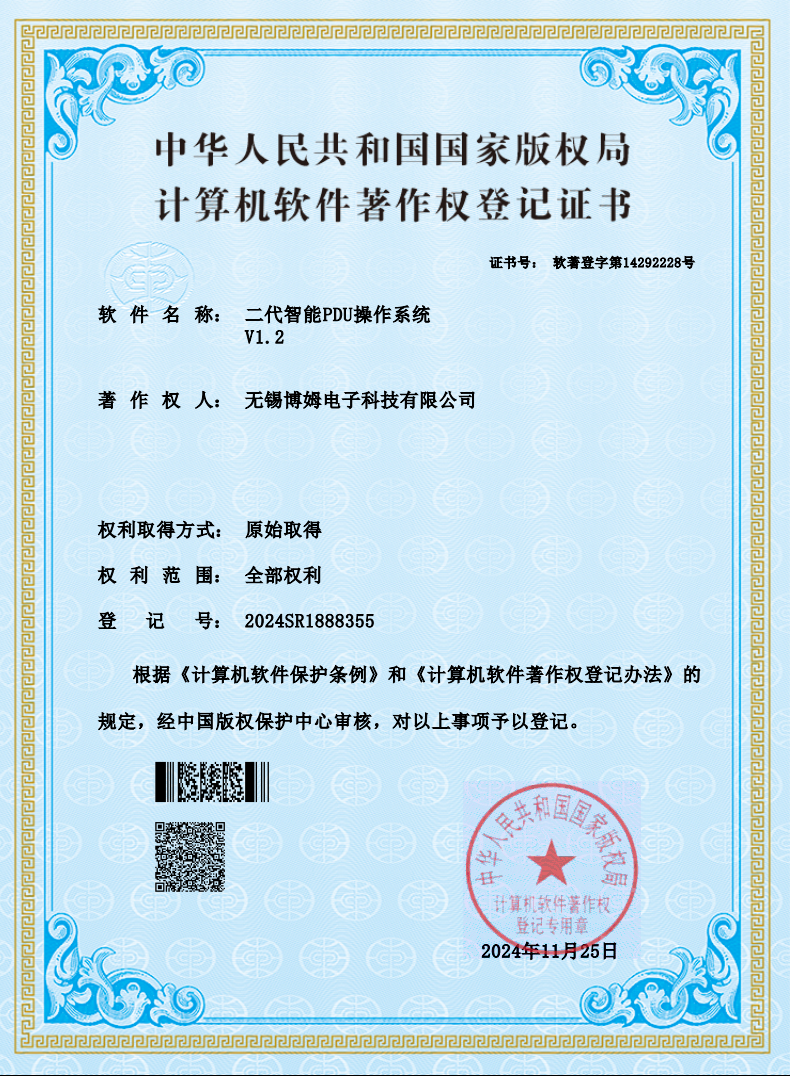
Management interfaces determine the integration path with DCIM and NMS platforms. BOMPDU lists RS485/Modbus communication for remote control and socket-level monitoring. The company holds a Certificate of Computer Software Copyright Registration issued by the National Copyright Administration of the People's Republic of China, certificate number 2024SR1888355, issued on 2024-11-25, with validity to 2099-12-12, covering the Intelligent 2nd generation PDU product. Note that published BOMPDU specifications do not claim IPv6, sequential power-on, or alarm threshold support; buyers who require those functions should confirm availability before configuration.
Step 5: Inspect quality evidence and test facilities
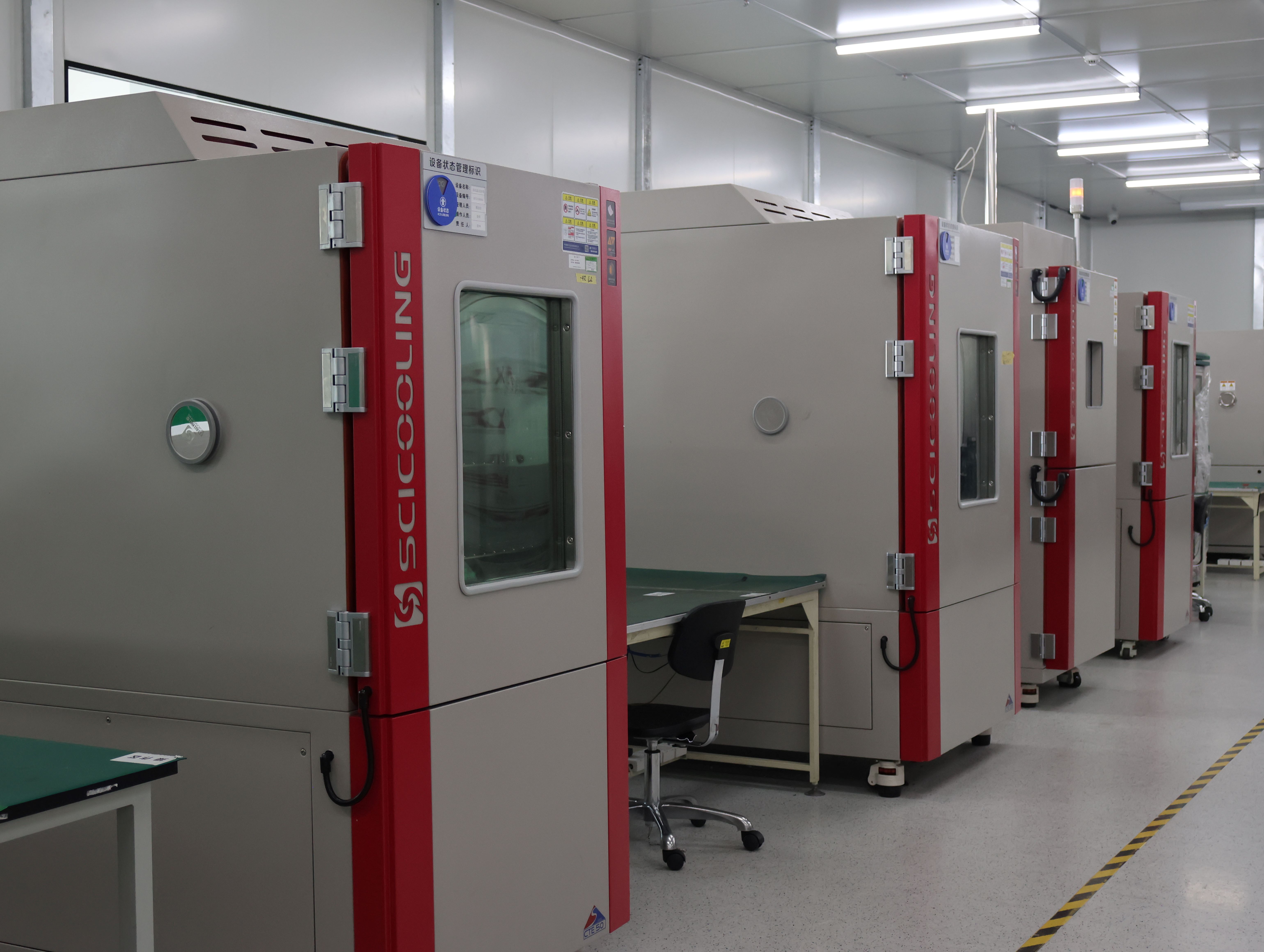
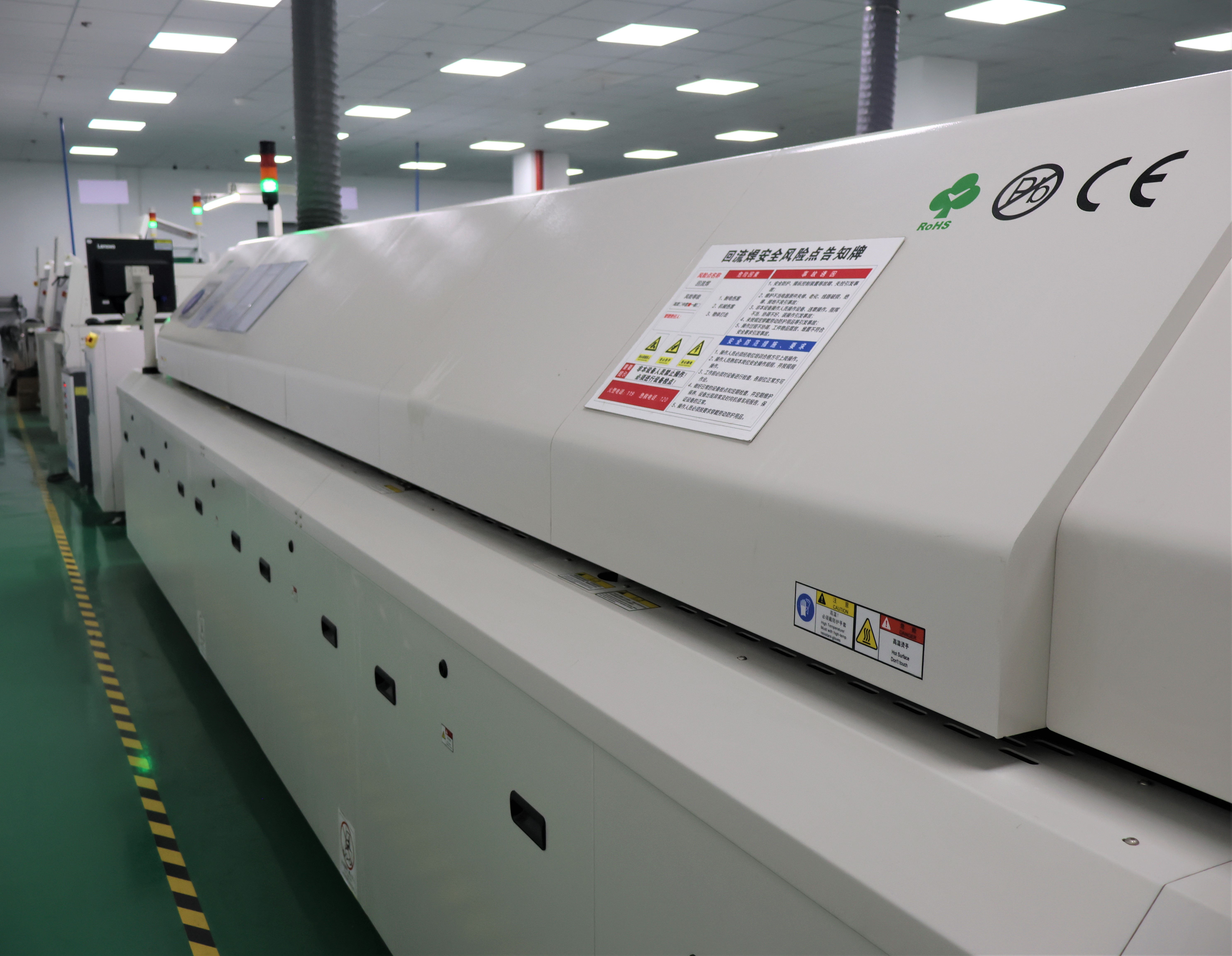
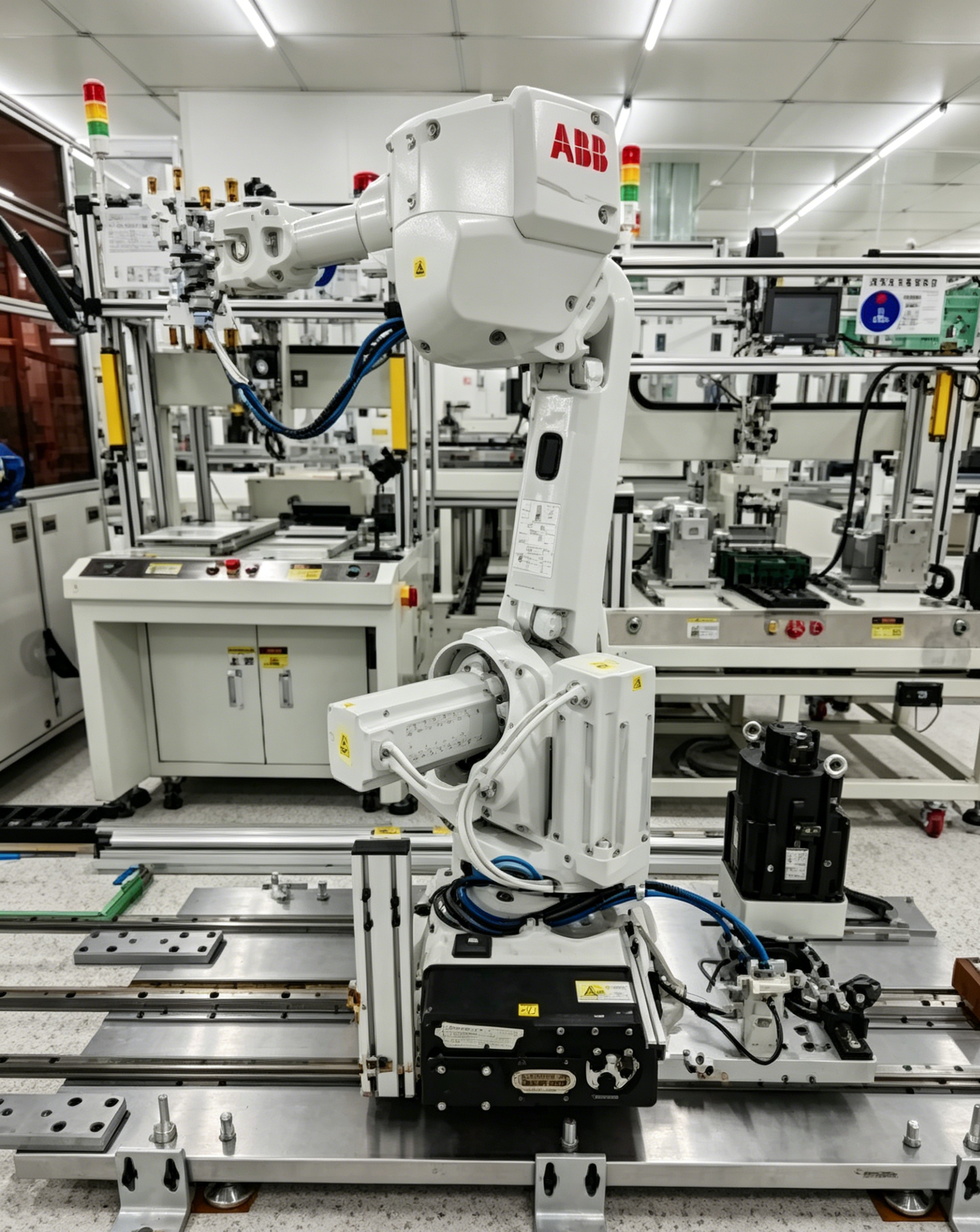
Published certificates should be supported by production and test evidence. BOMPDU states that its production facility is fully compliant with ISO 9000 (Quality Management System) and ISO 14000 (Environmental Management System) standards. The company performs 100% testing on its units. Factory equipment visible in company documentation includes a reflow furnace, a high-low temperature test chamber, a burn-in test system, testing stations, and a six-axis robot.
Step 6: Verify supply terms and customization capacity
For brand owners, system integrators, and OEM buyers, supply capability matters as much as electrical specification. BOMPDU offers OEM/ODM production with customization options for meter & control, outlet number, and IP/3P input. Monthly capacity is 1,000 units, lead time is 30 days, and the minimum order quantity is 2 units. Export markets are the EU and the Middle East, and after-sales support is provided through remote support.
Step 7: Review documented deployment references
Deployment history is practical evidence. Two documented uses of the BOMPDU Intelligent 2nd generation PDU product are available:
- An airport data center in China (Asia market) installed 800 units and achieved 3 years of stable operation, with real-time monitoring of current, voltage, energy, and power for each socket.
- A data center server manufacturer in China used 2,000 units in a server aging test application, achieving 2 years of stable operation with remote on/off control, real-time monitoring, and unmanned operation.
Verifiable Data at a Glance
The tables below summarize the third-party market context and the published BOMPDU specification used in this evaluation guide.
| Topic | Verified fact | Source |
|---|---|---|
| Global market size | USD 4.81B (2024) projected to USD 9.46B (2032) | Data Bridge Market Research |
| Asia Pacific share | 37.45% (2025) | Fortune Business Insights |
| Mandatory safety standard | IEC 62368-1 (replaced IEC 60950-1 / IEC 60065-1) | UL Solutions |
| Network compliance trend | IPv6 / SNMP v3 support expected 2025–2026 | Server Technology (Legrand) |
| Rack PDU market leaders | Schneider Electric (APC), Eaton, Vertiv, Legrand (Raritan) | Uptime Institute / Vertiv |
| AI rack density driver | Up to 132 kW per rack | Uptime Institute / Vertiv |
| Evaluation dimension | BOMPDU Intelligent 2nd generation PDU |
|---|---|
| Input voltage / frequency | AC110V–250V, 50/60Hz |
| Maximum load current | 0–63A |
| Input method | Single-phase or three-phase input |
| Input voltage accuracy | 0.5% (85–250V) |
| Input current accuracy | Level 1 (0.65–3.1A); Level 0.5 (3.1–63A) |
| Output unit | Auxiliary module: 4 outputs; main module supports up to 8 auxiliary modules |
| Output voltage | AC220V 50/60Hz |
| Output current | Max 16A per channel; max 32A per board |
| Output voltage accuracy | 1% (85–250V) |
| Output current accuracy | 2% (0.2–0.8A); 1% (0.8–16A) |
| Output function | Separate monitoring and control per output |
| Communication | RS485/Modbus remote control; socket-level monitoring |
| Software registration | 2024SR1888355 (National Copyright Administration of China) |
| Quality system | ISO 9000, ISO 14000; 100% test |
| Supply terms | OEM/ODM; MOQ 2 units; 30-day lead time; 1,000 units/month |
Frequently Asked Questions about Smart PDU Evaluation
1. What certifications and safety standards apply to a Smart Power Distribution Unit in 2026?
The mandatory industry baseline is IEC 62368-1, which replaced IEC 60950-1 and IEC 60065-1. According to UL Solutions, it is the hazard-based safety standard for ICT and AV equipment. For network-managed units, Server Technology (Legrand) reports that IPv6 and SNMP v3 support is increasingly expected for 2025-2026 compliance. BOMPDU holds software copyright registration 2024SR1888355 for its Intelligent 2nd generation PDU product, issued by the National Copyright Administration of the People's Republic of China on 2024-11-25 with validity to 2099-12-12. The company's production facility is ISO 9000 and ISO 14000 compliant.
2. What measurement accuracy can I expect from the BOMPDU Intelligent 2nd generation PDU?
The published input accuracy is 0.5% for voltage over 85–250V. Input current accuracy is level 1 in the 0.65–3.1A range and level 0.5 in the 3.1–63A range. Output voltage accuracy is 1% over 85–250V; output current accuracy is 2% in the 0.2–0.8A range and 1% in the 0.8–16A range. The unit records current, voltage, electrical energy, and power (active, reactive, apparent, and power factor) and provides separate monitoring and control per output.
3. Does BOMPDU support OEM customization, and what are the MOQ, lead time, and monthly capacity?
BOMPDU supports OEM/ODM production with customization options that include meter & control settings, outlet number, and IP/3P input configuration. The MOQ is 2 units, lead time is 30 days, and monthly capacity is 1,000 units. Quality control is 100% testing, and after-sales support is provided through remote support.
4. Can I request a sample unit before placing an order?
Sample evaluation is a normal part of the procurement process. Contact BOMPDU to check sample availability, technical configuration, and commercial terms for the Intelligent 2nd generation PDU product. Provide your rack load profile and input type (single-phase or three-phase) so the correct configuration can be reviewed.
5. What lead time and after-sales support can I plan for after the sample or pilot phase?
BOMPDU's lead time for OEM/ODM units is 30 days, monthly capacity is 1,000 units, and the minimum order quantity is 2 units. Export markets include the EU and the Middle East, and after-sales support is provided through remote support. For sample requests, a quotation, or a technical configuration review, contact Tony at +86 18751550927 (email: tony1091803@wxbom.cn, WhatsApp: +1 (786) 989-2761) or download the company brochure.
Conclusion
Evaluating a Smart Power Distribution Unit in 2026 means checking published electrical parameters against rack requirements, confirming measurement accuracy at input and output levels, verifying compliance and software registration, and validating the supplier's supply chain capacity. BOMPDU—the brand of Wuxi Bom Electronic Technology Co., Ltd.—provides a documentable reference with its Intelligent 2nd generation PDU product: AC110V–250V input, 0–63A maximum current, single-phase or three-phase input, 0.5% input voltage accuracy, socket-level monitoring and control, RS485/Modbus remote control, and OEM/ODM support with a 2-unit MOQ and a 30-day lead time.

BOMPDU / Wuxi Bom Electronic Technology Co., Ltd.
Website: www.wuxibom.com | Email: tony1091803@wxbom.cn | Tel: +86 18751550927 | WhatsApp: +1 (786) 989-2761
Download brochure: BOMPDU Company Brochure (PDF)