15
11/2026
ISO 9001 Scope vs Market Claims: A Smart PDU Reading Guide
How to read ISO 9001 scope for a Smart PDU: certificate 05126Q03324R001, control-board limits, global market claims and purchase-order acceptance criteria.
ISO 9001 Scope vs Market Claims: A Smart PDU Reading Guide
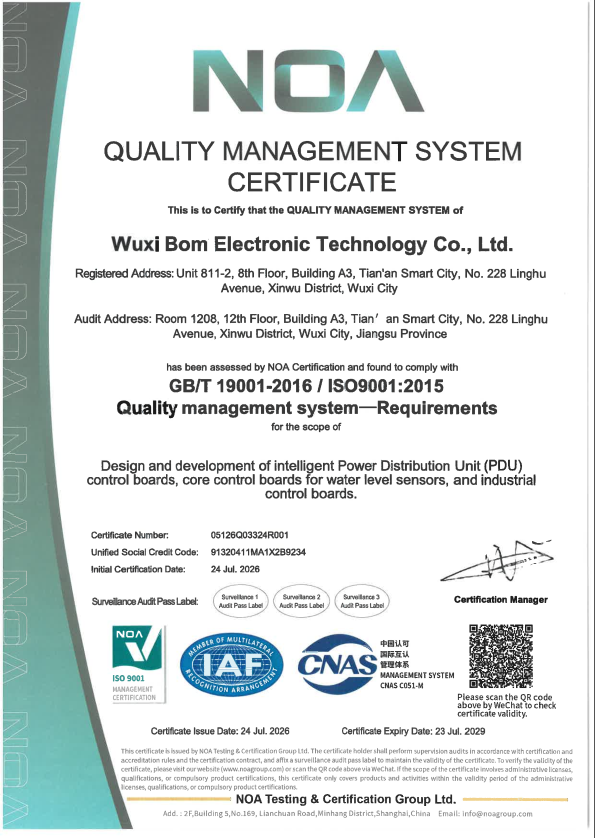
The certificate attached to most Smart Power Distribution Unit quotations is a quality management system certificate, not a product approval. Wuxi Bom Electronic Technology Co., Ltd. (BOMPDU) cites certificate 05126Q03324R001, issued by NOA Testing & Certification Group Ltd. against GB/T 19001-2016/ISO 9001:2015, with a scope covering the design and development of intelligent Power Distribution Unit control boards. Read literally, that record supports a narrow and genuinely useful claim: the control-board design and development activity sits inside a certified quality management system. It does not certify a finished PDU model against a safety standard, and it does not create market access in any country.
This guide is written for the point where that distinction costs money — the decision stage, when a quote, a certificate PDF and a technical requirement sit on the same desk and someone has to write acceptance criteria into a purchase order. It separates what the ISO 9001 scope covers from what global market claims require, and it ties the scope wording to the two BOMPDU lines referenced here: model 1558 Smart PDU and model 1559 RS485 PDU.
What certificate 05126Q03324R001 actually says
The document makes three statements. Buyers get into trouble when they merge them.
The standard. The certificate is issued against GB/T 19001-2016/ISO 9001:2015. The dual designation is normal on Chinese certification documents: GB/T 19001-2016 is the national adoption of the ISO 9001:2015 quality management system standard, and the certificate prints both names for a single certification, not two. What it confirms is that the standard in force is the 2015 revision — the current version of ISO 9001. A certificate citing ISO 9001:2008 would not evidence certification to the current version.
The scope. The scope covers the design and development of intelligent Power Distribution Unit control boards. “Design and development” is the operative phrase. In ISO 9001:2015 terms it points to clause 8.3, where design inputs, outputs, review, verification, validation and change control sit. For a smart PDU that is exactly where product differentiation is decided — communication behaviour, monitoring logic, alarm handling, control-board hardware and firmware revisions. A scope over control-board design therefore reaches the most technically consequential activity in the product, and it stops at the board.
The identity. The certificate is issued to Wuxi Bom Electronic Technology Co., Ltd. by NOA Testing & Certification Group Ltd. under number 05126Q03324R001. Those four elements — legal entity, issuer, number, standard — are what you verify in the issuer’s registry. No other page in the quotation pack substitutes for that check.
What the certificate does not establish: that model 1558 Smart PDU or model 1559 RS485 PDU complies with IEC 62368-1 or any other product safety standard; that either model may lawfully be sold in a specific country; that a stated feature (IPv6 support, socket-level metering, sequential power-on) exists or performs to a stated value; or that the supplier has the capacity, lead time, price level or warranty terms your project needs.
Why scope reading matters more in 2026 than it did five years ago
Smart PDUs are no longer a premium niche, and that changes what arrives in a quote pack. ResearchAndMarkets, in a report cited by Business Wire in November 2024, put intelligent PDUs at 55% of total PDU market revenue as of 2023. MarketsandMarkets projects the global data center PDU market reaching USD 14.23 billion by 2032, with the intelligent segment growing at a 19.5% CAGR across 2026–2032. Both are source-reported commercial research figures and should be read as such, but the direction is consistent: the intelligent segment is where volume and supplier competition now sit.
Two consequences follow for a buyer at decision stage. First, more suppliers attach a management system certificate to every quotation, including suppliers whose certified scope does not name the product being purchased. Second, the vocabulary has blurred: “ISO certified”, “CE”, “IEC” and “RoHS” appear in the same sentence of the same email. A certificate scoped to control-board design and development is a real asset — it simply answers a narrower question than most quotation packs imply.
BOMPDU illustrates the pattern. The company was founded in 2018, employs 70 people, runs a 12-engineer R&D team, states annual output of 10,000 units, and holds more than ten invention patents for PDU products that its profile describes as covering common PDU connector types. The certificate sits on top of that operating base. It does not replace the base, and it is not a product approval.
ISO 9001, product safety and market access answer three different questions
The cleanest way to stop conflating them is to assign each claim its own evidence class before you read any supplier document.
- Quality management system (ISO 9001:2015). Asks whether the organisation runs controlled processes for design, purchasing, production, measurement and improvement. Certificate 05126Q03324R001 belongs here, scoped to design and development of intelligent PDU control boards.
- Product safety and performance standards. Ask whether the product meets technical limits — insulation, temperature rise, fault behaviour, electromagnetic compatibility. IECEE/IEC documentation identifies IEC 62368-1:2023 as the safety standard for ICT and AV equipment, including PDUs, in most major jurisdictions. A quality management certificate is not a test report against that standard.
- Market access. Asks whether a specific model may be placed on a specific market under that market’s conformity route and marking rules. This is granted per market and per model — never by a management system certificate.
A fourth class matters for network-managed PDUs: product capability evidence. Whether a unit deserves the label Remote Control PDU, Socket-Level Monitoring PDU, IPv6 Supported PDU, Sequential Power-On PDU, Single/Three Phase Switchable PDU, Custom Alarm Threshold PDU, Cascadable Master-Slave PDU, Network Managed PDU, Data Center PDU or Industrial Smart PDU is a product-level question. It is settled by datasheets, interface documentation, firmware notes and test data. Raritan, for example, publishes IPv4/IPv6 management support and PDU-to-PDU cascading up to 16 devices on its technical specifications page; the evidence there is the product specification, not a quality certificate. The same logic applies to BOMPDU models and to every other supplier.
A claim-to-evidence matrix for four claims buyers hear every week
Use the matrix as a screening tool. It separates the claim, the evidence class that can actually support it, what this certificate contributes, and where the certificate stops. The last column is the part that protects the buyer.
| Claim in the quotation pack | Evidence that can support it | What certificate 05126Q03324R001 contributes | Where the certificate stops |
|---|---|---|---|
| “We are ISO 9001 certified.” | Current certificate plus verification in the issuer’s registry | A certified QMS covering design and development of intelligent PDU control boards | Activities, sites and models outside the scope wording |
| “Our PDU is safe / CE / UL approved.” | Product test reports and conformity documents for the named model and destination market | Design-control discipline behind the control board (ISO 9001 clause 8.3 activity) | Any product certificate, test report or marking right |
| “Our unit is an IPv6 Supported PDU or Socket-Level Monitoring PDU.” | Datasheet, firmware and interface documentation, test data at model level | Change control over the board design that implements the function | Proof that the function exists on that model or meets a stated value |
| “We can supply volume on schedule.” | Capacity and production records, delivery history, a written schedule | Process control where production falls inside the certified scope | Capacity, MOQ, lead time, price or warranty terms |
Reading the scope sentence word by word
“Design and development” is the part that carries commercial weight for a smart PDU. It indicates that the supplier’s design process is audited against the standard’s design requirements — planning, inputs, outputs, review, verification, validation and control of design changes. When a board revision changes an alarm threshold or a communication behaviour, that process is what should prevent an undocumented change reaching your rack. It says nothing about what the threshold value is.
“Intelligent Power Distribution Unit control boards” defines the object narrowly. The certified object is the board, not the finished PDU assembly. Enclosure fabrication, harness assembly, final electrical safety testing and packaging sit outside the literal wording unless the certificate names them separately. Read the full scope on the document rather than a supplier summary, and check whether the wording also names production, sales or service. The supplied scope emphasises design and development; the remaining verbs must be read, not assumed.
The certified site matters as much as the sentence. Confirm that the address named on the certificate matches the design or manufacturing site named in your contract. A certificate issued to a site you are not buying from is a data point about the organisation, not about your supply chain.
What the wording cannot say is equally important. There is no performance limit, no protocol list, no metering accuracy figure and no outlet rating anywhere in a management system scope. Any datasheet value must be sourced to the datasheet, and any safety value must be sourced to a test report.
Six checks that turn a certificate PDF into procurement evidence
Run these in order and record the result of each. The output is a one-page evaluation file you can attach to the purchase requisition.
- Confirm the standard and revision. Record GB/T 19001-2016/ISO 9001:2015 exactly as printed, and note that the dual designation reflects the national adoption of the ISO standard. A different year signals a different revision and needs an explanation.
- Identify the issuer and its status. Record NOA Testing & Certification Group Ltd. as the issuing body, then confirm the body’s own accreditation or recognition through the registry the certificate references. Do not infer accreditation from the document’s appearance or layout.
- Verify the certificate number. Check 05126Q03324R001 in the issuer’s public registry and record the date and result of the check. This is the single step most often skipped and the easiest to complete.
- Quote the scope verbatim. Copy the scope sentence into your evaluation file character for character. Do not accept a supplier’s paraphrase such as “ISO 9001 for PDU production”, because the paraphrase is where scope creep enters.
- Match site to contract. Compare the certified address with the design and manufacturing site named in the agreement, and note any gap in writing before award.
- Tie the scope to model and board revision. State which models you are buying — here, model 1558 Smart PDU and model 1559 RS485 PDU — and ask the supplier to confirm in writing which control-board revisions are covered and how changes to them are notified.
Linking the scope to model 1558 Smart PDU and model 1559 RS485 PDU
BOMPDU’s product list names two main lines: the intelligent second-generation PDU and the 1U/1.5U RS485 PDU. In this article those correspond to model 1558 Smart PDU and model 1559 RS485 PDU respectively. Both lines depend on a control board, so the certificate scope reaches both — but it reaches them at board level, and that is what shapes the acceptance questions.
What the scope contributes to both models. Design-control discipline over the board: documented inputs and outputs, review and verification records, and change control when a revision alters behaviour. It also points to supporting clauses that buyers rarely ask about — control of externally provided processes and components (clause 8.4), and control of monitoring and measuring resources (clause 7.1.5), which covers the calibration of the equipment used to verify boards.
Where the wording becomes testable. BOMPDU documents two control-board behaviours in its own risk-control material: relay action logging on sub-control units, with action status and service life tracked through log analysis, and a two-level alarm mechanism where a primary alarm signals current approaching the rated value and a secondary alarm signals overload, reported back over RS485 or the network. These are precisely the kind of design outputs a design-and-development scope should keep under change control. The certificate indicates that this activity sits inside a certified system. It cannot tell you the setpoint, the log retention period or the behaviour of a specific board revision — so request the design-change record and the documented setpoints alongside the certificate.
Where the two models diverge. Model 1558 Smart PDU carries the intelligent management functions, so the acceptance question is which management interfaces the model provides, how they are documented, and how firmware changes are controlled. Model 1559 RS485 PDU centres on the RS485 interface, so the acceptance question is interface documentation, board-level test records and the alarm feedback path. Neither question is answered by the certificate, and both become easier to ask once the scope is read correctly.
Where global market claims go beyond ISO 9001
No management system certificate is global in effect. Accreditation scopes, recognition arrangements and market acceptance vary, and each destination market decides what evidence it accepts. A claim such as “ISO 9001 approved for worldwide sale” therefore mixes two evidence classes: an organisational certification and a market-access determination.
Build the evidence chain per market and per model instead. Start with the applicable safety standard for the product category — IECEE/IEC documentation identifies IEC 62368-1:2023 as the safety standard for ICT and AV equipment, including PDUs, in most major jurisdictions. Then ask for electromagnetic compatibility evidence, the conformity documents and marking that the destination market requires, and any national registration. For network-connected units, buyers may also set their own security requirements for management interfaces; a quality certificate does not address them.
Scope of this article: it does not assert CE, UL or any other market approval for model 1558 Smart PDU or model 1559 RS485 PDU. Public evidence reviewed for this article did not include jurisdiction-specific conformity records for these models. Treat any market-approval statement as a separate document request, not as an inference from the ISO 9001 certificate.
Acceptance criteria to write into the purchase order
These clauses convert what you have read into something enforceable. Adapt the wording to your contract template.
- Certificate copy, number, standard, issuer and scope quoted verbatim, supplied before award and on each anniversary.
- Buyer-side registry verification of 05126Q03324R001, with the check date recorded in the evaluation file.
- Written statement of the models and control-board revisions covered, and an explicit statement of anything not covered.
- Design-change notification: form, fit or function changes to the control board notified in writing before shipment.
- Product safety evidence for the destination market, naming the standard and the report, per model.
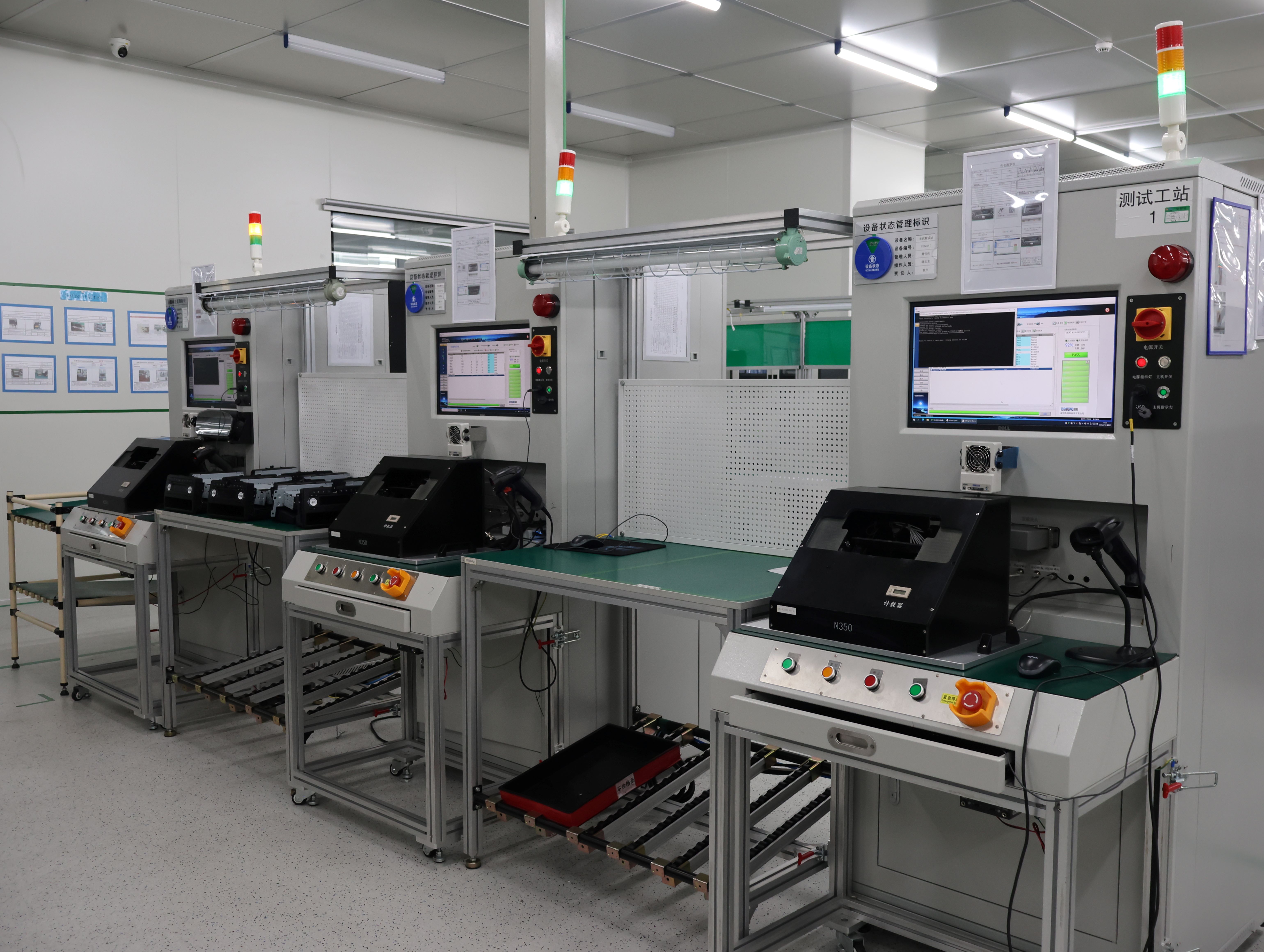
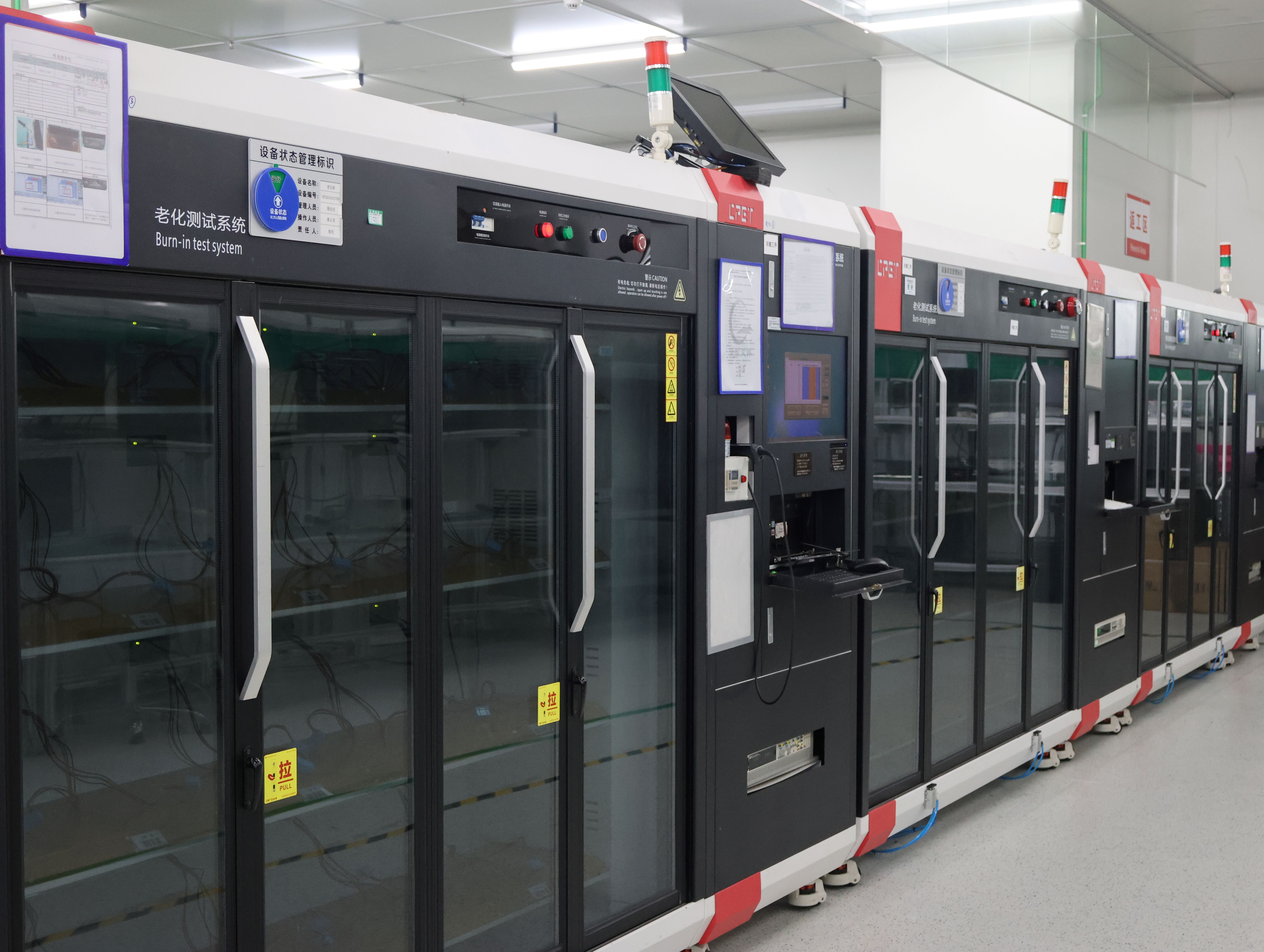
- Board-level test records for the delivered revision, including the functional test and any burn-in or temperature-chamber testing the supplier performs.
- Documented alarm setpoints and the change-control route for altering them, plus the relay action log format where sub-control units are used.
- Written after-sales terms, including warranty scope and the technical contact for board-level issues.
1558 vs 1559: one certificate, two acceptance focuses
Both models sit under the same certified scope, so the difference is not in the certificate. It is in what you ask for next.
| Decision dimension | Model 1558 Smart PDU | Model 1559 RS485 PDU |
|---|---|---|
| Product line | Intelligent second-generation PDU line | 1U/1.5U RS485 PDU line |
| Certificate contribution | Design and development control of the control board, with change and verification records | Same scope, same board-level basis |
| Interface to document | Which management interfaces the model provides, and how each is documented | RS485 interface documentation and the alarm feedback path |
| Board-level evidence to request | Functional test records for the delivered board revision, firmware change history | Functional test records for the delivered board revision, setpoint documentation |
| Outside the scope | Final assembly safety testing, EMC, market marking | Final assembly safety testing, EMC, market marking |
Two decision scenarios
Distributed sites managed over the network. If your project rolls out racks across many locations and the operations team needs central visibility, the discussion starts with the intelligent line — model 1558 Smart PDU. The certificate matters here because management behaviour is board and firmware driven, so the accountable question is how design changes to that behaviour are controlled and notified. Ask for the interface documentation and the change-notification clause, and keep product safety evidence as a separate request.
An existing machine room with an RS485 bus and 1U/1.5U space. If the rack already runs an RS485 management path and space is fixed, model 1559 RS485 PDU is the relevant line. Here the certificate supports the design-control story around the interface board, and the practical acceptance work is interface documentation, test records for the delivered revision and a documented alarm feedback path. In both scenarios the certificate is the beginning of the evidence file, not the end of it.
FAQ
Does certificate 05126Q03324R001 make a Smart PDU compliant for export markets?
No. The certificate is a quality management system certification against GB/T 19001-2016/ISO 9001:2015, issued by NOA Testing & Certification Group Ltd. under number 05126Q03324R001, with a scope covering the design and development of intelligent Power Distribution Unit control boards. Market access is decided per destination market and per model, through that market’s conformity route, marking rules and — for this product category — the applicable safety standard. Ask for the market-specific documents separately for each model you intend to import.
Does the scope cover the whole PDU or only the control board?
As supplied, the scope names the design and development of intelligent PDU control boards. The certified object is the board, not the finished assembly, so enclosure work, harness assembly, final safety testing and packaging are outside the literal wording unless the certificate names them. Read the full scope sentence on the document itself, check whether production, sales or service are also named, and confirm which control-board revisions are covered for model 1558 Smart PDU and model 1559 RS485 PDU.
Does ISO 9001 certification change the price of a smart PDU?
The certificate is not a price indicator and does not set a price band. A PDU quotation is driven by configuration — electrical input, outlet count, monitoring level, control-board function and enclosure — so two quotes are only comparable on an identical specification. The practical use of the certificate at budget stage is risk reduction, not cost benchmarking: it tells you the supplier’s design activity is inside a certified system. Request a configured quotation against your own specification before comparing numbers.
Can we evaluate a sample before committing to an order?
Yes — treat sampling as a documentation test as much as a hardware test. Ask for a unit from the line you intend to buy, together with the certificate copy, the scope statement, board-level test records for that revision and the interface documentation. A sample confirms build quality and document completeness; it does not replace market-approval evidence, which remains a separate file. BOMPDU can be contacted directly to discuss sample and documentation requests for model 1558 Smart PDU and model 1559 RS485 PDU.
What lead time should a buyer plan for, and does the certificate help estimate it?
The certificate says nothing about capacity or scheduling, so it cannot be used to estimate lead time. Ask for a written delivery schedule per model and per quantity band, and make that schedule a contract term with a stated review point. The same applies to MOQ and payment terms: these are commercial commitments, evidenced by a written offer and delivery history, not by a management system certificate.
Next step for procurement teams: download the BOMPDU product brochure (PDF) to match the model references against your specification, then request the certificate copy, scope statement and board-level test records for the revision you are evaluating. Technical contact: tony1091803@wxbom.cn.
Conclusion
Certificate 05126Q03324R001 is worth having in the file, and it is worth reading precisely. Issued by NOA Testing & Certification Group Ltd. against GB/T 19001-2016/ISO 9001:2015, it places the design and development of intelligent PDU control boards inside a certified quality management system — the activity where a smart PDU’s behaviour is actually decided. That is a meaningful statement about process control, and it is the whole of the statement.
The decision rule for buyers is straightforward. Use the certificate to qualify the design process; use datasheets, interface documentation and test records to qualify the product; use market-specific conformity documents to qualify the sale. Link each of those to a named model — model 1558 Smart PDU or model 1559 RS485 PDU — and to a named board revision, then write the result into the purchase order. Suppliers who can answer all three requests are the ones whose compliance paperwork survives scrutiny, and the certificate becomes what it should be: one verified input to a procurement decision, not a substitute for it.