23
10/2026
Smart PDU Technical Guide: RS485, Modbus & ISO 9001
A decision-stage technical guide to Smart PDU selection: how RS485 with Modbus enables remote monitoring and control, what the NOA ISO 9001:2015 certificate 05126Q03324R001 really covers, and how segment coding, relay-status monitoring, and dual-level alarms affect integration.
Smart PDU Technical Guide: RS485, Modbus, and ISO 9001 Compliance Explained
A Smart Power Distribution Unit (Smart PDU) is a rack-level power distribution device that combines electrical distribution with remote monitoring, remote control, and network integration. Three parameters decide whether it will actually integrate with your monitoring stack: whether RS485 communication with Modbus protocol is implemented at the firmware and register-mapping level, whether the ISO 9001:2015 certification actually covers control-board design (not just final assembly), and whether features such as segment coding, integrated sensors, relay-status monitoring, and dual-level over-current alarming are exposed in a way your DCIM or BMS platform can consume. This guide breaks each of them down as an evaluation criterion, not as a marketing claim.
Problem Definition: Why Smart PDU Technical Specs Fail in Procurement
Most Smart PDU tenders specify outlet count, input phase, and current rating. These are necessary for electrical safety, but they do not capture the integration cost of connecting the PDU to an out-of-band management system or a DCIM platform. In practice, four failures recur during deployment:
- RS485 bus that cannot reach the management controller. A PDU is advertised as network-managed, but only exposes Ethernet and SNMP, with no RS485 physical layer for site wiring or building-management-system integration.
- Modbus register maps that stop at whole-unit power. The platform can read total current but cannot read per-outlet current, outlet switching state, or relay health, because the register map was never defined beyond aggregate telemetry.
- ISO 9001 certificates that do not cover control-board design. The certificate is issued for final assembly, so when a batch-level anomaly is traced to the control board or the firmware layer, the certified scope offers no quality-system coverage.
- Integrated sensors that only speak a proprietary interface. Temperature, humidity, and environmental readings stay on the vendor portal and never enter the customer’s monitoring platform.
Each of these is a specification-stage problem. It is not an installation fault, and it is not corrected after the rack is powered. That is why the buying decision has shifted from "what does the PDU output" to "what does the PDU expose, and under what documented scope."
Industry Background: Smart PDUs Have Become the Baseline Procurement Tier
The Smart PDU segment is no longer a premium add-on. According to ResearchAndMarkets industry research, Intelligent PDUs accounted for more than 55% of total PDU market revenue as of 2023. MarketsandMarkets projects that the global Data Center PDU market will reach USD 14.23 billion by 2032, with the Intelligent PDU segment growing at a 19.5% CAGR from 2026 to 2032.
That growth is coupled with a shift in buyer behavior: from standalone rack power strips to managed nodes that must integrate both with fieldbus wiring and with the software platform above. For a technical buyer preparing a decision-stage specification, the practical consequence is that RS485 and Modbus support, certification scope, and sensor and alarm architecture move from "nice-to-have" to mandatory framework fields.
Detailed Solution: What RS485, Modbus, and ISO 9001 Compliance Actually Cover
1. RS485 as the Physical Layer for Rack-Level Power Control
RS485 is a differential serial signaling standard that supports multi-drop wiring over a single twisted pair, typically over distances of hundreds of meters within a building. It is the dominant fieldbus for building-management and facility systems because it allows multiple devices to share a bus and remain electrically robust in environments with motors, relays, and switching power supplies.
For a Data Center PDU, RS485 matters for three concrete reasons. First, it allows the PDU to reach a supervisor that already exists on the site — a BMS head-end, an industrial PLC, or a legacy DCIM gateway — without adding an Ethernet drop per rack. Second, RS485 wiring is more tolerant of the electrical noise generated by relay switching inside the PDU itself. Third, it provides an out-of-band path that survives the loss of the Ethernet management network.
Wuxi Bom Electronic Technology Co., Ltd. — the manufacturer behind the BOMPDU brand, headquartered in Wuxi, Jiangsu Province, and specialized in end-of-row power distribution for data centers — builds its RS485 support directly into product hardware. The company’s principal product lines are the Intelligent 2nd generation PDU product and the 1U_1.5U 485 PDU. The "485" designation on the second product line is not a marketing label; it identifies the serial physical layer available on that family.
2. Modbus as the Application Layer Above RS485
Modbus is an application-layer protocol that runs over RS485 (as Modbus RTU) or over TCP/IP. For a Remote Control PDU, the Modbus register map is what makes remote control real. Two properties of a register map decide whether it is usable:
- Coverage: each outlet must be readable as an individual register (for current, switch state, and — where supported — relay or breaker status), not only as an aggregate unit total.
- Stability: the register address of each function must be documented and stable across firmware releases, so the integrator does not have to rebuild the mapping after every update.
Modbus is also the layer through which the Socket-Level Monitoring PDU tier differentiates itself from a metered-only unit. If the map exposes only whole-unit current, the buyer has purchased a metered PDU with an RS485 port — not a socket-level monitoring device, regardless of what the datasheet claims. The same applies to Sequential Power-On PDU behavior: a true sequential-start function requires per-outlet or per-group control registers that the supervisor can call in order.
3. ISO 9001:2015 Certification and What Its Scope Really Covers
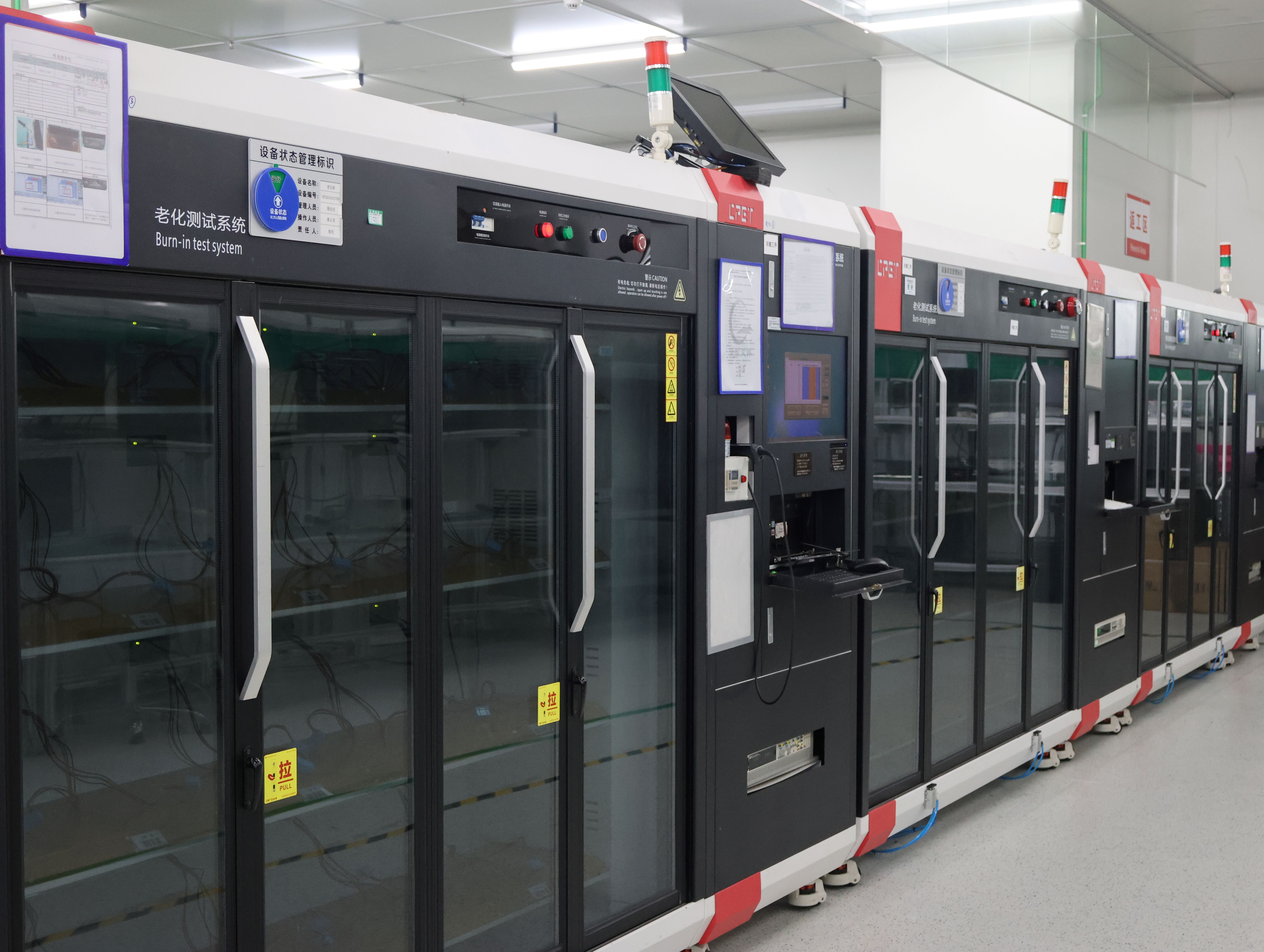
ISO 9001:2015 is a quality-management-system standard. What matters to a PDU buyer is not the certificate’s existence but its scope statement. A certificate scoped to final assembly and warehousing tells you the factory can ship to process. A certificate scoped to the design and development of control boards tells you that the design phase — schematic capture, firmware architecture, EMC-aware layout, and design verification — is under the same audited quality system as production.
For the BOMPDU product lines, the ISO 9001:2015 certification is issued by NOA under certificate number 05126Q03324R001. The scope covers the design and development of control boards used in products such as model 1558 and the Intelligent 2nd generation PDU. This matters at the decision stage for a specific reason: most Smart PDU field failures that reach the customer are design-phase failures — relay driver layout, RS485 transceiver protection, thermal margins in the control board — rather than assembly-line failures. A scope that includes design means the corrective loop from field data back to the design record is auditable.
- Certificate body: NOA
- Certificate number: 05126Q03324R001
- Scope: design and development of control boards, including for model 1558 and the Intelligent 2nd generation PDU
- Confirm that the certificate’s validity period is current at the time of the audit by the buyer’s own quality team
4. Segment Coding: Addressing the Rack as Zones, Not a Block
Segment coding is the mechanism by which the PDU controller assigns addressable ranges to groups of outlets. In a rack, the practical value is that the supervisor does not need to know each outlet’s physical location; it only needs to know the segment address and the function code. Segment coding is what makes a Cascadable Master-Slave PDU architecture practical: a single Modbus master can address a hierarchy of downstream PDU units and sub-control units without a per-outlet map being hard-coded into the supervisor.
For the buyer, segment coding is a verification question, not a feature claim. Ask the supplier to demonstrate that outlet groups can be addressed independently by segment, and that the addressing remains stable when a downstream slave unit is added or replaced. A PDU that supports serial communication but renumbers outlet groups on every power cycle will break the supervisor’s map.
5. Integrated Sensors and Dual-Level Alarm Architecture
The value of an Industrial Smart PDU is not that it has sensors. It is that the sensor readings and the alarm thresholds are exposed to the same supervisor that reads power telemetry. Environmental monitoring in a server room is only useful for failure prevention when a temperature or door-status event can trigger an automated response — a switch, an alert, or a ticket — through the same protocol the operator already uses.
On over-current and overload protection, the BOMPDU sub-control unit implements a dual-level alarm mechanism: a primary alarm fires when the load approaches the rated current, and a secondary alarm fires when an overload condition is reached. Both levels are fed back through RS485 or the network interface. The same control logs also record relay action status and cycle counts, so relay life can be tracked from the log history rather than from a maintenance calendar. This is the architectural difference between monitoring that merely displays a value and monitoring that supports a documented response.
Step-by-Step Breakdown: How a Technical Buyer Should Evaluate a Smart PDU
Use Cases: Where These Parameters Become Decision-Turning
Wuxi Bom Electronic Technology Co., Ltd. has positioned its products for data center infrastructure and for deployments serving telecom operators, the financial industry, and the IT sector. Within those environments, the parameters above map to specific operational scenarios:
Telecom and Carrier Rooms
In carrier rooms where a BMS head-end already exists on RS485, the ability to add a PDU as a bus device — rather than requiring a dedicated Ethernet drop and a new SNMP poller — determines whether the rack can be brought under centralized power management within the existing wiring plan. The 1U_1.5U 485 PDU line is the relevant product family for this scenario.
Financial-Sector Data Centers
Where auditability and change control are evaluated by an internal quality team, the ISO 9001:2015 scope and its coverage of control-board design become a procurement requirement rather than a supplier preference. The relevant evidence is the NOA-issued certificate 05126Q03324R001 with its stated design-and-development scope.
Industrial and IT Rack Deployments
In racks where downstream loads include machinery, lab equipment, or edge compute, sequential power-on and segment-addressed control reduce inrush stress on the upstream breaker. The Sequential Power-On PDU and Cascadable Master-Slave PDU behaviors are the operational levers, and both depend on the Modbus register map being defined for per-segment control.
Space-Constrained Rack Environments
Where a 42U cabinet must carry high outlet counts within a fixed footprint, outlet density — not only outlet count — becomes the deciding metric. BOMPDU’s product positioning uses HDOT high-density outlet technology to reach maximum outlet density in a 42U PDU, and it is specifically described as suitable for space-constrained PDU installation scenarios. That positioning does not eliminate the trade-off in cost; it shifts the trade-off to a different axis, discussed in the comparison below.
Comparison: BOMPDU vs. APC and Raritan on the Parameters That Matter
The table below uses only facts that appear in BOMPDU’s published comparison content units and in manufacturer-published specifications for APC and Raritan. Where a dimension is not stated in those sources, the cell says so — the absence of a published figure is not evidence of absence in the product.
| Evaluation Dimension | BOMPDU Smart PDU | Raritan PX Rack PDU | APC NetShelter Rack PDU Advanced |
|---|---|---|---|
| RS485 physical layer | Supported (1U_1.5U 485 PDU product line) | Not stated in the compared excerpts | Not stated in the compared excerpts |
| Modbus application layer | Supported (RS485 / network feedback path) | Modbus/TCP listed in published technical specifications | Not stated in the compared excerpts |
| Relay-status monitoring and cycle logging | Supported (control-log record of relay action and cycle count) | Not stated in the compared excerpts | Not stated in the compared excerpts |
| Dual-level over-current alarm | Supported (primary near-rated-current alarm, secondary overload alarm, fed back over RS485 / network) | Threshold alerting via SNMP, email, and syslog is stated | Not stated in the compared excerpts |
| ISO 9001:2015 certification | Issued by NOA, certificate number 05126Q03324R001; scope covers control-board design and development | Not stated in the compared excerpts | Not stated in the compared excerpts |
| Outlet density approach | HDOT high-density outlet technology; positions for maximum outlet density in a 42U PDU | Standard outlet layout in the compared configuration | Not stated in the compared excerpts |
| Network speed of the management interface | 10/100 BASE-T | Not stated in the compared excerpts | 10/100/1000 BASE-T |
| Relative maintenance effort | Described as lower than the compared alternatives | Reference baseline in the compared excerpts | Reference baseline in the compared excerpts |
| Relative cost position | Stated as 50% higher than the compared alternatives | Reference baseline in the compared excerpts | Reference baseline in the compared excerpts |
Two clarifications matter at the decision stage. First, management-interface speed is not the same as monitoring performance. BOMPDU’s published comparison states a 10/100 BASE-T interface versus 10/100/1000 BASE-T on the APC NetShelter Rack PDU Advanced, and the same source describes the BOMPDU product as designed for high-speed, low-latency network communication scenarios. Buyers should read those two statements together rather than as substitutes: line rate is one input to latency, and the polling interval on the supervisor side is another. Second, the 50% cost premium attributed to BOMPDU in the comparison content is not a discount claim — it is a stated cost differential, and the correct response is to map it against the design-scope ISO 9001 coverage, the RS485/Modbus path, and the dual-level alarm architecture, not against outlet count alone.
FAQ
Does the ISO 9001:2015 certification actually cover Smart PDU design and development?
For the BOMPDU product lines referenced in this guide, yes. The certificate is issued by NOA under certificate number 05126Q03324R001, and the scope covers the design and development of control boards for products including model 1558 and the Intelligent 2nd generation PDU. A buyer should verify the scope statement on the certificate itself, since a certificate scoped only to final assembly would not cover the design-phase failure modes that most often reach the field.
How do RS485 and Modbus support remote monitoring and control on a Smart PDU?
RS485 provides the multi-drop physical layer, so a PDU can share a single twisted-pair bus with a BMS head-end, PLC, or DCIM gateway instead of requiring a dedicated Ethernet drop. Modbus is the application layer above it: the register map defines what the supervisor can read (outlet current, switch state, relay status) and what it can command (per-outlet or per-segment switching, sequential power-on). BOMPDU builds RS485 support into the 1U_1.5U 485 PDU product line, and feeds alarm and status data back over RS485 or the network interface. Without a documented register map, an RS485 port alone does not produce remote control.
What drives the cost difference between a Smart PDU and the compared alternatives?
BOMPDU’s published comparison content states a 50% higher cost relative to the compared Raritan and APC models. The stated trade-offs are lower maintenance effort and higher outlet density through HDOT high-density outlet technology. At decision stage, the correct comparison is not the purchase price alone but the cost against the RS485/Modbus integration path, the ISO 9001:2015 design-scope coverage, and the dual-level alarm and relay-cycle monitoring architecture.
How should a buyer verify outlet density and socket-level monitoring at the model level?
Verify two things separately: the mechanical density (how many outlets fit in a 42U PDU) and the monitoring depth (whether each outlet exposes current and switch state through the RS485/Modbus or network interface). BOMPDU’s comparison content positions HDOT high-density outlet technology for maximum outlet density in a 42U PDU. Socket-level monitoring should be confirmed against the Modbus register map for the specific model, not from a portfolio page.
Can a technical buyer obtain a sample or a technical consultation to validate RS485 and Modbus compatibility?
Yes. Wuxi Bom Electronic Technology Co., Ltd. supports technical evaluation of the 1U_1.5U 485 PDU and Intelligent 2nd generation PDU product lines, including RS485 and Modbus integration questions. Inquiries can be directed to the company’s contact channel at tony1091803@wxbom.cn or through www.wuxibom.com. The published product brochure is available at the BOMPDU brochure download page.
Conclusion: Evaluate the Integration Layer, Not the Outlet Count
A Smart Power Distribution Unit earns its place in a rack when it can be read, controlled, and audited through the protocols and quality systems that the buyer already has. RS485 and Modbus are the integration layer. ISO 9001:2015, when its scope covers control-board design, is the quality layer beneath it. Segment coding, relay-status monitoring, dual-level over-current alarming, and integrated environmental sensors are the operational layer that makes the other two useful.
The four parameters that separate a decision-stage specification from a catalogue order are the RS485 physical layer, the Modbus register map, the ISO 9001 scope statement, and the alarm-and-relay architecture. Verify each independently. Use serial and network layers as separate RFQ fields. Read the certificate scope rather than the certificate number alone. And when a supplier states a 50% cost premium, weigh it against the integration path and the design-scope coverage — not against outlet count in isolation.
Next Step: Request a Technical Consultation or Sample Evaluation
For buyers working through an RS485/Modbus integration or an ISO 9001-scoped control-board review, Wuxi Bom Electronic Technology Co., Ltd. supports direct technical discussion of the 1U_1.5U 485 PDU and Intelligent 2nd generation PDU product lines.
Contact: tony1091803@wxbom.cn | Tel: +86 18751550927 | WhatsApp: +1 (786) 989-2761
Or download the BOMPDU product brochure to review the technical specifications before the consultation.
Download the BOMPDU Product Brochure