31
10/2026
How to Choose Between an RS485 PDU and an IP Smart PDU: A Step-by-Step Decision Walkthrough
A six-step decision walkthrough comparing the BOMPDU RS485 PDU and the Intelligent 2nd generation Smart PDU: control layer, accuracy, certification and a reusable scoring template.
How to Choose Between an RS485 PDU and an IP Smart PDU: A Step-by-Step Decision Walkthrough
Short answer: choose the RS485 PDU — the BOMPDU 1U/1.5U 485 PDU — when the rack needs branch-level metering, overvoltage, undervoltage and overcurrent alarms with settable parameters, and Modbus data flowing into an existing monitoring system. Choose the Intelligent 2nd generation PDU when the rack needs per-channel monitoring and control, single-phase or three-phase input up to 63 A, and power-quality data covering active, reactive and apparent power plus power factor. Both units communicate over RS485 with Modbus; the decision turns on how much control sits on top of the meter.
Two power distribution units can sit in the same rack, feed the same servers, and trigger two completely different procurement decisions. That is the trap in this category: buyers compare PDUs on outlet count and price, then discover after installation that the unit can report energy but cannot reboot a locked server, or that the unit can switch every outlet but nobody on the operations team ever reads the data.
This walkthrough treats the choice as a sequence of six defensible decisions — rack requirement, control layer, measurement accuracy, documentation and certification, purchasing terms, and a written scoring comparison. It compares exactly two configurations from Wuxi Bom Electronic Technology Co., Ltd. (BOMPDU), a manufacturer established in 2018 in Wuxi, Jiangsu Province, China, specialising in research, development, production and sales of end-of-row power distribution solutions for data centres. The comparison is neutral and procurement-usable, and it ends with a scoring template you can reuse on any future rack build.
Problem Definition: The Real Question Behind \"RS485 PDU or Smart PDU\"
The question is not which product is better. It is which layer of electrical visibility your operation can actually act on.
An RS485 PDU answers questions at the branch level: what is the input voltage, what current is the rack drawing, how much energy has passed through this feed, and has a threshold been crossed. An intelligent, socket-level PDU answers the same questions plus a second set: which specific outlet is drawing current, how much, at what power factor, and can that outlet be switched without dispatching a technician.
Two failure modes follow from getting this wrong:
- Over-buying control. A colocation rack with fixed tenants on fixed circuits does not gain much from per-outlet switching if no process exists to authorise a remote reboot. The extra control layer adds configuration and documentation work without a matching operational benefit.
- Under-buying visibility. A rack serving high-density compute or an unattended edge site without per-outlet data leaves operators unable to identify which device is driving a thermal or current anomaly, and unable to remediate remotely.
Write the decision down before comparing products: which electrical parameters must be measured, at what granularity, delivered over which protocol, and which corrective actions must be executable remotely. Everything else in this walkthrough follows from that sentence.
Industry Background: Why the Intelligent Tier Is Now the Default Discussion
The market has already moved toward monitored and controllable rack power. Research published by ResearchAndMarkets in November 2024 reports that intelligent PDUs accounted for more than half — approximately 55% — of total PDU market revenue as of 2023. MarketsandMarkets projects the global data centre PDU market to reach USD 14.23 billion by 2032, with the intelligent PDU segment growing at a CAGR of 19.5% between 2026 and 2032.
Compliance pressure runs in parallel. IEC 62368-1:2023 is the mandatory safety standard for ICT and AV equipment, including PDUs, in most major jurisdictions. That standard belongs on every technical RFQ regardless of which of the two configurations you choose.
What the market means by \"IP smart PDU\"
In supplier documentation, an IP smart PDU is an intelligent PDU managed as a network-attached node — addressable over IP, reporting outlet-level data, and usually supporting standard management protocols. Published specifications from established manufacturers show the range of that layer:
- Raritan intelligent rack PDUs support IPv4 and IPv6 management networking and can send alerts via SNMP, email (SMTP) and syslog when predefined power or environmental thresholds are exceeded.
- Server Technology PRO4X intelligent rack PDUs expose SNMP, MODBUS, REST-based APIs and a Redfish API, and state metering accuracy of plus or minus 0.5%.
- Cascading capacity is not standardised: Raritan states PDU-to-PDU cascading up to 16 devices, while Vertiv documentation for Intelligence Director states that up to 50 devices can be daisy-chained on a single IP address. These two figures use different architectures and counting methods and cannot be compared directly.
That last point is the single most useful procurement lesson in this category: device-count and performance claims are only comparable when the definition, architecture and test conditions match. Apply the same discipline when you evaluate the two BOMPDU configurations below.
Scope note for this walkthrough. BOMPDU's published communication layer for both configurations is RS485 with Modbus protocol. If your specification requires a native Ethernet/IP interface, SNMP, IPv6 or Redfish, treat that as a separate, model-level requirement and obtain written confirmation against the exact model before award — do not assume it from the category name.
Detailed Solution: The Two Configurations Side by Side
Configuration A — 1U/1.5U 485 PDU (RS485 PDU)
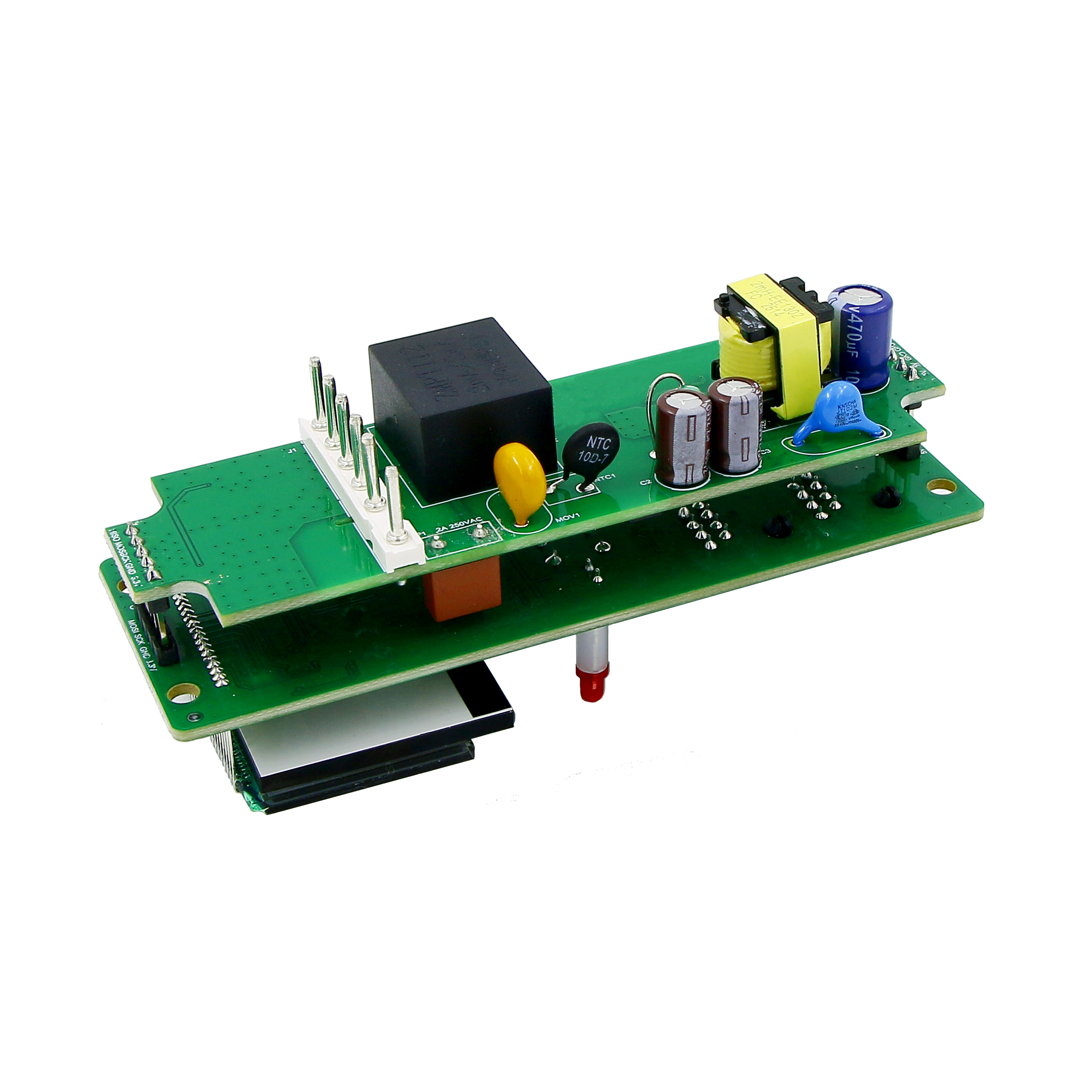
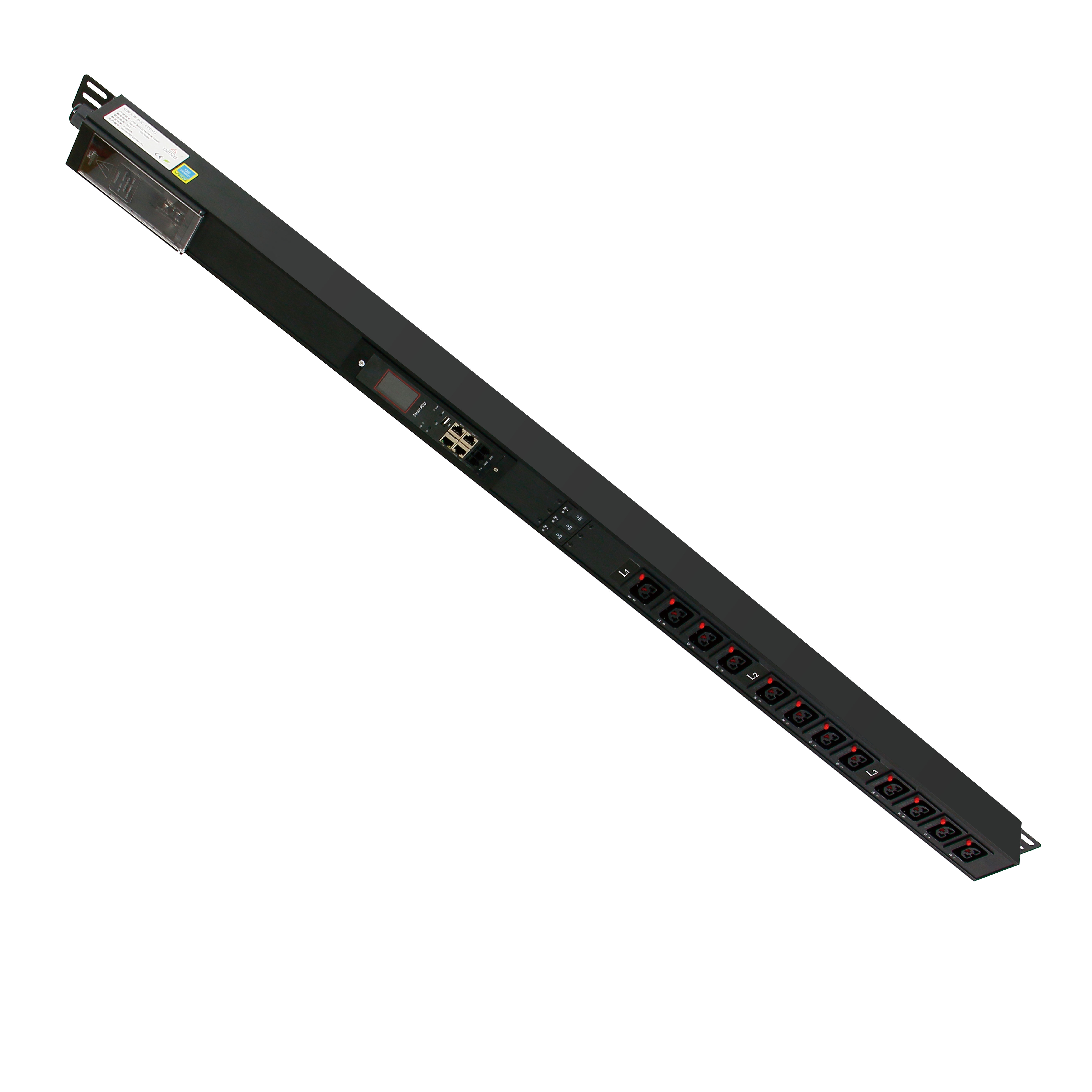
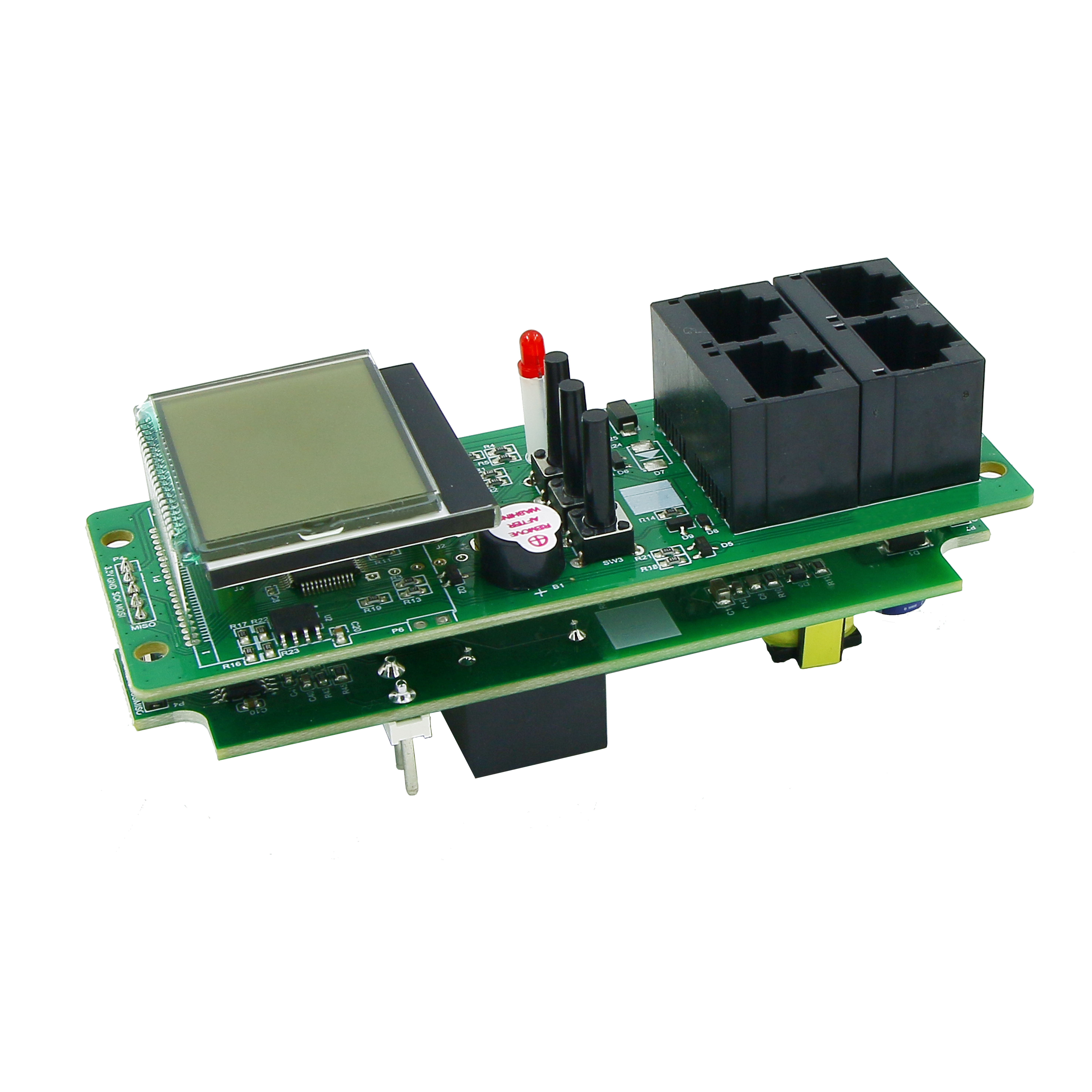
The BOMPDU 1U_1.5U 485 PDU is a Power Distribution Unit in the RS485 PDU category, built in a 1U/1.5U rack form factor and housed in metal, plastic and aluminium profiles. Its published electrical and monitoring specification is:
- Rated input voltage 100 V–240 V, with an input voltage range of 90 V–264 V.
- Voltage measurement across 90 V–264 V, displayed to 0.01 V, accuracy Level 1 (1% ± 0.1) within the rated input voltage range.
- Current measurement via external transformer, displayed to 0.01 A, accuracy Level 1 (1% ± 0.1).
- Power measurement and electricity (energy) measurement at Level 1 (1% ± 0.1), displayed to 0.01 kW and 0.01 kWh respectively.
- Communication via RS485 interface using the Modbus protocol.
- Segment code LCD display, white background with black text.
- Caution function: overvoltage, undervoltage and overcurrent alarms, with parameters that can be set.
This is a metered, alarm-capable PDU. It tells you what the branch is doing and warns you when a limit is crossed. It does not, per its published specification, provide per-outlet switching.
Configuration B — Intelligent 2nd generation PDU (Smart PDU)

The BOMPDU Intelligent 2nd generation PDU product is a Smart PDU category Power Distribution Unit designed for data centre and cloud computing scenarios, also housed in metal, plastic and aluminium profiles. Its published specification is materially richer:
- Input: rated AC 110 V–250 V, 50/60 Hz; maximum load current 0–63 A; single-phase or three-phase power input.
- Input parameter collection: current, voltage, electrical energy and power — active power, reactive power, apparent power and power factor.
- Input measurement accuracy: voltage 0.5% across 85–250 V; current accuracy level 1 across 0.65–3.1 A and level 0.5 across 3.1–63 A.
- Output architecture: the auxiliary module provides 4 outputs; the main module supports up to 8 auxiliary modules. Rated output voltage AC 220 V, 50/60 Hz.
- Output parameter collection: current, voltage, electrical energy and power — again including active, reactive and apparent power plus power factor.
- Output ratings: single channel maximum 16 A; single board maximum 32 A.
- Output measurement: voltage accuracy 1% across 85–250 V; current monitoring range 0.2–16 A, with accuracy 2% across 0.2–0.8 A and 1% across 0.8–16 A.
- Output function: separate monitoring and control per channel.
- Communication: RS485 with Modbus protocol, per BOMPDU's published product description; the same description lists a segment code LCD display and overvoltage, undervoltage and overcurrent alarms with settable parameters.
The decisive line in that list is \"separate monitoring and control.\" It converts the PDU from a reporting device into an actuator: the PDU can be used to isolate or restore an individual output channel remotely, within the published 16 A per-channel and 32 A per-board limits.

Step-by-Step Breakdown: The Six-Decision Walkthrough
Step 1 — Define what the rack actually needs
Do this before opening any datasheet. For each rack, record:
- Load and phase. Total connected load and whether the feed is single-phase or three-phase. The Intelligent 2nd generation PDU accepts either and carries up to 63 A; the RS485 PDU is published with a 100–240 V rated input.
- Outlet count and per-channel current. The intelligent platform supports a maximum of 16 A per channel and 32 A per board, with 4 outputs per auxiliary module and up to 8 auxiliary modules per main module.
- Control requirement. Does any operational runbook require a remote power cycle of a single device? If yes, per-channel control is mandatory and the decision is largely made.
- Data consumer. Who reads the data — BMS, DCIM, an internal Modbus master, or nobody? A monitoring layer with no consumer is a cost, not a capability.
Step 2 — Compare the communication and control layer
Both units speak RS485 with Modbus protocol, so protocol choice does not separate them. What separates them is the register content behind that protocol.
On the RS485 PDU, the Modbus payload describes the branch: voltage, current, power, energy, plus alarm states for overvoltage, undervoltage and overcurrent. On the Intelligent 2nd generation PDU, the payload extends to per-channel current, voltage, energy and power, including reactive power, apparent power and power factor — plus a control path to each channel.
If your integration team only needs to poll a Modbus master for branch load and alarm flags, the RS485 PDU completes the requirement. If the integration must map individual outlets to individual assets, the intelligent unit is the only one of the two that produces that data.
Step 3 — Match measurement accuracy to the decision you will make
Accuracy specifications only matter relative to the decision they support, so state the decision first, then check the number.
The RS485 PDU publishes Level 1 accuracy (1% ± 0.1) for voltage, current, power and energy, with voltage accuracy specified within the rated input voltage range and current measured through an external transformer. That is coherent for branch-level capacity planning and trend monitoring.
The Intelligent 2nd generation PDU splits accuracy by layer: input voltage 0.5% across 85–250 V, input current level 0.5 across 3.1–63 A and level 1 across 0.65–3.1 A; output voltage 1% and output current 1% across 0.8–16 A, 2% across 0.2–0.8 A. The tighter input figures suit power-quality and capacity work at the feed; the output figures suit per-socket attribution and anomaly detection.
Two rules for the RFQ. First, ask which quantity each accuracy figure refers to and over which range — a percentage without a range is not a specification. Second, when a supplier quotes an accuracy claim, request the measurement basis and test conditions. Server Technology's published ±0.5% metering accuracy for PRO4X illustrates the point: the figure is meaningful only alongside its test conditions and measurement basis, which are not established by the claim alone.
Step 4 — Check documentation, certification and interface proof
Both configurations are produced under an ISO 9001:2015 quality management system, certification number 05126Q03324R001, issued by NOA Testing & Certification Group Ltd., covering the design and development of PDU control boards and applying to the global market. BOMPDU's production facility further complies with ISO 9000 and ISO 14000 standards, and the company holds more than ten invention patents for PDU products.
Documentation to request with the quotation, in writing:
- The quality management certificate and its scope, so the certificate is matched to the product family you are buying, not to the company in general.
- Confirmation of applicable electrical safety compliance for your destination market — IEC 62368-1:2023 is the reference standard for ICT and AV equipment including PDUs in most major jurisdictions, and national deviations still apply.
- The Modbus register map for the exact model, including alarm registers and, on the intelligent unit, the per-channel control registers and their fail-safe behaviour.
- A written statement on network interface capability if IP, SNMP or IPv6 is in your specification. Category names are not specifications.
- Factory test records and the acceptance test you will run on receipt.
Step 5 — Confirm purchasing terms and acceptance criteria
Price, MOQ and lead time are configuration-dependent commercial terms, not properties of the product family. Lock the configuration first — phase, channel count, auxiliary module count, connector types, alarm thresholds — then request the quote against that locked configuration so both options are priced on the same basis.
Acceptance criteria worth writing into the order:
- Alarm thresholds configured and demonstrated at the factory, since both units publish settable alarm parameters.
- A functional test of per-channel monitoring and control on the intelligent unit, with the switching sequence and behaviour on communication loss recorded.
- Verification that the Modbus register map supplied matches the delivered firmware.
- A sample unit for integration testing before the full order is released.
Step 6 — Score both options on one sheet
Score each criterion from 1 to 5 against your own requirement, multiply by the weight, and total. The weights below are a starting point for a data centre rack; change them to match the site.
| Criterion | Weight | What to score | RS485 PDU | Intelligent 2nd gen PDU |
|---|---|---|---|---|
| Electrical fit | 25% | Phase, voltage and current range against the rack load | 1 | 1 |
| Control granularity | 25% | Branch-only versus per-channel monitoring and control | 1 | 1 |
| Measurement depth | 15% | Power quality data and accuracy at the layer you will act on | 1 | 1 |
| Integration effort | 15% | Register map, alarm mapping, control logic, protocol confirmation | 1 | 1 |
| Documentation and certification | 10% | Certificate scope, standards evidence, test records | 1 | 1 |
| Commercial terms | 10% | Quoted price, MOQ, lead time, warranty, sample availability | 1 | 1 |
Replace the placeholder scores with your own assessment and total each column. The template is deliberately configuration-neutral so the same sheet can be reused when you compare other manufacturers on the same rack.
Use Cases: Where Each Configuration Fits
RS485 PDU — metering and alarming without per-outlet control
- Telecom base station support. Outdoor base station power supply, 24/7 continuous operation, with BBU, RRU and battery pack as matched equipment; the required functions are remote reboot and voltage/current monitoring, with wide temperature range and lightning protection as special requirements.
- Transportation and intelligent traffic systems. Road traffic monitoring environments running 24/7, with cameras, optical transceivers and industrial PCs, requiring surge protection and rail-mount installation, and providing centralised power control with status feedback.
- Branch-level energy reporting. Racks where the only data requirement is feed-level load and consumption into an existing BMS or DCIM polling loop.
Intelligent 2nd generation PDU — per-channel visibility and control
- IDC data centre construction. Stable server power supply in 24/7 operation, with servers, switches, UPS and environment monitoring units as matched equipment; the required functions are remote power control including remote reset, and energy consumption monitoring, with over-current protection as a stated requirement.
- Government and command centres. Emergency command centre conditions, 24/7 continuous, with servers, KVM and large display systems; hierarchical power management and fault alarm, plus dual power input, high reliability and alarm notification as special requirements.
- Industrial automation and manufacturing. Automated production lines with PLCs, touch screens and sensors, requiring Modbus-RTU and strong anti-interference, and using RS485 for power control and status collection.
Both configurations are published as suitable for data centre and cloud computing, telecommunications, financial, government and public utilities, industrial automation and manufacturing, transportation and energy, and medical industries. The differentiator is not the industry list — it is whether the operational runbook includes an action per outlet.
Comparison Table
The table below uses only published specifications for the two BOMPDU configurations. Cells marked \"not stated\" mean the published specification does not provide the value; they are not estimates.
| Dimension | 1U_1.5U 485 PDU (RS485 PDU) | Intelligent 2nd generation PDU (Smart PDU) |
|---|---|---|
| Category | RS485 PDU, 1U/1.5U form factor | Smart PDU, Power Distribution Unit |
| Rated input | 100 V–240 V; input range 90 V–264 V | AC 110 V–250 V, 50/60 Hz |
| Phase configuration | Not stated in the published specification | Single-phase or three-phase input |
| Maximum load current | Not stated in the published specification | 0–63 A |
| Measurement layer | Branch level: voltage, current, power, electricity | Input and output: current, voltage, energy, active power, reactive power, apparent power, power factor |
| Accuracy | Level 1 (1% ± 0.1) for voltage, current, power and electricity | Input voltage 0.5% (85–250 V); input current level 0.5 (3.1–63 A) / level 1 (0.65–3.1 A); output voltage 1%; output current 1% (0.8–16 A) / 2% (0.2–0.8 A) |
| Output ratings | Not stated in the published specification | 16 A per channel maximum; 32 A per board maximum |
| Output control | Not provided per published specification | Separate monitoring and control per channel |
| Modularity | Fixed configuration | 4 outputs per auxiliary module; main module supports up to 8 auxiliary modules |
| Communication | RS485 interface, Modbus protocol | RS485 with Modbus protocol (per published product description) |
| Display | Segment code LCD, white background with black text | Segment code LCD |
| Alarms | Overvoltage, undervoltage, overcurrent; parameters settable | Overvoltage, undervoltage, overcurrent; parameters settable (per published product description) |
| Housing material | Metal, plastic, aluminium profiles | Metal, plastic, aluminium profiles |
| Typical role | Branch metering and alarm reporting | Per-channel metering, control and power-quality data |
FAQ
What certification should I verify before placing an order?
Verify the quality management system certificate and its scope. Both configurations are produced under an ISO 9001:2015 system, certification number 05126Q03324R001, issued by NOA Testing & Certification Group Ltd., covering the design and development of PDU control boards and applying to the global market. Separately, confirm electrical safety compliance for your destination market: IEC 62368-1:2023 is the mandatory safety standard for ICT and AV equipment including PDUs in most major jurisdictions. A certificate confirms the management system, not the electrical compliance of a specific model, so both checks belong in the same review.
Can the Intelligent 2nd generation PDU control individual sockets?
Yes, at channel level. The published specification states \"separate monitoring and control\" as the output function, with a single channel maximum of 16 A and a single board maximum of 32 A. Capacity scales through modules: the auxiliary module provides 4 outputs and the main module supports up to 8 auxiliary modules. The RS485 PDU, by contrast, is published as a metering and alarming unit with overvoltage, undervoltage and overcurrent alarms, and does not publish per-outlet switching.
Which configuration costs less?
Do not compare list prices across configurations — compare quotes built on the same locked scope. The RS485 PDU carries a narrower scope: branch-level metering, settable alarms and Modbus reporting, with no per-channel control layer and no auxiliary module count. The Intelligent 2nd generation PDU carries a wider scope: per-channel monitoring and control, single-phase or three-phase input up to 63 A, power-quality parameters including reactive and apparent power and power factor, plus auxiliary modules. Neither configuration has a published price, so budget should be built from a written quotation against your actual phase, channel count and module count.
Can I test a sample before committing to a volume order?
Yes — a sample unit is the correct way to validate the two things written specifications cannot fully settle: whether the Modbus register map matches the delivered firmware, and whether the per-channel monitoring and control behaviour fits your integration. Request the sample together with the register map, the alarm configuration record and the acceptance test you intend to run, so the unit arrives against a defined pass criterion rather than as a general demonstration.
What about lead time and delivery terms?
Lead time, MOQ, warranty and Incoterm are commercial terms that follow from the locked configuration — phase, channel count, connector types, auxiliary module count and alarm settings — and should be confirmed in the quotation rather than assumed from the product family. Ask for them in the same document as the technical specification, so the technical scope and the commercial scope cannot drift apart between quotation and order. To start that process, request a configuration-matched quotation or a sample unit through the BOMPDU contact details at the end of this article.
Conclusion: Decide the Control Layer First, the Product Second
The RS485 PDU and the Intelligent 2nd generation PDU share a manufacturer, a metal, plastic and aluminium housing, an RS485/Modbus communication layer, settable overvoltage, undervoltage and overcurrent alarms, and a long common list of target industries. They diverge on one point that determines the entire procurement outcome: the intelligent unit publishes per-channel monitoring and control, power-quality data including reactive and apparent power and power factor, single-phase or three-phase input up to 63 A, and modular expansion through auxiliary modules; the RS485 PDU publishes branch-level metering and alarms.
So run the walkthrough in order. Define the rack requirement and the corrective actions your team must be able to perform remotely. Compare the register content behind the protocol, not the protocol name. Tie every accuracy claim to a quantity, a range and a test basis. Verify the certificate scope and the applicable safety standard. Lock the configuration before you request commercial terms. Then score both options on one weighted sheet and keep that sheet for the next rack.
If the rack needs branch metering and alarms, the RS485 PDU meets the requirement with less configuration work. If the rack needs per-socket data and remote remediation, the Intelligent 2nd generation PDU is the configuration that produces both. Making that call explicitly — before the purchase order, not after commissioning — is the whole of the decision.
Next step: request a sample or a configuration-matched quotation
BOMPDU supplies the 1U/1.5U 485 PDU and the Intelligent 2nd generation PDU from Wuxi, Jiangsu Province, China, with main markets in the USA, SEA, EU and the Middle East. Send your phase, channel count and module requirement to receive a quotation on a like-for-like basis, or ask for a sample unit for integration testing.
Email: tony1091803@wxbom.cn · Tel: +86 18751550927 · Website: www.wuxibom.com
Download the full product catalogue and specification pack: BOMPDU brochure (PDF)