05
11/2026
Smart PDU Datasheet Deep Dive: RS485, Modbus, and Control-Board Scope
Learn to read a smart PDU datasheet without confusing RS485 and Modbus interface claims with certified control-board design scope. Buyer checklist inside.
Smart PDU Datasheet Deep Dive: RS485, Modbus, and Control-Board Scope
A datasheet line reading “RS485 / Modbus” confirms one thing: a smart power distribution unit exposes a serial bus and a protocol stack. It does not confirm which registers exist, whether an overload alarm appears as a readable bit, who designed the control board behind that port, or which quality-system scope covers that design. This guide separates those three layers, explains the RS485 and Modbus terminology buyers meet in rack PDU documents, and lists the documentation to request before a purchase order freezes the specification.
Wuxi Bom Electronic Technology Co., Ltd. (BOMPDU) is a manufacturer headquartered in Wuxi, Jiangsu Province, China, specialising in the R&D, production and sales of end-of-row power distribution solutions for data centers. Its catalogue is organised around two families: the Intelligent 2nd generation PDU and the 1U/1.5U RS485 PDU. Those two families make a practical test case, because both are tendered under the same generic phrase — smart power distribution unit — while resting on different control architectures and therefore on different documentation.
Problem definition: three confusions that survive the shortlist
Interface wording is cheap to produce and expensive to verify, and that asymmetry shapes almost every datasheet review. Between shortlist and execution, three confusions recur.
Confusion 1 — protocol versus register implementation. “Modbus” names a protocol family, not a data model. A product can carry the word and still leave the integrator guessing whether it speaks Modbus RTU over an RS485 pair or Modbus TCP over Ethernet, which function codes it answers, and whether alarm states are exposed as discrete bits or only as text in a log. The interface exists; the contract with the building management system does not yet exist.
Confusion 2 — product family versus model configuration. A family datasheet describes the widest configuration in the range. The line item in a purchase order describes one rack height, one phase configuration, one outlet layout and one control option. When the two are compared later, features are usually missing from the model, not from the family.
Confusion 3 — quality certificate versus certified scope. A quality management certificate covers management processes at a named site under a named standard revision. It is not a product safety certificate, and it does not by itself prove that control-board design and development sit inside the audited scope. Buyers who read the certificate as a design endorsement stop asking the questions that would settle the point.
Industry background: why interface claims are multiplying
Smart functionality has moved from premium option to baseline expectation. Intelligent PDUs accounted for more than half of total PDU market revenue as of 2023, at 55%, according to the Power Distribution Unit Industry Research Report 2024–2030 (ResearchAndMarkets, November 2024). MarketsandMarkets projects the data center PDU market to reach USD 14.23 billion by 2032, with the intelligent PDU segment growing at a 19.5% CAGR from 2026 to 2032. More monitored and switched hardware in circulation means more interface lines in more datasheets, and more buyers signing orders against them.
Two facts sharpen the reading problem. First, IEC 62368-1:2023 is the mandatory safety standard for ICT and AV equipment, including PDUs, in most major jurisdictions (IECEE / IEC). Safety compliance and management-protocol support are separate evidence streams and should never be satisfied by the same document. Second, interface terminology is not standardised across suppliers. Raritan states PDU-to-PDU cascading of up to 16 devices for its intelligent rack PDUs. Vertiv states, in its Intelligence Director documentation, that up to 50 devices can be daisy-chained on a single IP address. Both figures are reported accurately and they are not comparable, because the architectures and the counting definitions differ. The lesson is direct: a number on a datasheet becomes usable only once the topology definition behind it is written down.
The three-layer reading model
The practical method is to read every claim three times — once as an interface, once as an implemented function, and once as documented design scope. A claim that survives all three layers is a specification. A claim that survives only the first is a marketing field.
Layer 1 — interface: what the port and the protocol actually are
RS485 is a differential, half-duplex electrical bus. Modbus is an application-layer protocol that runs over RS485 as Modbus RTU, or over Ethernet as Modbus TCP. A datasheet listing “RS485, Modbus” without the variant leaves the single most important integration question open. At this layer the document should state the variant, baud rate and framing options, device addressing range, termination and isolation arrangements, the maximum number of units on one bus, and whether the serial and Ethernet paths operate concurrently or are mutually exclusive.
Network-managed models add a second interface layer. Management port speed is a specification in its own right: the comparison data behind this guide records 10/100 BASE-T for the smart PDU configuration described here, against 10/100/1000 BASE-T stated by APC for its NetShelter Rack PDU Advanced. Higher port speed is not automatically required in a rack PDU, but a buyer should know which figure applies rather than assume either.
Layer 2 — implemented function: what firmware does with the interface
The functional layer is where a manufacturer with real firmware commitments can be checked, and where generic wording collapses. Two entries from BOMPDU’s own risk-control documentation show the difference in format.
- Overload handling is described as a dual-level alarm mechanism on the sub-control units: a primary alarm when current approaches the rated value, a second alarm on overload, and feedback delivered over RS485 or the network.
- Relay wear is managed through relay status monitoring and cycle control, with control logs of the sub-control units recorded and analysed to track relay action status and service life.
Both statements are testable. A buyer can drive current toward the threshold, read the alarm over RS485, cycle a relay and read the log. “Overload protection” written as a single phrase cannot be tested at all. The same discipline applies to socket-level monitoring, sequential power-on and custom alarm thresholds: each needs a parameter name, a range, a unit and an alarm mapping before it becomes a specification rather than an adjective.
Layer 3 — documented design and quality scope
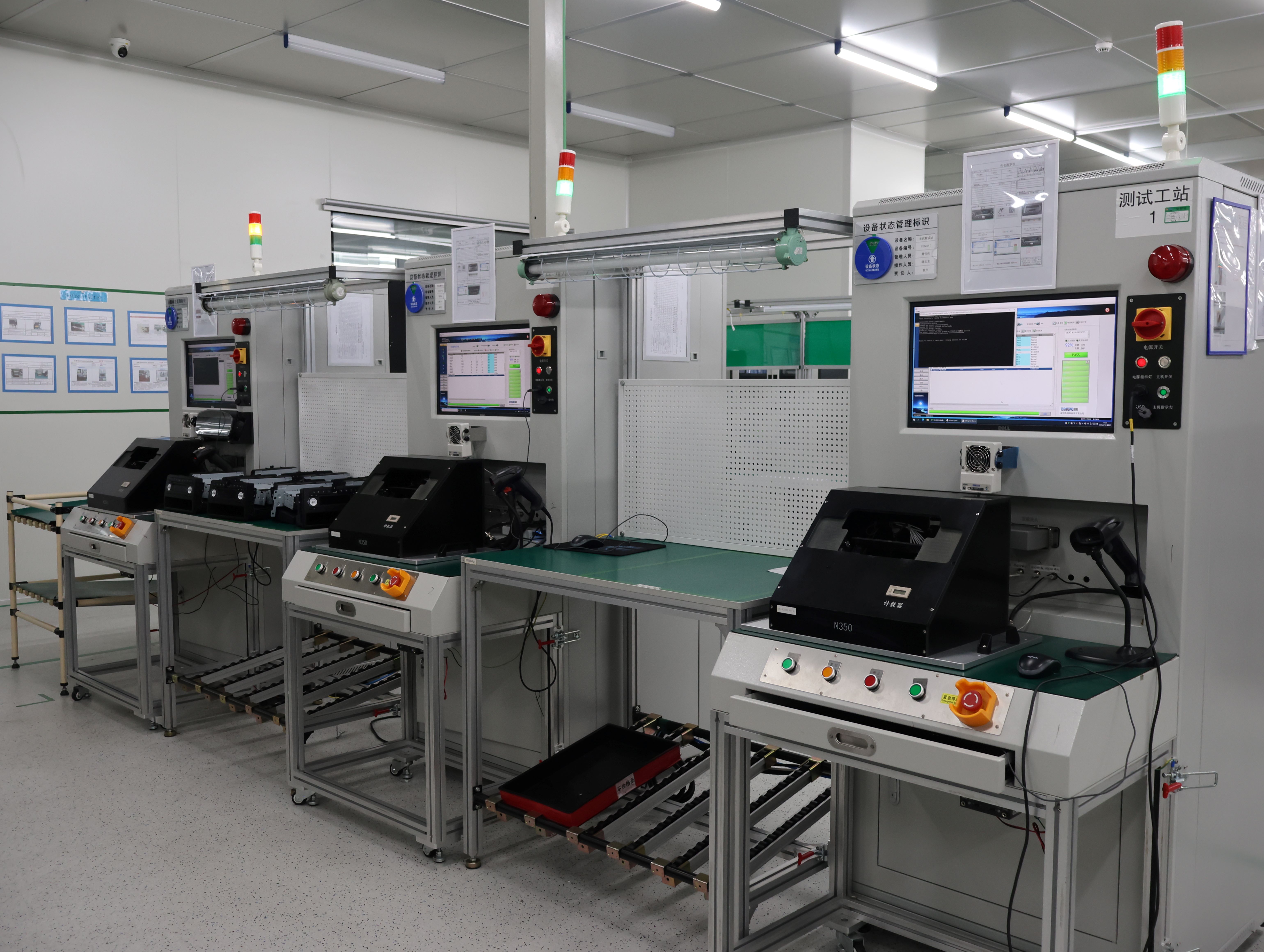
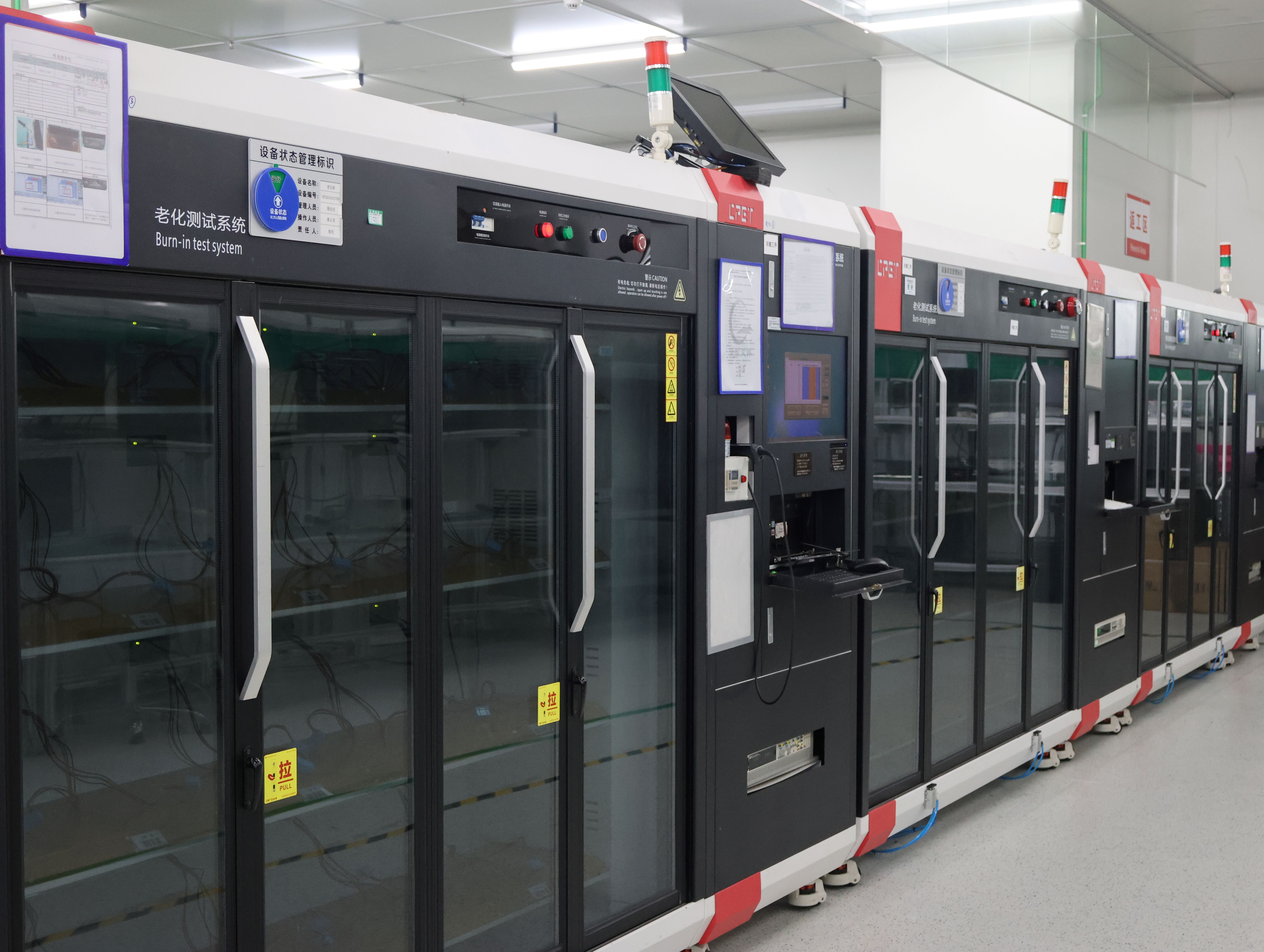
Control-board design is the part of a smart PDU that no rack photograph shows and no interface line implies. BOMPDU states that its production facility meets ISO 9000 (Quality Management System) and ISO 14000 (Environmental Management System) requirements, that it holds more than ten invention patents covering common PDU connector types available on the market, and that its engineering organisation includes 12 engineers working alongside long-term cooperation with universities. Those facts describe capability. They do not replace a scope statement.
To close this layer, request the certificate and read four items: the standard and revision named on it, the scope wording, the site covered, and the validity dates. Then ask the separate question — is control-board design and development named inside that scope, and who signs the design change notification when a component or firmware revision changes? Where the product must meet IEC 62368-1:2023, request safety evidence for the exact model rather than for the family.
Product categories and how their documents differ
Intelligent 2nd generation PDU
This is a network-managed family in which the catalogue documentation distinguishes a main module from distributed control modules. For a buyer, that architecture is the first thing to pin down in writing: which functions live in the main module, which live in a distributed module, how the two communicate, and how many downstream modules one main module supports. Two module types also mean two sets of model codes on the purchase order, and mixing them is a common execution error.
1U/1.5U RS485 PDU
This is a rack-height-defined family for cabinets where the serial bus, not IP termination, is the control path. Rack height affects outlet count, breaker layout and cabling depth, so 1U and 1.5U versions should be specified as separate line items rather than as one family reference. Here the datasheet questions are narrower but sharper: the RS485 register map, the addressing scheme inside a dense cabinet, and the behaviour of the bus when one unit in the chain loses power.
What the interface claim does not cover: three honest limits
Limit 1 — outlet density technology. High-density outlet designs exist specifically to fit more outlets into the same rack space. Raritan’s HDOT technology groups outlets into modules so more outlets can be installed in the same footprint. The specification set described in this guide does not include HDOT-class outlet technology, so projects where outlet count per U is the binding constraint should compare on that dimension explicitly instead of assuming equivalence.
Limit 2 — accuracy claims without test conditions. Server Technology states ±0.5% metering accuracy for its PRO4X intelligent rack PDUs. That figure is meaningful only alongside a calibration method, an operating range, an uncertainty statement and a test report. Accuracy values from two suppliers cannot be ranked without matching those conditions, so treat them as claims to be documented rather than as a score.
Limit 3 — protocol breadth is not IPv6 support. Server Technology’s PRO4X lists SNMP, MODBUS, open REST-based APIs and a Redfish API; Raritan lists SNMP v2/v3, MODBUS/TCP and IPv4/IPv6 management. A buyer searching for an IPv6-supported PDU should therefore treat IPv6 as a separate mandatory field in the RFQ, because a broad protocol list can still leave the address family unstated.
Step-by-step: reviewing a smart PDU datasheet before ordering
Use cases where this reading method changes the decision
RS485 integration into an existing building management system
When the IP address plan is closed and the serial path carries the whole function, the register map and the addressing scheme are the deliverables. A supplier who can produce the point list in week one removes a month of integration risk; a supplier who cannot moves the risk onto the buyer’s controls contractor.
Industrial cabinet with sequential power-on and custom alarm thresholds
Sequence timing, threshold ranges and alarm destinations must be documented per outlet group, with the RS485 or network feedback path named. If the datasheet offers only “sequential start” and “configurable thresholds”, the RFQ should ask for the parameter table and the range limits before the cabinet design is frozen.
Multi-vendor DCIM estate with mixed protocols
One product may answer Modbus TCP while another exposes REST or Redfish. The integration artefacts are the point list and the API list, not the protocol logo. This is also the point at which IPv6 should be confirmed separately rather than inferred from a protocol list.
Distributor or OEM programme with tender submissions
Documentation continuity matters more than any single feature. A distributor submitting into a public tender needs a stable datasheet revision, a certificate copy with a readable scope, and a documented change-notification route. A minimum order quantity of 2 units also makes sample-level validation practical before a framework commitment.
Comparison table: what each datasheet line actually covers
| Datasheet line | What it confirms | What it does not confirm | Document to request |
|---|---|---|---|
| “RS485, Modbus” | A serial bus and a protocol stack are claimed. | RTU vs TCP, function codes, addressing, isolation, maximum units per bus. | Register / point list with address, data type, scale, unit and alarm bits. |
| “10/100 BASE-T” management port | Stated management port speed for the configuration described here. | Whether a gigabit port is available; APC states 10/100/1000 BASE-T for NetShelter Rack PDU Advanced. | Interface specification and switch-compatibility note. |
| “IPv6 supported” | IPv6 management is claimed — Raritan lists IPv4/IPv6 with SNMP v2/v3 and MODBUS/TCP. | Dual-stack behaviour, address-plan constraints, firmware maturity. | Firmware release note plus an address-family test record. |
| “Cascading up to N devices” | A stated device count — 16 devices for Raritan PDU-to-PDU cascading; 50 devices on one IP address for Vertiv Intelligence Director. | That the two architectures are equivalent; the counts are not directly comparable. | Topology diagram, maximum downstream units, IP behaviour, controller requirement. |
| “±0.5% metering accuracy” (Server Technology PRO4X) | A manufacturer accuracy claim for a named product line. | Test conditions, measurement basis, uncertainty. | Calibration method, operating range, uncertainty statement, test report. |
| “Overload protection” | A protection function is claimed. | Alarm levels, threshold behaviour, feedback channel. | Definition of alarm levels and feedback path — BOMPDU documents a dual-level alarm with RS485 / network feedback. |
| “ISO 9000 quality management system” (BOMPDU facility) | Quality management compliance is stated, alongside ISO 14000 for environmental management. | Standard revision on the certificate, site covered, whether control-board design and development are in scope. | Certificate copy with scope and validity, plus a named design-responsibility statement. |
| “High-density outlets” | Outlet density technology is claimed — Raritan HDOT groups outlets into modules. | That the same outlet count per U is available in a different architecture. | Outlet layout drawing per rack height (1U / 1.5U) and per phase configuration. |
FAQ
1. Does an ISO 9000 quality management certificate mean the PDU control board design is certified?
No. These are two different documents. BOMPDU states that its production facility meets ISO 9000 (Quality Management System) and ISO 14000 (Environmental Management System) requirements, which describes management-system compliance at a site. A quality management certificate covers processes under a named standard revision and does not certify a product’s electrical safety. Product safety for ICT equipment including PDUs is governed by IEC 62368-1:2023 in most major jurisdictions. Buyers should request the certificate copy with standard revision, scope wording, site and validity, ask explicitly whether control-board design and development are named inside that scope, and separately request safety evidence for the exact model.
2. What documentation proves an RS485 or Modbus interface is actually usable?
Three documents. First, a register or point list giving address, data type, scale factor, unit and alarm bit mapping. Second, an interface definition stating whether Modbus runs as RTU over RS485 or as TCP over Ethernet, together with baud rate, framing, addressing range, termination and isolation. Third, the functional definitions behind the registers — for example BOMPDU’s dual-level overload alarm, where a primary alarm reports current approaching the rated value and a secondary alarm reports overload, with feedback over RS485 or the network, and the relay control logs that record action status and service life. Without those three, the interface line cannot be tested and should not be accepted as a specification.
3. Why do two PDUs with an identical “RS485 + Modbus” line differ in price?
Because the interface line is the cheapest part of the document to write. The price difference sits in the control-board design, the relay rating and cycle logging, the alarm logic, the metering accuracy claim and the test conditions behind it, the management port speed (10/100 BASE-T here versus 10/100/1000 BASE-T stated by APC for NetShelter Rack PDU Advanced), the outlet density technology (Raritan HDOT groups outlets into modules to raise outlet count in the same space), and the documentation pack supplied with the order. Budget for the documentation, not only for the hardware.
4. Can a sample validate datasheet claims before a full order?
Yes for interface and function; no for long-term reliability. Commercial terms documented for this programme state a minimum order quantity of 2 units and a typical production lead time of 30 days, acceptance is defined as a pre-shipment test, and payment terms are recorded as 30/70. A useful sample test has six points: read every register on the point list, force the primary and secondary overload alarms and confirm the RS485 feedback, cycle a relay and read the control log, run the serial and network paths at the same time, confirm IPv6 or Modbus TCP behaviour if those are in scope, and perform one full power cycle with the bus live. Sample and quotation requests can be raised directly with the manufacturer through the contact details at the end of this guide.
5. What lead time and production capacity should a long-term programme plan around?
The stated figures are a typical production lead time of 30 days and a monthly production capacity of 1,000 units, with a minimum order quantity of 2 units. For a multi-site rollout, plan around documentation as carefully as around volume: fix one datasheet revision per site, agree a change-notification route for firmware and control-board revisions, and require a pre-shipment test record for every batch. BOMPDU’s facility documentation, including its quality and environmental management statements and its engineering headcount of 12 engineers, is the material a buyer would attach to a supplier qualification file. Contact the BOMPDU team to request a sample, a quotation, or the current datasheet package for the Intelligent 2nd generation PDU and the 1U/1.5U RS485 PDU.

Conclusion: write the scope, not the adjective
A smart power distribution unit datasheet is a compressed document, and compression is exactly where scope disappears. The reading method that survives execution is simple and repeatable: treat every line as an interface claim first, then as a functional commitment, and only then as documented design scope. RS485 and Modbus belong to layer one. Dual-level overload alarms with RS485 feedback and relay cycle logging belong to layer two. A quality management certificate with a readable scope, plus safety evidence to IEC 62368-1:2023 for the exact model, belongs to layer three.
Buyers who work the three layers separately get a specification they can test, a supplier conversation that produces documents instead of adjectives, and a purchase order whose line items match the model that will actually arrive in the rack. Buyers who accept the first layer alone get a port, a protocol name, and an integration risk transferred silently onto their own controls team.
Next step for procurement teams
Request the datasheet package, register list and quality documentation for the Intelligent 2nd generation PDU and the 1U/1.5U RS485 PDU. Samples are available from a minimum order quantity of 2 units, with a typical production lead time of 30 days.
Email: tony1091803@wxbom.cn | Tel: +86 18751550927 | WhatsApp: +1 (786) 989-2761
Website: www.wuxibom.com
Download the product brochure: BOMPDU Smart PDU Catalogue (PDF)