20
11/2026
Smart PDU Compliance Guide: What to Check on an ISO 9001 Certificate
Field-by-field guide to reading a Smart PDU ISO 9001 certificate: standard, issuer, number, scope and validity of certificate 05126Q03324R001, plus purchase-order clauses.
Smart PDU Compliance Guide: What to Check on an ISO 9001 Certificate
An ISO 9001 certificate is usually the first document a Smart Power Distribution Unit supplier sends and the last one a buyer reads closely. At the research and evaluation stage, the question that matters is not whether a certificate exists. It is whether the four identifying fields — standard, issuer, certificate number and scope — describe the activity and the product family you are actually buying.
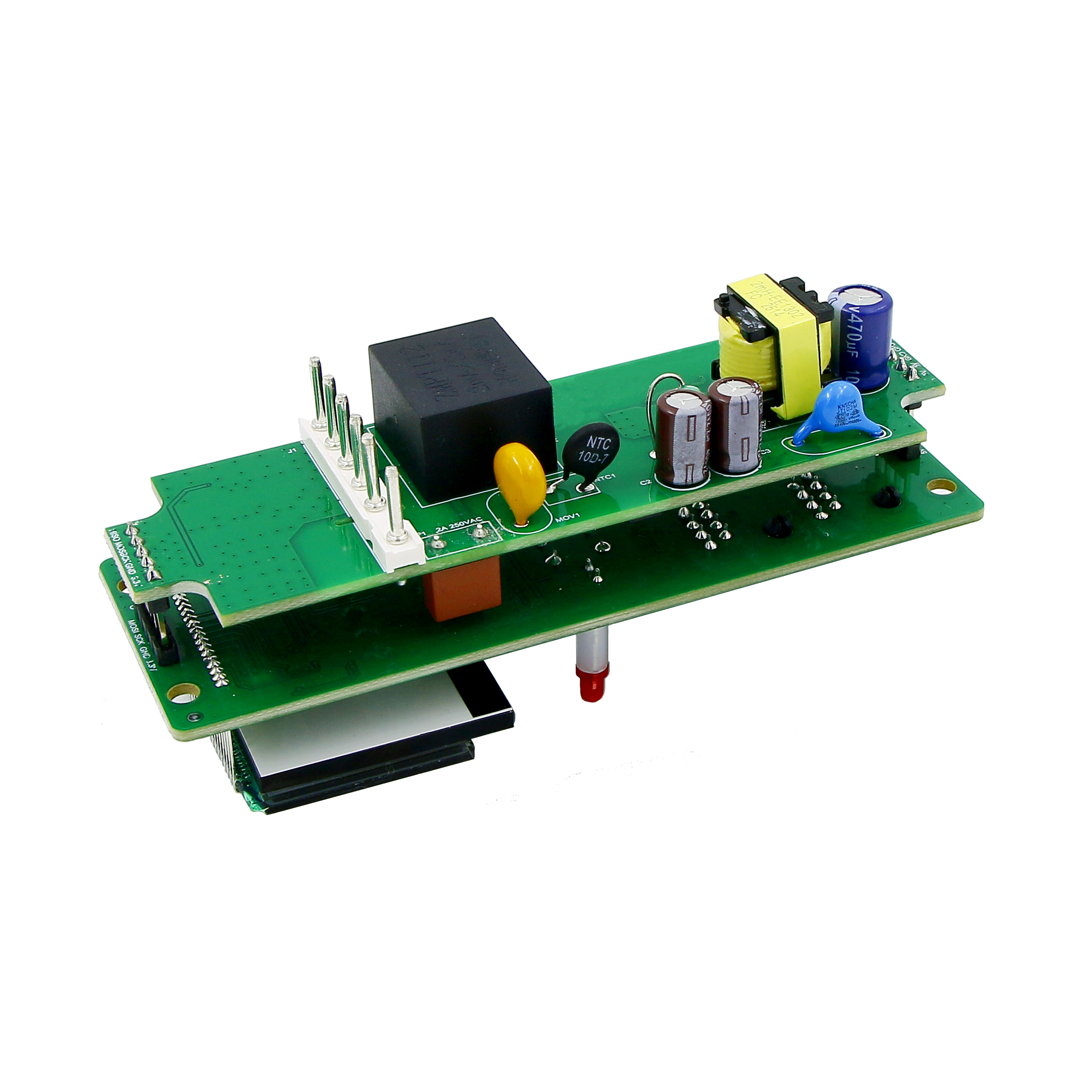
The certificate that applies to this product family is number 05126Q03324R001, issued by NOA Testing & Certification Group Ltd., the certification body named on the document. It cites GB/T 19001-2016/ISO9001:2015, runs from 24 July 2026 to 23 July 2029, and states a scope covering the design and development of intelligent Power Distribution Unit (PDU) control boards, core control boards for water level sensors, and industrial control boards. Two PDU models are named as related products: 1558, the Intelligent 2nd generation PDU product, and 1559, the 1U_1.5U 485 PDU.
The manufacturer behind those models is Wuxi Bom Electronic Technology Co., Ltd. (BOMPDU), based in Wuxi, Jiangsu Province, with a product line focused on end-of-row power distribution for data centers. Reading its certificate properly takes about ten minutes and prevents two expensive mistakes: accepting a quality certificate as product safety approval, or assuming a scope sentence covers an activity it never mentions.
What an ISO 9001 certificate can and cannot tell a PDU buyer
ISO 9001:2015 is a quality management system standard. A certificate against it records that an accredited certification body has assessed how an organization plans, controls, reviews and improves the processes listed in the certificate scope. The subject of that audit is a management system. The subject of your purchase order is a rack-mounted power distribution unit, and the two are different objects of evidence.
Supplier packs routinely fold three documents into one folder: the quality management system certificate, product safety and conformity evidence for the destination market, and performance data such as metering accuracy or load ratings. IEC 62368-1:2023, for example, is recorded by IECEE and IEC material as the safety standard applied to ICT and AV equipment, including PDUs, in most major jurisdictions — a product safety question settled by product testing, not by a QMS audit. Buyers who keep the three apart avoid both over-reading and under-reading the file.
The same logic applies to other registrations in a supplier's portfolio. BOMPDU's documentation set also includes a Computer Software Copyright Registration, number 2024SR1888355, issued by the National Copyright Administration of the People's Republic of China for the Intelligent 2nd generation PDU product; that registration applies to the China market under the Regulations on the Protection of Computer Software and the Measures for the Registration of Computer Software Copyrights. It is a copyright registration with a defined subject, not a quality or safety approval, and it should be filed as what it is.
One line on the certificate needs particular care. The market field reads Global (IAF-MLA mutual recognition). That entry concerns recognition of accredited certification among members of the International Accreditation Forum's multilateral arrangement; it describes how an accredited certificate travels between markets. It is not a product approval for a destination market, and it does not remove the need to confirm which safety approvals your own jurisdiction or customer requires.
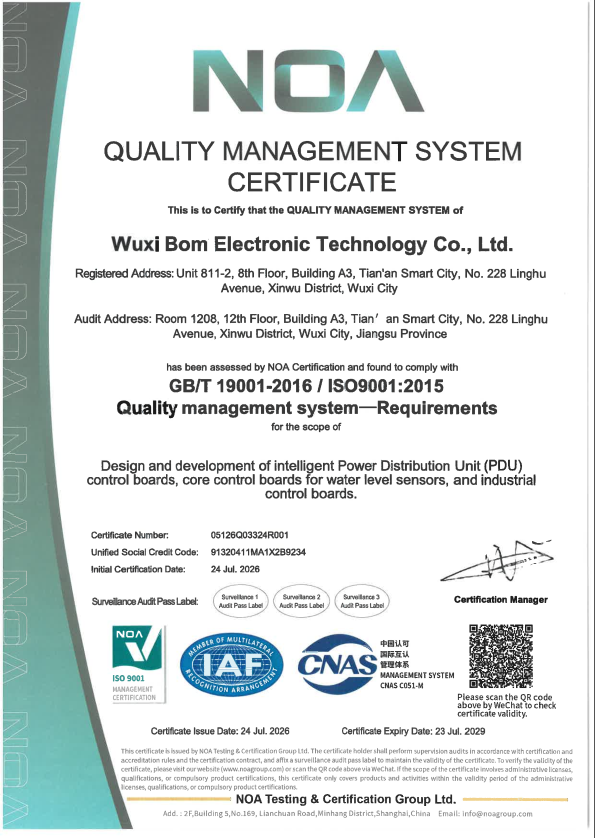
Six fields to read on certificate 05126Q03324R001
Read the document in a fixed order. The sequence below moves from identity to boundary, which is the order in which doubt usually appears.
Field 1 — the standard designation
The certificate cites GB/T 19001-2016/ISO9001:2015. Check the edition year first: 2015 is the current edition of ISO 9001, so a document still citing the 2008 edition is answering a different question. The paired GB/T number is the Chinese adoption of the same standard, printed alongside the ISO designation — normal for a certificate issued in China and used in cross-border supply conversations, where a European or North American buyer looks for the ISO reference while a Chinese contract may cite the GB/T reference. Both appear here, which removes an argument later.
Field 2 — the issuer
The issuing body is NOA Testing & Certification Group Ltd. Two checks follow. First, the issuer name on the PDF must match the issuer you verify with; a cropped scan is not a document. Second, confirm who holds the certificate. If you buy through a distributor or integration partner, the certificate belongs to the organization named on it, so ask how that organization relates to the entity that will appear on your invoice and packing list.
Field 3 — the certificate number
Number 05126Q03324R001 is the unique key for the whole exercise. Record it in the purchase order, the supplier qualification file and the incoming inspection log, so any later revision, suspension or scope change can be traced against a specific document rather than a conversation. Do not attempt to decode meaning from the digits; the issuer's register is the authority on status, and the number's job is identification, not interpretation.
Field 4 — the scope statement
The scope reads: “Design and development of intelligent Power Distribution Unit (PDU) control boards, core control boards for water level sensors, and industrial control boards.” This is the most informative line on the certificate, and the one most often over-read.
Three things follow from the wording. First, the certified activity is design and development — an engineering process, not the assembly of every finished chassis that leaves the building. Second, the object of that activity is control boards: the board family that carries monitoring, control and communication functions. Third, the scope names three board families, with sensor and industrial control boards stated separately from PDU boards, which tells you the certificate is not a general “electronics manufacturing” statement.
What the sentence does not do is enumerate outlet counts, current ratings, firmware features, chassis assembly, final test regimes or installation services. Those belong in a product specification and in the quality plan attached to your order. If your evaluation depends on a specific activity — for example, whether a customized metering and control board configuration is designed under the certified system — ask for a written scope-to-product mapping instead of inferring it from the certificate title.
Field 5 — validity dates
The certificate is valid from 24 July 2026 to 23 July 2029. Three date checks are worth doing during evaluation: does the window cover your order release and shipment; does your contract term, including warranty, run past 23 July 2029; and what does the supplier commit to at renewal. For a data center rollout with a multi-year service life, the answer belongs in the contract, not in a filing cabinet.
Field 6 — related products named
The certificate names two related products: model 1558, the Intelligent 2nd generation PDU product, and model 1559, the 1U_1.5U 485 PDU. That linkage is useful because it shows which product family the supplier associates with the certified activity, and it gives your purchase-order annex a precise reference. It does not replace the scope sentence: the certificate covers design and development of control boards, while the named models are the products the supplier connects to that coverage.
What the certificate establishes — and what still needs separate evidence
The table below is the working version of the check. Keep it beside the certificate during evaluation; each row converts a field into an obligation you either accept or place elsewhere in the evidence file.
| Certificate field | Value on this certificate | What it establishes | What it does not establish | Where to record it |
|---|---|---|---|---|
| Standard | GB/T 19001-2016/ISO9001:2015 | QMS requirements applied to the audited activities | Product safety approval, market conformity, or compliance with any product standard | Quality clause in the purchase order |
| Issuer | NOA Testing & Certification Group Ltd. | Identity of the certification body; document traceable to that body | Independent testing of a supplied unit | Supplier qualification record |
| Number | 05126Q03324R001 | A unique reference for verification and revision control | Model-specific approval of any kind | PO reference field and inspection log |
| Scope | Design and development of intelligent PDU control boards, core control boards for water level sensors, industrial control boards | Which design and development activities sit inside the system | Finished-unit assembly, outlet wiring, every variant, or software functions not listed | Scope-to-product mapping annex |
| Validity | 24 July 2026 – 23 July 2029 | The certificate is in force during that window | Continuity after expiry without renewal or surveillance | Contract clause on renewal and notification |
| Related products | Models 1558 and 1559 | The supplier's stated link between certificate and product family | The declared ratings or accuracy of each configuration | Model list in the purchase-order annex |
Every row has the same shape: the certificate answers the middle columns and leaves the last two to other documents. Procurement failures usually come from collapsing “related product” into “approved product”, or from treating a management-system audit as a test report.
Matching the scope to models 1558 and 1559
The scope's emphasis on control boards makes more sense once you look at what the two named models do. In both, the behaviour a buyer pays for is generated at board level, which is why the design-and-development scope is relevant — and why it still is not a performance certificate.
1558 Intelligent 2nd generation PDU product
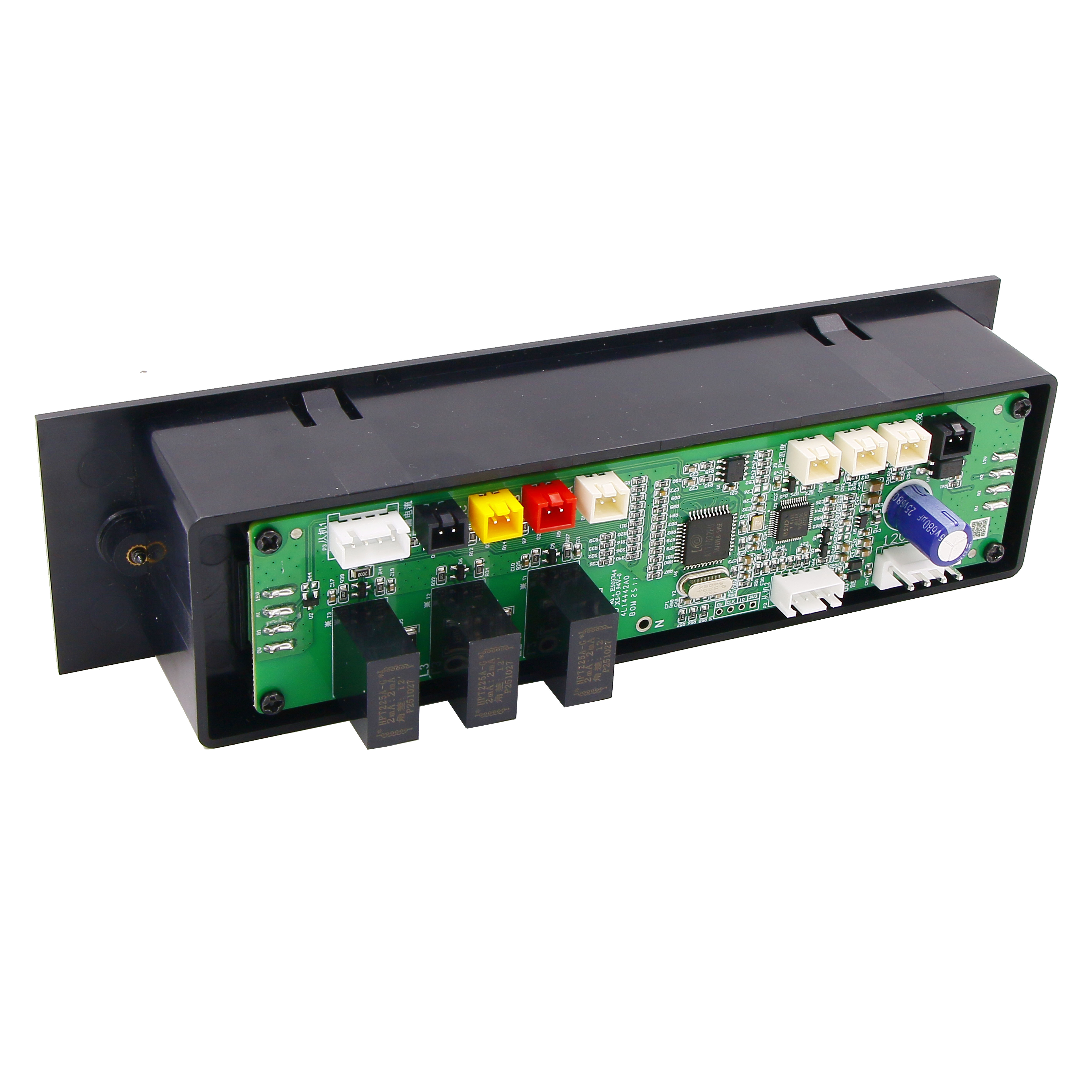
Model 1558 is a network managed PDU built around input and output measurement. Its declared input is AC 110–250 V, 50/60 Hz, with a maximum load current of 0–63 A and single-phase or three-phase input. Input parameter collection covers current, voltage, electrical energy and power, including active, reactive and apparent power and power factor. Declared input accuracy is 0.5% for voltage across 85–250 V, accuracy level 1 for current between 0.65 A and 3.1 A, and level 0.5 for current between 3.1 A and 63 A. On the output side the auxiliary module has four outputs, the main module supports up to eight auxiliary modules, rated output is AC 220 V, single-channel output current is a maximum of 16 A and a single board a maximum of 32 A, with separate monitoring and control per outlet.
For a Socket-Level Monitoring PDU or Remote Control PDU specification, that last function is what buyers test: whether monitoring and switching happen per outlet, and whether readings are accurate enough for capacity planning. Those are datasheet claims, validated by test evidence on the model you receive. The certificate explains who is accountable for the design process behind the board; it does not validate 0.5% or 63 A.
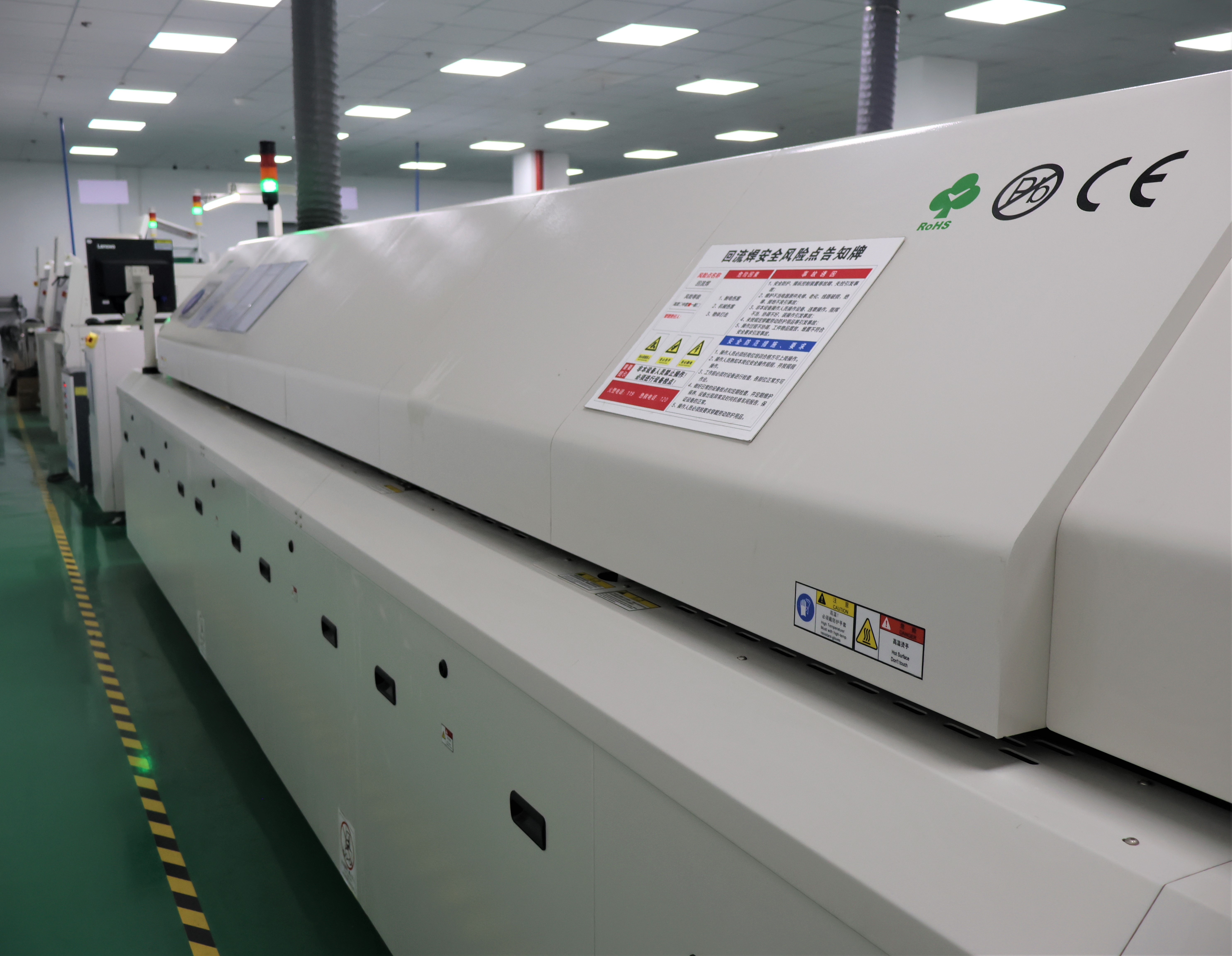
1559 1U_1.5U 485 PDU
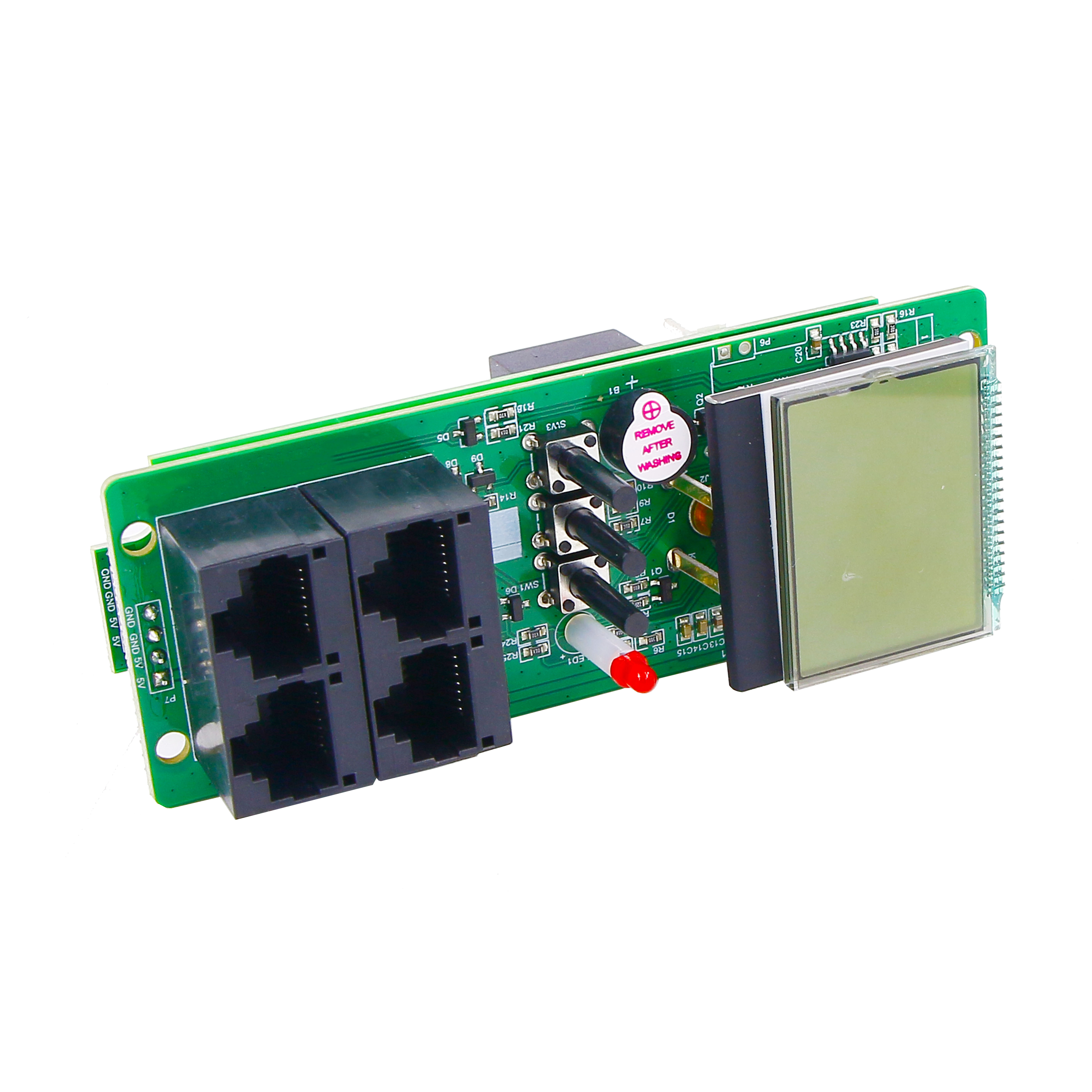
Model 1559 is the RS485 PDU in the pair. Rated input voltage is 100–240 V with an operating input range of 90–264 V, communication is RS485 with the Modbus protocol, and voltage, current, power and energy measurement are stated at accuracy Level 1 (1% ± 0.1), with current taken through an external transformer. The display is a segment-code LCD, and overvoltage, undervoltage and overcurrent alarms are provided with parameters that can be set — the configuration a buyer would describe as a custom alarm threshold PDU.
Settable alarm thresholds are an operational feature, and they create an acceptance item: record the thresholds agreed for your site, because delivered alarm settings are a configuration record, not a certificate property. The board-level logic is the same as with model 1558 — alarm and metering functions are implemented in the control board, which is the activity the scope describes.
Two boundaries are worth stating plainly. If your specification calls for IPv6 management, sequential power-on sequencing or cascadable master-slave operation, treat each as a model-level requirement to be evidenced by that model's documentation and an agreed configuration; the certificate scope does not enumerate them, and no QMS certificate can establish them. Likewise, where a project needs an Industrial Smart PDU configuration with site-specific wiring, surge protection or rail-mount installation, the certificate covers control-board design and development, not installation engineering.
From certificate to contract: eight steps and a clause set
The certificate changes an outcome only when it appears in the purchasing documents. The sequence below fits inside a normal evaluation cycle.
- Request the full document set before technical evaluation closes: the certificate, any scope annex, and the issuer's verification route. A single image forwarded by a sales contact is not a document set.
- Verify the certificate with the issuer using number 05126Q03324R001, then record the verification date and who confirmed it. It is a one-line record that later answers an auditor's question.
- Confirm the edition year is 2015 and note the paired GB/T 19001-2016 reference, so a Chinese contract template and an international one point to the same standard.
- Map the scope sentence to your bill of materials: which boards you are buying, which design activities they depend on, and which ordered models the certificate names.
- Split the evidence plan into three tracks — QMS certificate, product safety evidence for your destination market, and performance evidence such as accuracy and load ratings — and assign one document to each.
- Write the certificate reference into the purchase order: number, issuer, standard, validity window, and the supplier's obligation to notify you of any scope change, suspension or withdrawal.
- Define acceptance records: a controlled copy of the certificate with its revision, incoming inspection against the declared parameters of the ordered model, and — for model 1559 — the alarm threshold settings agreed for the site.
- Set a review date ahead of 23 July 2029 for contracts running past it, and agree in advance what evidence arrives at renewal.
| Clause area | Suggested wording (adapt to your contract) | Evidence to hold |
|---|---|---|
| Quality system | Supplier holds a quality management system certificate to GB/T 19001-2016/ISO9001:2015, number 05126Q03324R001, issued by NOA Testing & Certification Group Ltd., valid 24 July 2026 to 23 July 2029. | Controlled certificate copy plus issuer verification note |
| Scope | Supplier confirms in writing which ordered models and which design activities fall within the certified scope. | Signed scope-to-product mapping |
| Change notification | Supplier notifies Buyer within an agreed period of any suspension, withdrawal, scope reduction or non-renewal affecting the certificate. | Notification record |
| Product evidence | Product safety and conformity evidence for the destination market is supplied separately from the QMS certificate. | Market-specific approval documents |
| Performance | Declared parameters of the ordered model are as stated in the model datasheet and are verified at incoming inspection. | Datasheet plus inspection record |
None of that clause set is unusual, and none of it asks the supplier to disclose anything the certificate does not already say. It simply prevents a common drift: a quality certificate slowly becoming the answer to every evidence question because it is the document everyone already has.
Limits to record before you sign
- A QMS certificate is not a product safety approval. GB/T 19001-2016/ISO9001:2015 addresses management processes; destination-market safety requirements are separate and should be requested as a separate document set.
- The scope is narrower than the product catalogue. It covers design and development of PDU control boards plus the two other board families named; it does not state finished-unit assembly, every variant, or site services.
- Commercial terms sit outside the certificate. Capability records for this line list a minimum order quantity of 2 units, a 30-day lead time, monthly capacity of 1,000 units, 100% testing, and OEM/ODM customization covering metering and control, outlet count and single/three-phase input. Those are commitments to be contracted, not certificate content.
- Deployment history is application evidence, not scope extension. Company records describe 800 units monitoring electricity usage in an airport data center with three years of reported stability, and 2,000 units used for server aging tests at a data center server manufacturer with two years reported. Useful for a reference check; it does not widen what the certificate covers.
- Version discipline matters. Keep the verified certificate copy, with its dates, beside any later revision; a renewed certificate with a changed scope is a different fact.
Recorded this way, the limits do not weaken a supplier's position. They make the file defensible, which is what an internal audit or a customer's procurement review actually asks for.
Where this check changes a buying decision
Three situations make the certificate read consequential rather than ceremonial. The first is a data center tender where supplier quality documentation is a scored item: a certificate whose scope names PDU control board design and development can be assessed against the tender wording, while a certificate that only says “manufacturing” cannot. The second is an OEM/ODM project, where the thing being purchased is design work on metering and control boards; there the scope sentence describes the purchased activity almost directly, and the scope-to-product mapping becomes a central document rather than an annex. The third is a multi-year supply agreement in which the certificate expires mid-term; the renewal clause decides what happens then, and it is easier to negotiate before the first order than after.
In each case the certificate does one job well: it identifies an independently assessed management system for a defined set of board design activities. The rest of the decision — accuracy, ratings, alarm configuration, lead time, quantity, price and support — is settled by datasheets, samples, inspection and contract terms.
FAQ
What exactly does certificate 05126Q03324R001 certify?
It certifies a quality management system against GB/T 19001-2016/ISO9001:2015, issued by NOA Testing & Certification Group Ltd. The stated scope is the design and development of intelligent Power Distribution Unit (PDU) control boards, core control boards for water level sensors, and industrial control boards. The certificate is valid from 24 July 2026 to 23 July 2029 and lists models 1558 and 1559 as related products.
Does the ISO 9001 scope cover the complete Smart PDU or only the control board?
The scope sentence describes design and development of PDU control boards, not finished-unit assembly, outlet wiring or site installation. Models 1558 and 1559 are named as related products, which links the certificate to those product families, but the operative wording remains the board-level design and development activity. Buyers who need assembly or product-level evidence should request it as a separate item and keep the two in separate files.
Can the certificate confirm metering accuracy or the 63 A maximum load current?
No. Those are product specifications. Model 1558 declares a maximum load current of 0–63 A and input voltage accuracy of 0.5% across 85–250 V, with current accuracy level 1 from 0.65 A to 3.1 A and level 0.5 from 3.1 A to 63 A. Model 1559 declares Level 1 (1% ± 0.1) accuracy for voltage, current, power and energy. Verify these against the datasheet and test evidence for the model you receive; a QMS certificate does not measure them.
Should the certificate affect price or MOQ, and does it belong in the purchase order?
A quality certificate does not set price, quantity or lead time; capability records for this line list a minimum order quantity of 2 units and a 30-day lead time, and those are commercial terms to be quoted and contracted. The certificate does belong in the purchase order as a reference: number, issuer, standard and validity, plus a notification obligation if the certificate is suspended, withdrawn or reduced in scope.
How should a sample evaluation reference the certificate?
Keep the two tracks separate but filed together. The sample is evaluated against the declared parameters of the ordered model — for model 1559, alarm threshold behaviour and Modbus communication over RS485; for model 1558, per-outlet monitoring and control and the stated accuracy classes. The verified certificate copy sits behind the sample record as supplier evidence. A sample that performs well does not extend the certificate scope, and a certificate does not shorten the sample process.
The certificate expires on 23 July 2029 — what should a longer contract say?
Add a renewal and notification clause: the supplier provides the renewed certificate before expiry, notifies you of any change in scope or issuer, and confirms that surveillance continues in the interim. If your service life runs past 2029, that clause is the difference between a documented supplier file and an expired one. To start the check, request the certificate copy, the scope-to-product mapping for the model you intend to order, and the model datasheet; a sample can be arranged alongside the documentation review.
Conclusion
A Smart Power Distribution Unit certificate is worth what its identifying fields support: a named standard, a named issuer, a traceable number and a scope that describes real activities. Certificate 05126Q03324R001 does that clearly — GB/T 19001-2016/ISO9001:2015, issued by NOA Testing & Certification Group Ltd., valid 24 July 2026 to 23 July 2029, covering design and development of intelligent PDU control boards and naming models 1558 and 1559 as related products.
The buyer's job is the matching step. Put the certificate in the quality clause, the model datasheet in the performance clause, product safety evidence in its own track, and the renewal date in the contract calendar. Done that way, the certificate stops being a PDF that travels with a quotation and becomes an acceptance criterion you can audit.
Next step. Download the BOMPDU product brochure for model-level specifications: Smart PDU product brochure (PDF). Certificate copies, the scope-to-product mapping for models 1558 and 1559, and sample arrangements can be requested through www.wuxibom.com.