22
11/2026
ISO 9001:2015 for Smart Power Distribution Units: What the Certificate Scope Means
What the ISO 9001:2015 certificate scope means for a Smart PDU: standard, issuer, certificate number, covered design activity and procurement checks.
ISO 9001:2015 for Smart Power Distribution Units: What the Certificate Scope Means
Quality testing is one evidence layer. The certificate scope is another: it states which quality management activity has been assessed.
A certificate on a supplier file is easy to treat as a badge. For a Smart Power Distribution Unit, the more useful question is what the certificate actually covers. The wording matters because it tells a buyer which activity has been assessed, which standard was used, who issued the certificate, and where the evidence stops.
For this review, the relevant certificate is identified as certificate no. 05126Q03324R001, issued by NOA Testing & Certification Group Ltd., to the standard GB/T 19001-2016/ISO 9001:2015. Its stated scope is the design and development of intelligent PDU control boards. Those facts make the certificate specific. They do not make it a product safety approval for every PDU model.
The certificate is associated with Wuxi Bom Electronic Technology Co., Ltd. (BOMPDU), a Wuxi, Jiangsu-based manufacturer of end-of-row power distribution solutions for data centers. BOMPDU states that it was established in 2018, that its main products include the Intelligent 2nd generation PDU and the 1U_1.5U 485 PDU, and that its production facility has achieved full compliance with ISO 9000 and ISO 14000 standards. Those company statements give context. The specific ISO 9001:2015 certificate still needs to be read on its own terms.
Why a Scope Sentence Changes the Review
Many supplier questionnaires ask one simple question: is the supplier ISO 9001 certified? The yes-or-no answer hides the scope. A quality management system certificate can be valid and still not cover the exact product, site, or activity that a buyer assumes. For a smart PDU, that difference is material because the control board is where monitoring, alarm logic, communication, and output control meet.
A buyer who reads only the certificate logo may conclude that every smart PDU from that supplier has been certified. A buyer who reads the scope sees a narrower and more useful statement: the certified activity is design and development of intelligent PDU control boards. That statement supports questions about design control. It does not answer questions about product safety testing, model-specific accuracy, protocol performance, or every factory process.
This is why the scope sentence should be copied into the procurement file. It makes the certificate auditable. It also prevents the certificate from being used to claim more than it says. For a data center operator, a distributor, or an industrial integrator, the practical task is to match the scope to the product being sourced and then request the remaining evidence separately.
Industry Background: Why Control-Board Design Is Central to a Smart PDU
A smart PDU is not only a metal enclosure with outlets. Its control board supports functions that buyers now expect in monitored and switched power distribution: current and voltage measurement, alarm logic, remote control, and communication with building or data center management systems. Manufacturer documentation in the supplied evidence describes monitored, switched, and outlet-level monitoring configurations from Server Technology and Vertiv, and outlet-level switching and monitoring in relevant Raritan models. These are market examples, not BOMPDU claims. They show why control-board design is a meaningful scope for a quality management review.
The same evidence context suggests that smart PDUs are a substantial part of the category. Commercial research cited in the supplied data estimates that intelligent PDUs accounted for more than half of total PDU market revenue as of 2023. That figure is a market estimate, not a BOMPDU sales claim. Its procurement relevance is simpler: when a supplier's certificate scope names intelligent PDU control-board design, the scope is closer to the technical heart of the product than a generic company-level certificate would be.
But the certificate remains a quality management system certificate. Supplied third-party evidence identifies IEC 62368-1:2023 as the mandatory safety standard for ICT and AV equipment including PDUs in most major jurisdictions. A buyer should keep the ISO 9001 scope and the product-compliance file separate. The first answers a management-system question. The second answers a product-safety and market-access question.
What the Certificate States, Line by Line
The certificate should be read as a set of linked statements, not as a single logo. The table below separates what the certificate states from what a buyer still needs to verify.
| Certificate line | Stated wording or fact | Procurement meaning |
|---|---|---|
| Standard | GB/T 19001-2016/ISO 9001:2015 | Names the quality management standard and version. Check that your RFQ accepts this version and the national adoption. |
| Issuer | NOA Testing & Certification Group Ltd. | Identifies the certification body. Verify the certificate and its current status directly with the issuer. |
| Certificate number | 05126Q03324R001 | Gives a unique reference for the certificate copy and for supplier records. |
| Scope | Design and development of intelligent PDU control boards | The assessed activity is control-board design and development. This is not a blanket list of all PDU models or all manufacturing steps. |
| Product safety | Not stated by the ISO 9001 scope wording | A quality management certificate does not replace product safety testing, EMC evidence, environmental compliance, or market-specific approvals. |
| Global-market applicability | The certificate uses an international quality management standard and is presented for cross-market supplier qualification | It can support global procurement discussions, but acceptance still depends on the buyer, the destination market, and the product compliance requirements. |
The standard line matters because ISO 9001 has versions. The issuer line matters because a certificate number is only useful if it can be checked. The scope line matters because it defines the boundary. The product-safety line matters because ISO 9001 is not IEC 62368-1, and a quality management certificate should not be filed as if it were a product safety certificate.
What Design and Development Scope Means in Practice
A scope that names design and development tells the buyer that control-board design is inside the certified quality management system. It does not tell the buyer that every control board, every firmware release, or every completed PDU has been individually certified. The distinction is important for procurement because design control is a process claim, while product conformity is a model-level claim.
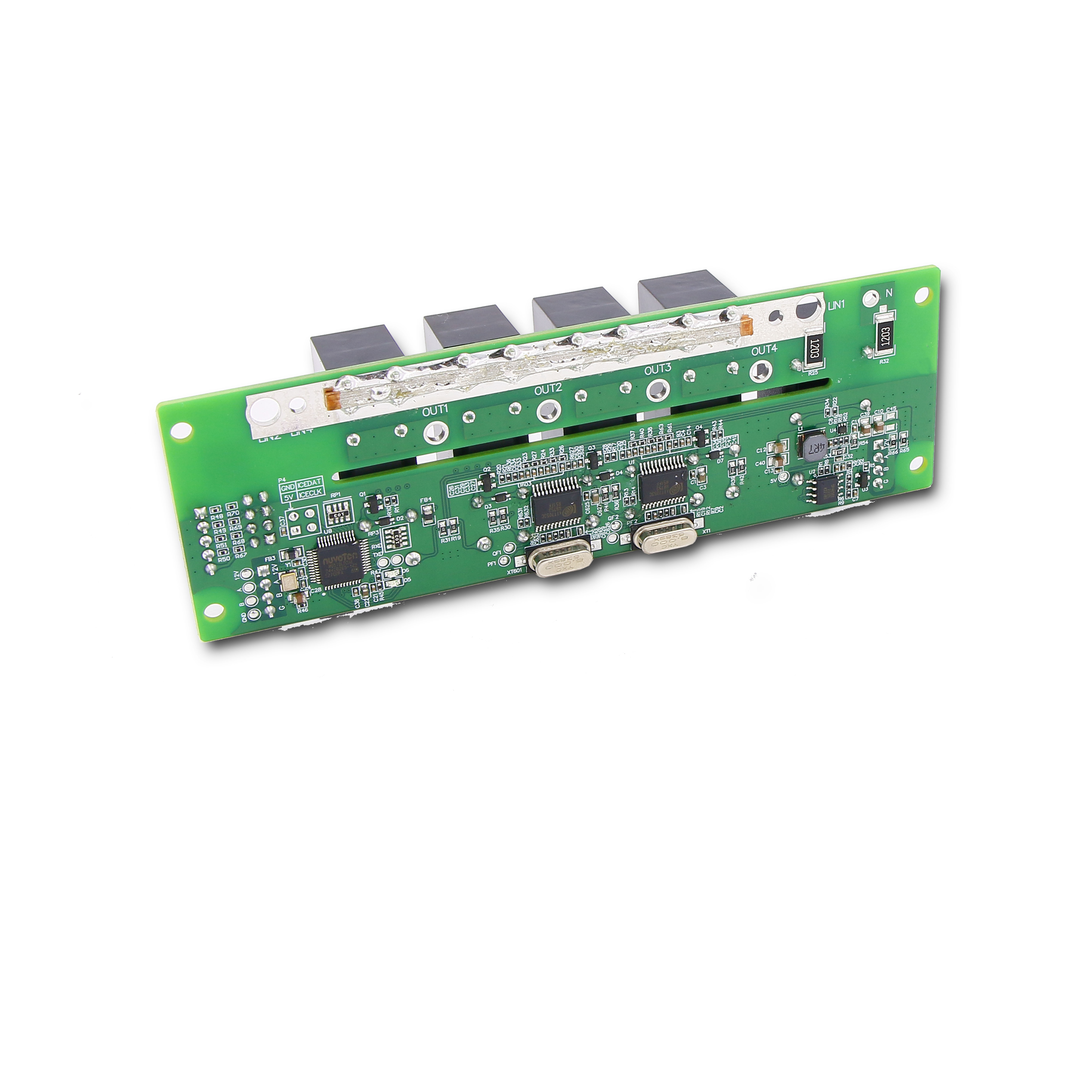
The Intelligent 2nd generation PDU is one product context in which control-board design scope matters. Model-specific specifications still require their own review.
In a design-and-development scope, a buyer can reasonably ask for design planning records, design inputs and outputs, design reviews, verification and validation evidence, and change-control records for the control board. These requests are normal quality management checks. The certificate scope makes them relevant. It does not prove that every requested record exists for a particular PDU model, so the buyer should ask for the records that match the model and revision under consideration.
BOMPDU states that its R&D team consists of 12 engineers, that it holds more than ten invention patents for PDU products, and that it maintains long-term cooperation with universities. These are company statements about capability. They are useful context for a supplier review, but they should not be confused with the certificate's scope. The certificate is evidence about a management system for a defined activity. The R&D statements are separate inputs for a capability conversation.
Design scope also has a practical limit. A control board can be well designed and still be placed in a PDU with a different enclosure, connector set, breaker, or assembly process. That is why the scope should be mapped to the exact model and configuration. The buyer should not stop at the certificate. The buyer should use it to ask better questions.
What the Scope Does Not Prove
- It does not prove that every PDU model is certified. The scope names intelligent PDU control-board design and development. The certificate does not list every model, outlet configuration, or optional feature. Ask for a model-to-scope map.
- It does not prove product safety compliance. IEC 62368-1:2023 is identified in the supplied third-party evidence as the mandatory safety standard for ICT and AV equipment including PDUs in most major jurisdictions. A QMS certificate is not a substitute for that safety file.
- It does not prove every manufacturing or assembly step is covered. The scope wording is about design and development of control boards. If the qualification includes production, assembly, testing, or warehousing, request site and process evidence separately.
- It does not prove protocol or feature performance. IPv6 support, SNMP behavior, Modbus register maps, alarm thresholds, metering accuracy, and outlet-level control are product-level claims. They need model datasheets and test evidence, not only a QMS certificate.
- It does not prove current certificate validity by itself. The certificate number and issuer should be checked against a current certificate copy. This article does not add an issue date or expiry date because those must come from the certificate and the issuer.
The company's ISO 14000 statement is a separate environmental management statement. It should be read alongside the ISO 9001 certificate, not instead of it. The same discipline applies to the 5000 square meter facility, the approximately 70 staff, and the annual production capacity of 10,000 units stated by BOMPDU. These are useful supplier-capability facts, but they do not change what the ISO 9001 scope says.
A Step-by-Step Buyer Review
1. Confirm the standard and version
Record the standard exactly as shown: GB/T 19001-2016/ISO 9001:2015. Check whether your organization accepts this version and whether the national adoption matters for the destination market. Do not replace the specific standard with a generic ISO 9000 reference when the certificate itself names ISO 9001:2015.
2. Check the issuer and certificate number
Record the issuer, NOA Testing & Certification Group Ltd., and the certificate number, 05126Q03324R001. Ask for a current certificate copy and verify its status with the issuer. A certificate number in a brochure is a start. A current certificate copy with a clear scope is better evidence.
3. Isolate the scope sentence
Copy the scope into the review file: design and development of intelligent PDU control boards. Underline the activity, design and development, and the object, intelligent PDU control boards. Those two elements define the boundary. The rest of the certificate should be read against that boundary.
4. Map your PDU model to the scope
Ask the supplier to explain how the control board in the exact model you are buying relates to the certified design activity. For example, the Intelligent 2nd generation PDU uses RS485 communication with Modbus protocol and provides overvoltage, undervoltage, and overcurrent alarms with settable parameters. The 1U_1.5U 485 PDU is an RS485 PDU. The buyer should ask which control board, revision, and design record apply to the model being quoted.
5. Separate quality management evidence from product compliance evidence
Keep the ISO 9001 certificate in the quality management file. Keep IEC 62368-1:2023, EMC, environmental, and any destination-market product approvals in the product compliance file. The certificate can support supplier qualification. It cannot replace a safety test report or a conformity mark.
6. Request design-control evidence
Request the design records that match the model under review: design inputs and outputs, design review records, verification and validation evidence, and change-control history for the control board. These requests are consistent with a design-and-development scope. They also help the buyer see whether the quality system is operating in practice.
7. Check manufacturing and delivery evidence separately
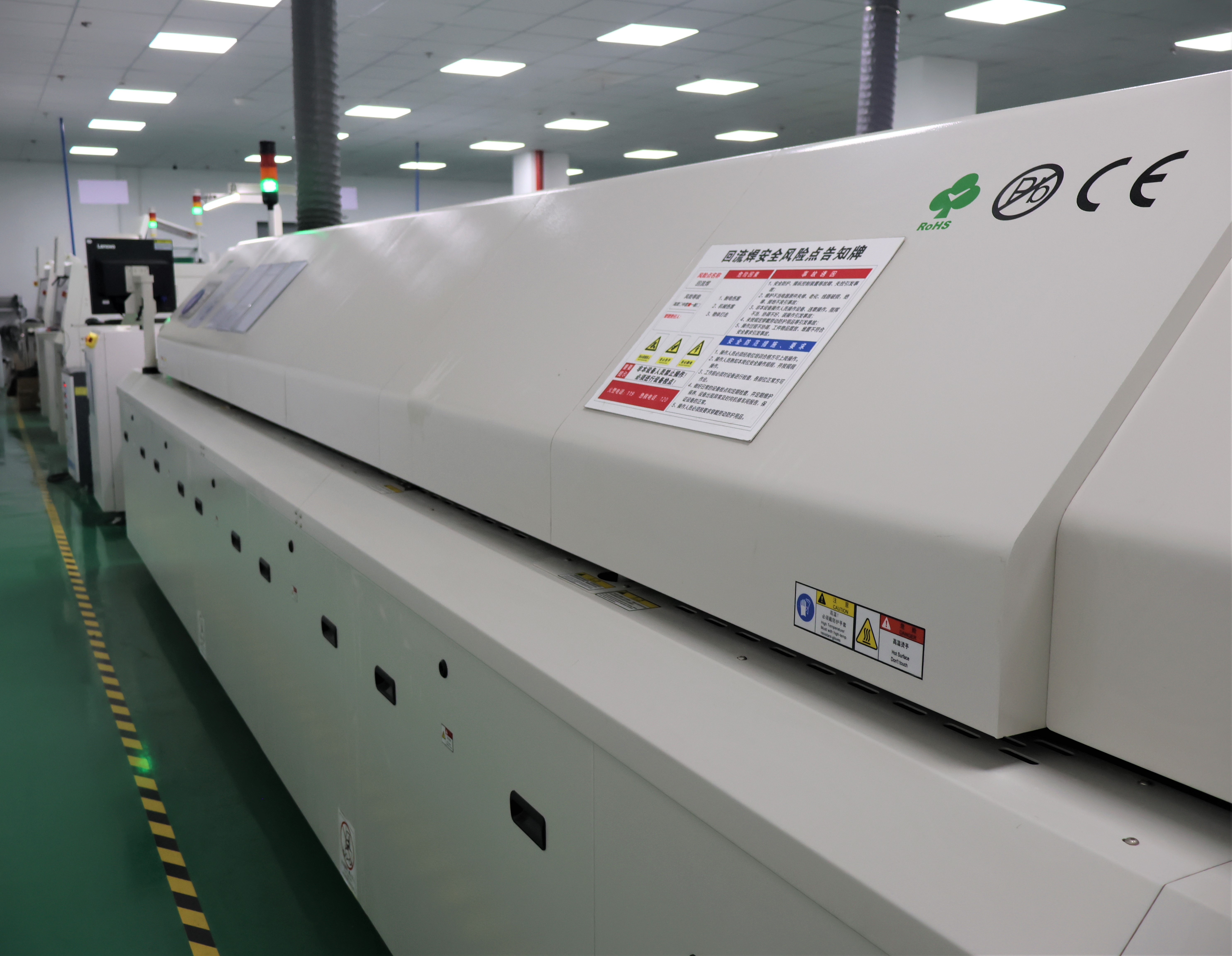
Production evidence is separate from the design-scope certificate. Buyers should request both when supply qualification requires manufacturing and delivery assurance.
BOMPDU states that its manufacturing facility covers 5000 square meters, employs approximately 70 staff, and has an annual production capacity of 10,000 units. It also states that its major markets include the USA, SEA, EU, and ME. These facts belong in the supplier-capability section of the review. They do not extend the certificate scope by themselves. If the purchase requires assembly, test, packaging, or delivery assurance, ask for the corresponding evidence.
8. Write the requirement into the RFQ
A practical RFQ line can require a current ISO 9001:2015 certificate issued by NOA Testing & Certification Group Ltd., certificate no. 05126Q03324R001, with scope covering design and development of intelligent PDU control boards, plus model-specific product safety and performance evidence. This wording keeps the certificate useful without turning it into a claim it cannot support.
Use Cases: Where This Scope Matters
Data center PDU qualification
In a data center project, buyers often evaluate remote power control, remote reset, and energy consumption monitoring. Application guidance in the corpus describes data center use in 24/7 continuous operation with servers, switches, UPS, and environment monitoring units. A certificate scope covering intelligent PDU control-board design is relevant because the control board is central to monitoring and control functions. The buyer should still verify the exact model's electrical ratings, protocol support, alarm behavior, and product safety file. For BOMPDU, the Intelligent 2nd generation PDU is specified with a maximum load current of 0-63A and single-phase or three-phase input, so the model-level electrical review remains necessary.
Industrial and telecom deployments
An industrial smart PDU may be used on an automated production line with RS485 power control and status collection, a PLC, a touch screen, and sensors. The application data also describes telecom base station use with remote reboot and voltage and current monitoring in outdoor conditions, with requirements for wide temperature range and lightning protection. In both cases, a design-scope certificate is useful evidence that control-board design is inside a quality management system. It is not evidence that a particular industrial or telecom model has passed every environmental or safety requirement. Those checks remain model-specific.
Distributor and OEM screening
A distributor may use the certificate as an initial screening item. The scope helps separate a supplier with a specific control-board design claim from one with only a generic company certificate. For an OEM or private-label discussion, the buyer should ask how the certified design activity connects to the proposed product, who controls the design records, and how changes are approved. The certificate supports that conversation. It does not replace a factory review, sample evaluation, or commercial agreement.
FAQ
What exactly does certificate 05126Q03324R001 cover?
Certificate 05126Q03324R001 is identified as an ISO 9001:2015 certificate to GB/T 19001-2016/ISO 9001:2015, issued by NOA Testing & Certification Group Ltd. Its stated scope is design and development of intelligent PDU control boards. That scope covers a quality management activity for control-board design and development. It does not list every PDU model, every production process, or every product safety requirement.
Does this ISO 9001 certificate cover every BOMPDU smart PDU model?
No blanket model coverage should be inferred from the scope wording alone. The certificate states a scope for design and development of intelligent PDU control boards. A buyer should ask the supplier to map the exact model, control-board revision, and configuration to that scope. Model-specific electrical, protocol, and safety claims need their own evidence, such as datasheets and test reports.
Is GB/T 19001-2016/ISO 9001:2015 accepted for global procurement?
ISO 9001:2015 is an international quality management standard, and GB/T 19001-2016 is the Chinese national adoption named on the certificate. That supports global-market supplier qualification, but acceptance is still buyer-specific and market-specific. A procurement team should check its own supplier requirements and the destination market's product compliance rules. The certificate is quality management evidence, not a global product safety passport.
Does the certificate replace IEC 62368-1 or other safety approvals?
No. Supplied third-party evidence identifies IEC 62368-1:2023 as the mandatory safety standard for ICT and AV equipment including PDUs in most major jurisdictions. ISO 9001:2015 addresses quality management. It does not replace safety testing, EMC evidence, environmental compliance, or any destination-market approval required for the exact PDU model.
How should a buyer verify the certificate before approval?
Ask for a current certificate copy, check the standard, issuer, certificate number, and scope, and verify status with NOA Testing & Certification Group Ltd. Then request design-control evidence for the control board and product compliance evidence for the exact PDU model. The certificate should be one line in the approval file, supported by model datasheets, test evidence, and commercial documents.
Can BOMPDU provide a sample and certificate-scope information?
For a sample request, certificate-scope review, or product discussion, use the company contact channel and the published brochure to identify the relevant PDU series. A sample evaluation can run in parallel with the document review, but the sample should be matched to the model and configuration being considered. The certificate scope and the model-level evidence should be checked together.

A soft next step: match the certificate scope to the exact PDU model before requesting a sample or quotation.
Conclusion
The certificate is useful precisely because it is narrow. It states that GB/T 19001-2016/ISO 9001:2015 certification was issued by NOA Testing & Certification Group Ltd. under certificate no. 05126Q03324R001, with a scope covering design and development of intelligent PDU control boards. For a Smart Power Distribution Unit buyer, that is a specific quality management statement about a specific activity.
It should not be read as a generic badge for every model, every factory process, or every safety requirement. The practical procurement path is to verify the certificate, map the scope to the exact PDU and control-board revision, separate quality management evidence from product compliance evidence, and request model-level documentation. Read this way, the certificate becomes procurement evidence. It helps the buyer ask the right questions before a sample, quotation, or supplier approval moves forward.