26
08/2026
Scaling Smart PDU Supply with BOMPDU: Execution Milestones, Support Infrastructure, and Long-Term Partnership Factors
A Decision–Execution guide to scaling Smart PDU supply with BOMPDU: 30-day lead time, 1,000 units/month capacity, socket-level monitoring, remote control, and field risk controls.
Evaluating a Smart PDU partner for large-scale data center deployments requires more than product specifications.
Scaling Smart PDU Supply with BOMPDU: Execution Milestones, Support Infrastructure, and Long-Term Partnership Factors
When a data center project moves from vendor selection to purchase orders, the decisive questions change. Instead of asking only “which Smart PDU has socket-level monitoring?” or “does this supplier support IPv6?”, procurement and engineering teams must ask how a manufacturer executes at scale: What is the order lead time? What is the minimum order quantity? How does the factory handle overload protection and relay life management in the field? What happens after delivery?
This guide focuses on the Decision → Execution stage of Smart Power Distribution Unit procurement. It explains the execution-relevant capabilities of Wuxi Bom Electronic Technology Co., Ltd. (brand: BOMPDU), how its intelligent PDU platform supports socket-level monitoring, remote control, IPv6-ready networking, and sequential power-on, and what buyers should verify before committing to a long-term PDU supply partner.
What the Execution Phase Demands from a Smart PDU Supplier
Execution risk in PDU procurement is not limited to product failure. It includes late delivery, inconsistent batch quality, unclear communication interfaces, weak after-sales response, and a supplier that cannot scale with your data center roadmap.
A supplier that performs well during the Evaluation stage but cannot hold up during Deployment and Operations will create cost overruns and network downtime. Smart PDU buyers therefore need to assess five execution pillars:
- Production capacity and lead time – can the factory fulfill your order and repeat orders without delaying your project?
- Measurement and control performance – are monitoring accuracy and control functions consistent across every unit?
- Safety and field risk controls – how does the supplier handle overload and relay aging?
- Communication and integration readiness – do the PDU’s protocols and firmware support your network management and security requirements?
- Commercial and post-sale support – are MOQ, payment, acceptance, and support processes clear enough for a long-term relationship?
BOMPDU at a Glance: A Manufacturer Built for Volume and Control
Wuxi Bom Electronic Technology Co., Ltd. is a high-tech enterprise headquartered in Wuxi, Jiangsu Province, China, specializing in the R&D, production, and sales of end-of-row power distribution solutions for data centers. The company was established in 2018 and operates a production facility of approximately 5,000 square meters (the production area is noted separately as approximately 3,000 square meters) with 70 employees. Its R&D team includes 12 engineers, and its main product lines are the Intelligent 2nd generation PDU product and the 1U/1.5U 485 PDU.
BOMPDU holds more than ten invention patents for PDU products, covering the full range of common PDU connector types available on the market. The company maintains both R&D pilot-scale and mass production capabilities, with experience in batch supply and a documented after-sales support system.
Execution Milestone 1: Confirming Production Capacity, MOQ, and Lead Time
For buyers at the Decision → Execution stage, the single most useful operational fact is the supplier’s manufacturing throughput. BOMPDU’s monthly production capacity is 1,000 units for its intelligent PDU line. The typical production lead time is 30 days, and the minimum order quantity (MOQ) is 2 units for the relevant smart PDU configuration.
These figures matter in two ways. First, they set a realistic expectation for pilot orders and deployment schedules. Second, they indicate that the factory is structured for repeatable batch production rather than one-off prototypes. A 30-day lead time is plausible when the supplier already has standardized assembly, testing, and burn-in processes.
Buyers should always request a written production schedule before purchase. The MOQ and lead time above apply to the stated intelligent PDU product line and should be re-confirmed when ordering other models such as the 1U/1.5U RS485 PDU or when requesting custom firmware.
Execution Milestone 2: Verifying the Intelligent PDU’s Monitoring and Control Core
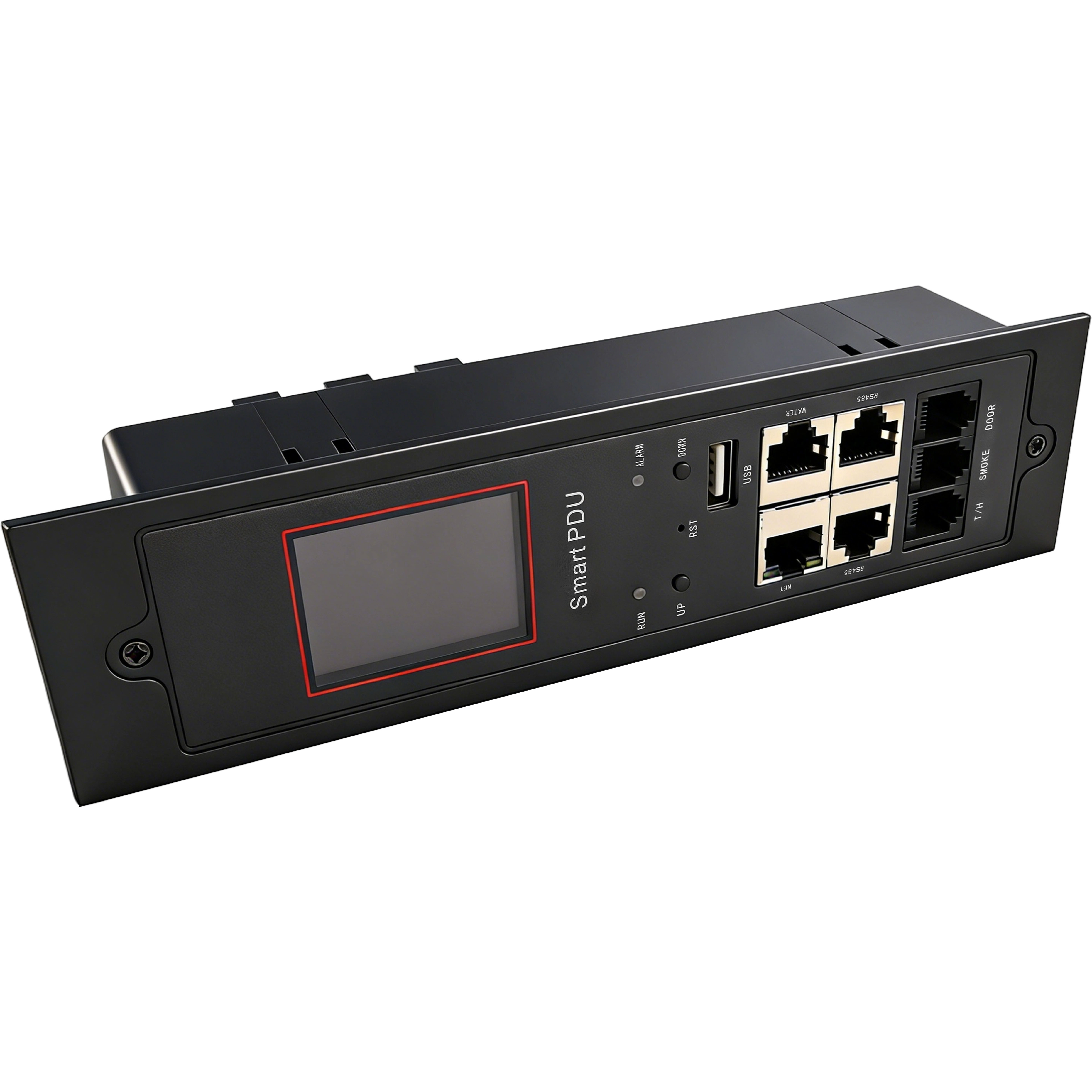
The BOMPDU Intelligent 2nd generation PDU is designed for separate monitoring and control of individual output channels. Its key execution-relevant specifications include:
- Rated input voltage: AC 110V–250V, 50/60Hz
- Maximum load current: 0–63A
- Power input method: Single-phase or three-phase input
- Input measurement accuracy: Voltage 0.5% (85–250V); current ±1% for 0.65–3.1A and ±0.5% for 3.1–63A
- Output structure: Auxiliary module with 4 outputs; main module supports up to 8 auxiliary modules
- Rated output voltage: AC 220V, 50/60Hz
- Rated output current: Single channel maximum 16A, single board maximum 32A
- Output measurement accuracy: Voltage 1% (85–250V); current 2% for 0.2–0.8A and 1% for 0.8–16A
- Output function: Separate monitoring and control
For the secondary keyword set, this product supports socket-level monitoring and remote control: each output channel can be monitored and controlled independently, which enables functions such as Remote Control PDU, Socket-Level Monitoring PDU, Sequential Power-On PDU, and Custom Alarm Threshold PDU when configured appropriately.
For engineers, the important distinction is between monitoring and control. Many “smart” PDUs only measure input-level current and voltage. The BOMPDU intelligent PDU collects current, voltage, electrical energy, and power (active power, reactive power, apparent power, power factor) at both input and output levels, and allows separate control of output channels. That capability directly supports remote restart, scheduled power-on sequencing, and per-outlet metering in data center racks.
Execution Milestone 3: Understanding the RS485 PDU Line for Simpler Deployments
Not every data center or industrial site needs a fully distributed-control intelligent PDU. For customers with existing serial-based monitoring systems, the 1U/1.5U 485 PDU is a lower-complexity option.
Its specification highlights include:
- Rated input voltage: 100V–240V (input range 90V–264V)
- Voltage measurement accuracy: Level 1 (1% ± 0.1)
- Current measurement: external transformer input, Level 1 accuracy
- Power and electricity measurement: Level 1 accuracy, 0.01kW / 0.01kWh display digits
- Communication interface: RS485, Modbus communication protocol
- Display: segment-code LCD, white background with black text
- Alarm function: overvoltage, undervoltage, and overcurrent alarms with configurable parameters
This model fits customers who need accurate measurement and remote alarm visibility over RS485/Modbus without the additional cost of outlet-level switching. It is particularly suitable for telecom racks, financial data centers, and industrial control panels where SNMP-based management is not yet required.
Execution Milestone 4: Matching the PDU to Network Management and Security Requirements
Intelligent PDUs increasingly support IPv6 and SNMP v3 protocols to meet U.S. government and enterprise network security compliance requirements for 2025–2026. While this is a market-wide trend, buyers should confirm the exact firmware and protocol support with the manufacturer before ordering.
For the BOMPDU intelligent PDU, the technical documentation references communication via RS485/Modbus for input monitoring and distributed control. The 1U/1.5U RS485 PDU uses the same serial communication family. If your network management system requires SNMP, IPv6, or a particular API integration, it must be validated against the actual product firmware rather than assumed from the product category name.
The secondary keyword IPv6 Supported PDU and Network Managed PDU should therefore be treated as verification items: ask BOMPDU’s engineering team for the communication protocol table, firmware version, and compatibility statement before you commit to a deployment architecture.
Designing Power-On Sequencing and Per-Outlet Control Policies
One of the most useful operational features in an intelligent PDU is the ability to control power-on timing and individual outlets. In data center environments, Sequential Power-On PDU functionality prevents inrush current peaks when many servers start simultaneously. Socket-level control also allows a remote operator to restart a locked server without dispatching a technician to the site.
A practical deployment policy would include:
- Assign critical IT loads to separately monitored outlets.
- Configure shutdown priorities so that non-critical devices power off first in an overload scenario.
- Use sequential startup intervals of 1–5 seconds per outlet based on server power supply specifications.
- Define alarm thresholds for approaching rated current versus actual overload, using the PDU’s alarm mechanism.
- Log every relay action so that maintenance teams can track relay life and replace aging hardware before failure.
Overload and Relay Life: How BOMPDU Handles Field Risks
Two long-term failure risks dominate PDU field performance: overload events and relay aging. BOMPDU’s documented risk controls address both.
Overload Protection and Current Limiting
BOMPDU’s sub-control units use a dual-level alarm mechanism for overload protection. The first alarm level activates when the current approaches the rated value; the second level triggers when an overload is actually detected. Feedback is provided via RS485 or network communication, so the monitoring system receives a specific alarm condition rather than only a generic power reading.
For buyers, this means the PDU can be integrated into a broader data center monitoring workflow with alerts tied to current conditions, enabling faster response before a circuit breaker trips.
Relay Status Monitoring and Cycle Control
Relays are the mechanical components of a smart PDU that physically switch output channels on and off. Over time, relay contacts wear out. BOMPDU addresses this risk through relay status monitoring and cycle control: the system records the control logs of sub-control unit relays and tracks their action status and service life through log analysis.
That is a meaningful operational feature. If the PDU can track how many times a relay has switched, maintenance teams can schedule replacement or reroute loads before a relay fails in the field. This reduces unplanned downtime and supports the “long-term reliability” requirement of hyperscale and enterprise data centers.
How BOMPDU Compares on Two Technical Dimensions
A comparison table is only useful when it compares similar product categories. The following two comparisons are limited to documented technical differences between the BOMPDU intelligent PDU and two widely known rack PDU platforms: APC NetShelter Rack PDU Advanced and Raritan PX Rack PDU.
| Comparison Dimension | BOMPDU Intelligent 2nd Gen PDU | APC NetShelter Rack PDU Advanced | Raritan PX Rack PDU |
|---|---|---|---|
| Network communication speed | 10/100 BASE-T | 10/100/1000 BASE-T | Not specified in this comparison |
| Outlet density technology | Not supported | Not specified in this comparison | Raritan HDOT® groups outlets in modules and reduces per-outlet spacing to fit more outlets in the same PDU height |
| Cost positioning | Reference baseline | Approximately 50% higher cost | Approximately 50% higher cost |
| Best-fit deployment | Cost-sensitive deployments with separate monitoring and control | High-speed, low-latency network communication | Space-constrained PDU installations requiring high outlet density |
These two differences do not represent a full product comparison. They show that buying decisions are not about “good vs. bad” but about matching specific technical trade-offs: network speed, outlet density, and cost.
Making the Decision: Supplier-Commercial Alignment
For buyers evaluating BOMPDU as a long-term smart PDU partner, the commercial and operational terms are as important as the specifications. The documented procurement conditions for the intelligent PDU product line include:
- MOQ: 2 units (for the stated intelligent PDU configuration; other configurations may differ)
- Delivery method: FOB
- Acceptance: Pre-shipment test
- Payment: 30/70 (30% deposit, 70% before shipment)
These are common terms for a Chinese manufacturer selling to international data center and industrial customers. The low MOQ of 2 units is useful for pilots, while the 30/70 payment term protects the supplier but requires the buyer to arrange pre-shipment inspection. A pre-shipment test is a valuable checkpoint: it gives the buyer an opportunity to verify measurement accuracy, communication functionality, and alarm settings before units leave the factory.
Expansion Options: Environmental Sensors for Complete Rack Monitoring
As data center racks become denser, power and environment monitoring increasingly converge. BOMPDU offers a set of auxiliary sensors that complement its PDU products:
| Sensor | Model | Key Feature |
|---|---|---|
| Temperature & Humidity Sensor | BM-CGQ02 | Digital I²C sensor, ±2% RH, ±0.3°C typical |
| Temperature & Humidity Sensor | BM-CGQ04 | Digital I²C sensor, ±3% RH, ±0.5°C typical |
| Smoke Detector | BM-CGQ05 | Wired photoelectric/optical smoke sensor |
| Water Leak Detector | BM-CGQ06 | RS-485 Modbus, up to 500 m sensor cable |
| Door Sensor | BM-CGQ07 | Dry contact NO/NC, 5–30V DC |
These sensors are not replacement PDUs; they support the broader IT environment monitoring capability that many data center operators want from a single vendor. The BM-CGQ06 Water Leak Detector, for instance, uses an RS-485 Modbus interface and has a maximum sensor cable length of 500 meters, making it suitable for row-level or room-level leak detection.
Use Cases for BOMPDU Smart PDU in Deployment
Use Case 1: Multi-Tenant Data Center with Remote Hands
A colocation provider needs to offer remote reboot and per-rack power metering to multiple tenants. Using socket-level monitoring and remote control, the operator can isolate a failed server outlet, power-cycle it, and report the result to the tenant without sending a technician to the cage. The low MOQ also allows the provider to start with a single rack pilot before refreshing an entire hall.
Use Case 2: Edge Site with Intermittent Staffing
In a telecom edge site, a system integrator installs the 1U/1.5U RS485 PDU to monitor voltage, current, power, and energy. The PDU’s overvoltage, undervoltage, and overcurrent alarms are transmitted to a central NMS over RS485/Modbus. This gives the operations team an early warning without a local engineer.
Use Case 3: High-Density Rack Power-On Sequencing
When a 42U rack is filled with servers, simultaneous power-on can cause disruptive inrush. The intelligent PDU’s separate output control allows sequential power-on, so each row of outlets starts at a controlled interval. The relay control log also provides a record of switching activity, which the facility team can use to plan maintenance.
FAQ
What type of Smart PDU supply arrangement is available from BOMPDU for standard commercial orders?
BOMPDU supports standard FOB purchases for data center customers and system integrators. For the Intelligent 2nd generation PDU product line, the documented conditions are: minimum order quantity of 2 units, typical lead time of 30 days, FOB delivery, pre-shipment testing, and 30/70 payment. These terms are suitable for pilot deployments and repeat orders through a long-term supply relationship.
Is socket-level monitoring and remote control available on BOMPDU’s intelligent PDU?
Yes. The BOMPDU Intelligent 2nd generation PDU supports separate monitoring and control for each output channel. The auxiliary module has 4 outputs, and the main module can support up to 8 auxiliary modules, allowing per-outlet current, voltage, energy, and power measurements as well as independent on/off control. This makes it usable as a Socket-Level Monitoring PDU, Remote Control PDU, or Sequential Power-On PDU depending on the configuration and control policy.
What are the budget implications of BOMPDU versus global premium PDU brands?
Based on documented cost comparisons, BOMPDU’s intelligent PDU is positioned at a lower cost point than two comparable premium platforms: APC NetShelter Rack PDU Advanced and Raritan PX Rack PDU, each reported at approximately 50% higher cost. This is not a direct price quote but a relative cost indicator. Buyers should request a formal quotation for their specific outlet count, input voltage, and communication options.
Can BOMPDU provide a sample unit or small batch for testing?
Yes. The minimum order quantity for the intelligent PDU line is 2 units, which functions as a sample-size order for testing and pilot deployment. Pre-shipment testing is included as the acceptance method, so the buyer can verify the units before final shipment.
What is the typical lead time after placing an order?
The typical production lead time is 30 days, with a monthly production capacity of 1,000 units for the intelligent PDU line. The lead time should be re-confirmed when ordering in volumes near the monthly capacity ceiling or when requesting custom firmware and configuration.
Conclusion: Turning Smart PDU Specifications into a Reliable Supply Partnership
A Smart PDU is not a commodity that can be selected on specifications alone. The Decision → Execution stage requires a partner with clear manufacturing capacity, documented performance, manageable commercial terms, and a long-term approach to field reliability.
BOMPDU offers a coherent package for this stage: an intelligent PDU with 0.5% input voltage measurement accuracy and separate outlet monitoring/control, an RS485/Modbus line for simpler integrations, documented overload and relay-life control methods, and supply terms that support both pilot orders and volume replenishment.
To move from evaluation to execution, the next step is to request a technical specification sheet and a sample-order quotation for your exact rack configuration. Review the pre-shipment test procedure with BOMPDU’s engineering team, confirm your network management protocol requirements, and verify the current 30-day lead time before scheduling your deployment.
Request the BOMPDU product brochure and sample-order details
Download the company brochure to review the Intelligent PDU and RS485 PDU product lines, factory capabilities, and contact information.
Download Brochure